Pakistan's PPP Holds Rallies Across Sindh Condemning India's Water Diversion Threats
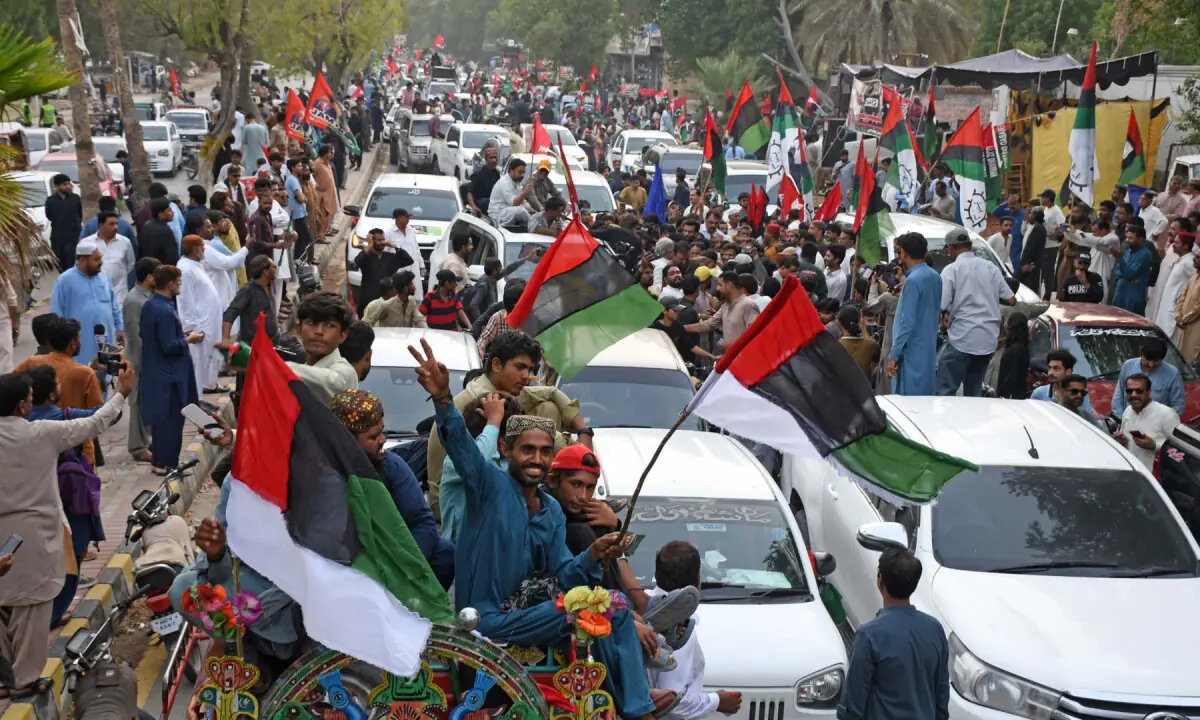
The Pakistan Peoples Party (PPP) organized widespread rallies across Sindh province on Sunday to protest India's alleged unilateral actions regarding the Indus Waters Treaty (IWT) and its plans to divert water from the Indus river system. Demonstrations took place in major cities and districts, including Karachi, Hyderabad, and Larkana, under the slogan 'We will die, but we will not give up the Indus.' PPP leaders, such as Nisar Ahmed Khuhro, emphasized that party chairman Bilawal Bhutto-Zardari has raised this issue on global platforms and intends to pursue it vigorously. Khuhro criticized Indian Prime Minister Narendra Modi and highlighted the PPP's historical stance on federalism and water rights, recalling opposition to the Kalabagh Dam. He also criticized other Pakistani parties like PTI for not confronting India on this matter.
In Karachi, Sindh Labour Minister Saeed Ghani stated that the Indus river is vital for Pakistan's 250 million people, serving as a primary source of drinking and irrigation water. He warned that while Pakistan prefers peace, deprivation of water and food could leave war as the only option. Ghani asserted that neither country can unilaterally suspend the IWT, which has endured through past conflicts. The PPP leaders also addressed concerns about the federal government's alleged non-implementation of the Water Accord of 1991 and water shortages affecting Sindh and Balochistan due to excess draw by Punjab. The Pakistani military has also previously stated that any attempt to divert water would be considered an 'act of war.'
This event highlights the critical geopolitical and domestic implications of water resource management in South Asia, particularly concerning the Indus River system. The PPP's mobilization underscores the deep-seated national security and economic anxieties tied to water availability, framing it as an existential issue for Pakistan. The rhetoric employed, including the invocation of 'water terrorism' and the threat of war, reflects a strategy to galvanize public support and exert diplomatic pressure. From a systemic perspective, the situation exposes the fragility of international water treaties when faced with differing interpretations and national interests, especially in a region with high population growth and agricultural dependence. The analysis suggests that long-term stability will require enhanced bilateral cooperation, robust third-party mediation mechanisms, and potentially innovative water management technologies to address the growing scarcity and mitigate the risk of conflict, rather than relying solely on treaty adherence or nationalistic posturing.
AI-generated to prompt reflection — not editorial opinion, not advice, not a statement of fact. How this works.