Pakistan's RLNG Prices Surge 15% in June Amid Supply Disruptions
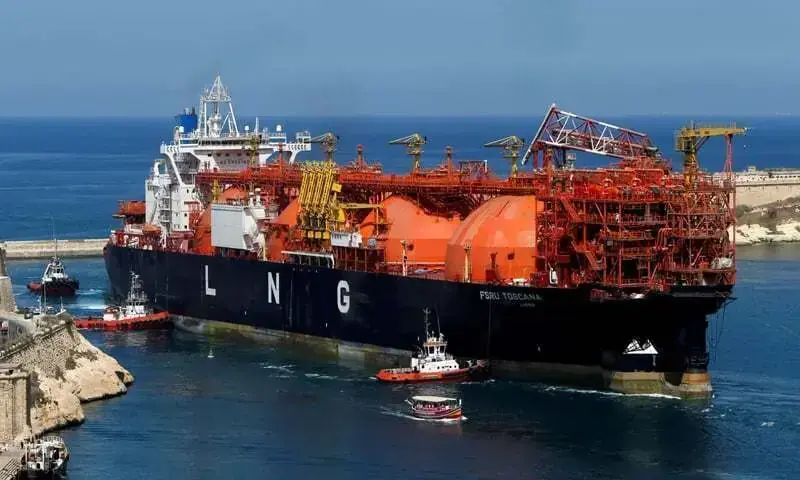
Pakistan's Oil and Gas Regulatory Authority (Ogra) has announced a significant 15% increase in the price of Regasified Liquefied Natural Gas (RLNG) for June, impacting sales by the Sui gas companies. This price hike is primarily attributed to costly purchases from the international spot market, necessitated by supply disruptions linked to geopolitical tensions, specifically the US-Iran war. The current RLNG price is 56% higher than in March and 73% higher than in February, leading to a substantial rise in fuel costs for power generation. For instance, the fuel cost for RLNG-based power generation in May reached Rs31 per unit, a sharp increase from Rs13.72 per unit in April. System losses in the distribution networks of both Sui Southern Gas Company Limited (SSGCL) and Sui Northern Gas Pipelines Limited (SNGPL) have also increased. At the transmission stage, SNGPL's RLNG price rose by 14.85% to $17.94 per million British thermal units (mmBtu) in June, while SSGCL's transmission price increased by 16% to $16.368 per mmBtu. These price increases, coupled with supply chain costs and distribution losses, make RLNG considerably more expensive for end-users. The basket RLNG price for June was based on four cargoes, with three under a PSO-QatarGas contract averaging $13.144 per mmBtu and one from Pakistan LNG Limited (PLL) at $19.134 per mmBtu. PLL, reactivated due to LNG import needs, procures one cargo monthly on short notice, with two-thirds allocated to K-Electric and the remainder to SNGPL.
The surge in RLNG prices highlights the vulnerability of Pakistan's energy sector to global supply chain volatility and geopolitical events. The reliance on short-notice spot market purchases, driven by economic constraints and supply disruptions, leads to significantly higher costs for end-users. This situation underscores a systemic challenge in energy procurement, where immediate needs often override long-term, cost-effective contracting strategies. The increasing system losses within distribution companies further exacerbate the financial burden. Looking ahead, a diversified energy portfolio and robust supply chain management, potentially leveraging regional partnerships or investing in domestic production, could mitigate future price shocks and enhance energy security. The current procurement model, heavily influenced by external factors, presents a significant trade-off between immediate energy availability and long-term economic sustainability.
AI-generated to prompt reflection — not editorial opinion, not advice, not a statement of fact. How this works.