Pakistan's Sugarcane Sector: Shifting Focus from Price to Productivity
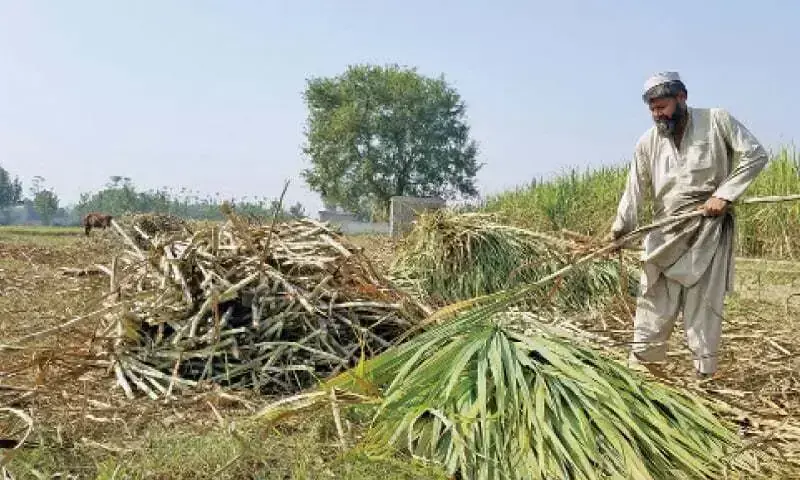
Pakistan's annual sugarcane crushing season is consistently marked by a recurring debate over cane prices, with farmers demanding higher rates to cover rising production costs and sugar mills arguing that increased procurement prices render sugar commercially unviable. Governments typically intervene to mediate these disputes, often leading to higher retail prices for consumers. This cycle highlights a fundamental issue: Pakistan treats sugarcane primarily as a pricing problem rather than a productivity challenge. While prices redistribute existing value, productivity creates new value for all stakeholders. Increased yields per hectare would allow growers to earn more without solely relying on price hikes, while millers could operate more efficiently, benefiting consumers with stable supply and enhancing the economy's competitiveness.
Despite agriculture contributing 23.4% to Pakistan's GDP and employing 33% of the workforce, sugarcane's direct contribution is a mere 0.8%. Although production rose by 6.2% to 89.45 million tonnes in the last fiscal year, this single favorable season does not guarantee long-term competitiveness. Deep-rooted structural challenges persist, including stagnant farm productivity in many areas, escalating cultivation costs, diminishing water availability, climate variability, labor shortages, and inconsistent technology adoption. Policy attention remains disproportionately focused on annual price notifications, neglecting crucial areas like productivity, innovation, and resource efficiency.
Future agricultural growth in Pakistan must stem from producing more with fewer resources, given finite land, scarce water, and intensifying climate risks. Key priorities should include rebuilding agricultural extension services to disseminate research-based knowledge and best practices to farmers, and accelerating technological adoption. Mechanization, precision farming, and efficient water management are critical. Water productivity, in particular, needs greater emphasis, as Pakistan is water-stressed and sugarcane is a water-intensive crop. Integrated Pest Management (IPM) should be promoted over heavy pesticide reliance for both economic and environmental reasons. While fair pricing remains essential, it should not dominate agricultural policy. True success lies in consistently increasing output per unit of land, water, and investment, rather than solely focusing on price announcements.
The recurring conflict over sugarcane prices in Pakistan, as detailed in the article, illustrates a systemic tendency to address complex agricultural challenges through short-term price adjustments rather than long-term productivity enhancements. This approach, while providing temporary relief, perpetuates a cycle of escalating costs and subsidies without fostering genuine economic value creation. The analysis suggests that a policy framework prioritizing investment in agricultural extension, technological adoption, and resource efficiency, particularly water and pest management, could unlock sustainable growth. Such a shift would move Pakistan's sugarcane sector from a zero-sum pricing game to a positive-sum productivity paradigm, aligning with the global imperative for resource optimization and climate resilience in agriculture. The next decade will likely see increased pressure on food systems, making a transition to efficiency-driven growth not just beneficial but essential for national food security and economic stability.
AI-generated to prompt reflection — not editorial opinion, not advice, not a statement of fact. How this works.