Pakistan's Sulaiman Range reveals 60-million-year continental collision scars
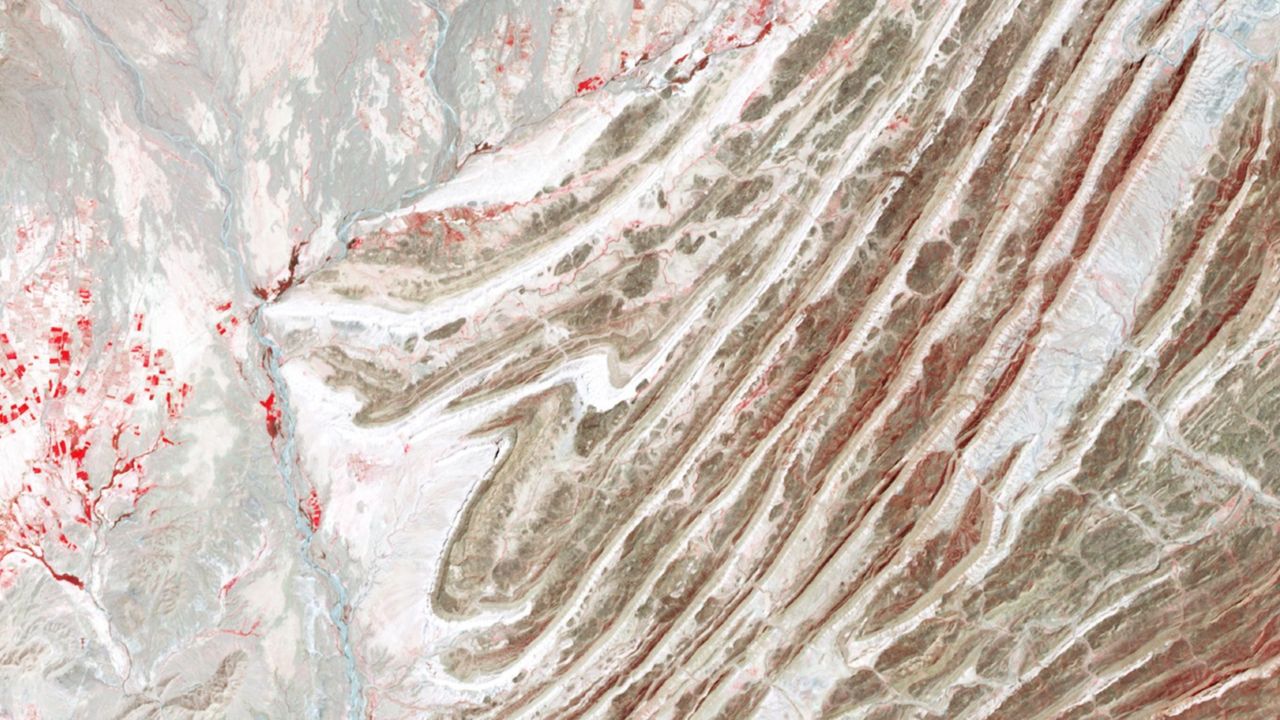
A satellite image from 2011 highlights the "imbricate fan" geological formation in Pakistan's Sulaiman Range. This striking feature is the result of a colossal continental collision that has been ongoing for approximately 60 million years. The formation showcases alternating layers of rock, indicative of the immense pressures and geological forces at play. It developed along the boundary of two major tectonic plates that have been engaged in a prolonged geological struggle. The "imbricate fan" structure is a visible testament to the deep time and powerful processes shaping Earth's crust. This geological phenomenon underscores the dynamic nature of our planet's tectonic activity over vast timescales. The visual evidence from space provides a unique perspective on these ancient geological events.
The visible geological features in Pakistan's Sulaiman Range offer a tangible representation of deep-time tectonic processes. The "imbricate fan" formation, resulting from a 60-million-year continental collision, illustrates the immense, slow-moving forces that shape planetary surfaces. Understanding these formations is crucial for seismic hazard assessment and resource exploration, as plate boundaries are often associated with geological activity and mineral deposits. This event prompts consideration of how long-term geological dynamics interact with contemporary human settlement and infrastructure development in tectonically active regions.
AI-generated to prompt reflection — not editorial opinion, not advice, not a statement of fact. How this works.