Pakistan Security Forces Kill 3 More Terrorists in Balochistan Operation Shaban
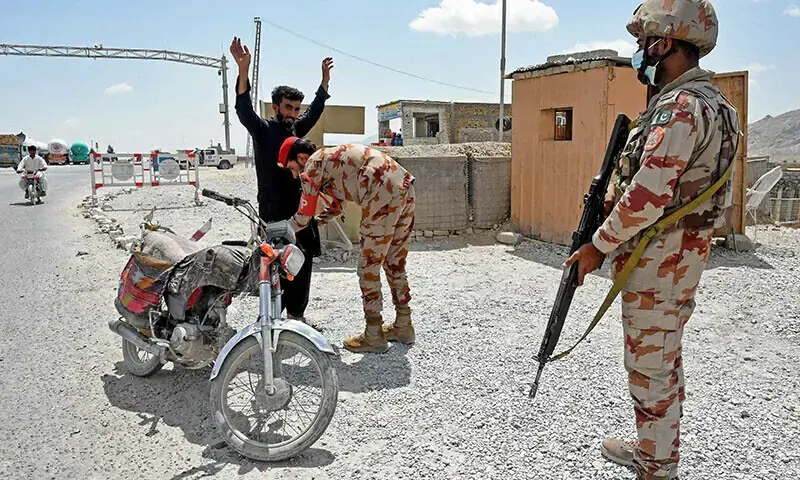
Security forces in Balochistan have killed an additional three terrorists as part of the ongoing Operation Shaban, bringing the total number of militants eliminated in this specific operation to 67, according to PTV News. This operation, a joint effort by the Pakistan Army, Frontier Corps, and Balochistan Police, was initiated following a deadly terrorist attack in the Mangi Dam area on July 7, which resulted in the martyrdom of several police officers. State broadcaster PTV News indicated that air and ground assaults are continuing against a group identified by the state as 'Fitna-al-Khawarij,' a term used for the banned Tehreek-i-Taliban Pakistan. Cumulatively, since July 5, a total of 105 terrorists have been killed in Balochistan through Operation Shahban and other intelligence-based operations. The joint operation, particularly active in Quetta district's Shaban area since July 5, targets militants responsible for killing 27 police personnel in an attack on a police post at the Mangi dam pumping station. During that initial assault, nine police officers were killed, and 18 others were abducted, with their bodies later discovered in the Zarghoon Gar mountainous region. Prime Minister Shehbaz Sharif recently stated in Quetta that Pakistan's civil and military leadership have made a unified decision to eradicate terrorism, emphasizing collective action. This declaration was made during a meeting of the Provincial Apex Committee on the National Action Plan, attended by Chief of Defence Forces and Chief of the Army Staff Field Marshal Asim Munir. The meeting occurred shortly after the Director General of Inter-Services Public Relations, Lt Gen Ahmed Sharif Chaudhry, reported that at least 42 individuals, including four civilians, 27 police officers, and 11 security personnel, had died in terrorist incidents and subsequent security operations in Balochistan since July 5.
The ongoing security operations in Balochistan, including Operation Shaban, reflect a heightened state response to persistent terrorist activity, particularly targeting law enforcement. The state's designation of militant groups and the emphasis on a unified civil-military approach suggest a strategic recalibration aimed at consolidating counter-terrorism efforts. However, the cyclical nature of such operations, marked by significant casualties on both sides, raises questions about the long-term efficacy of purely kinetic strategies in addressing the underlying socio-political and economic factors that may fuel insurgency in the region. Future strategies may need to incorporate a more comprehensive approach that balances security imperatives with robust development initiatives and inclusive governance to achieve sustainable peace and stability.
AI-generated to prompt reflection — not editorial opinion, not advice, not a statement of fact. How this works.