Pakistan Security Forces Kill 3 Terrorists in Balochistan; Operation Continues
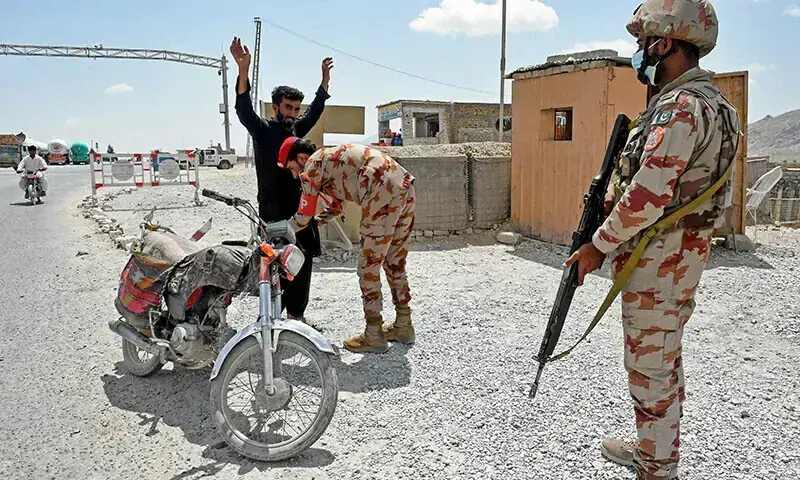
Pakistani security forces reported on Thursday that three more terrorists were killed in Balochistan as part of the ongoing "Operation Shaban." This brings the total number of terrorists eliminated during the operation to 91. Since July 5, state media indicates that 129 terrorists have been killed in "Operation Shaban" and other intelligence-based operations across the province. The operation aims to eliminate the last terrorist in Balochistan and was initiated following a deadly attack on a police post in the Mangi dam area, which resulted in the deaths of 27 police personnel. The joint operation involves troops from the Pakistan Army, Frontier Corps, and police. Balochistan has been experiencing a significant security deterioration, with a recent report from the Pakistan Institute for Conflict and Security Studies (PICSS) identifying it as the most affected province in May. The province saw a 109% increase in terrorist attacks, from 34 in April to 71 in May, alongside a surge in kidnappings, with 52 out of 54 nationwide abductions occurring in Balochistan during May. Prime Minister Shehbaz Sharif recently stated that the civil and military leadership have made a unified decision to end terrorism, emphasizing collective action. This declaration followed remarks by the Director General of the Inter-Services Public Relations (ISPR), Lt Gen Ahmed Sharif Chaudhry, who attributed recent attacks in Balochistan to India and Afghanistan, specifically mentioning incidents in Quetta, Ziarat, and Bela.
The ongoing "Operation Shaban" in Balochistan, characterized by significant security force actions and reported terrorist casualties, highlights the persistent challenge of militancy in the region. The stated objective of eliminating all terrorists underscores a zero-tolerance approach, yet the context provided by the Pakistan Institute for Conflict and Security Studies (PICSS) points to a complex and escalating security situation, with a sharp rise in attacks and kidnappings in May. The Prime Minister's declaration of a unified civil-military resolve to end terrorism suggests a strategic recalibration. However, the attribution of recent attacks to external actors by the ISPR introduces geopolitical dimensions that may influence the long-term efficacy and nature of counter-terrorism strategies. Future efforts will likely be shaped by the balance between internal security operations and regional diplomatic engagement, while addressing the underlying socio-economic factors that may contribute to instability in Balochistan.
AI-generated to prompt reflection — not editorial opinion, not advice, not a statement of fact. How this works.