Pakistan Security Forces Neutralize 32 Terrorists in KP and Balochistan
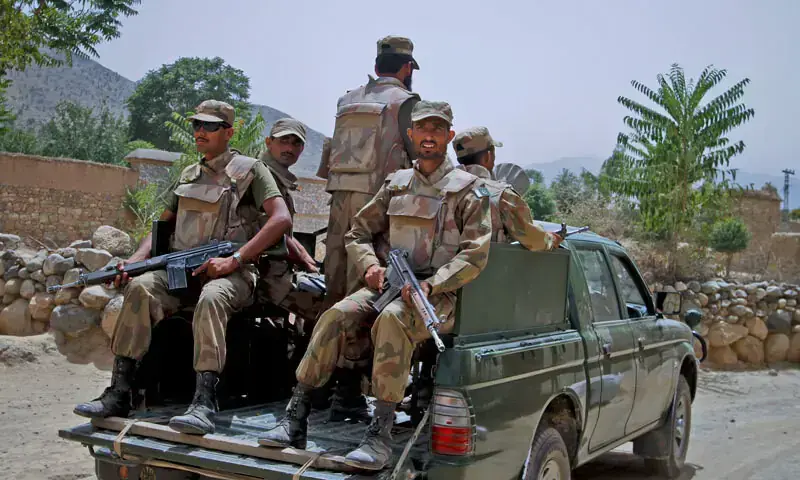
Pakistani security forces have eliminated 32 terrorists in coordinated operations across Khyber Pakhtunkhwa (KP) and Balochistan provinces within the past 24 hours, according to a statement released on Wednesday by the Inter-Services Public Relations (ISPR), the military's media wing. These "comprehensive joint operations" were conducted as part of ongoing efforts against what the ISPR terms the "terrorists nexus of India-sponsored Fitna-al-Khawarij and Fitna-al-Hindustan." The ISPR uses "Fitna-al-Khawarij" to refer to the banned Tehreek-i-Taliban Pakistan (TTP) and labels Balochistan-based groups as "Fitna-al-Hindustan" to assert India's alleged involvement in Pakistan's destabilization. In KP, intelligence-based operations on July 28 and 29 in Khyber resulted in the killing of 24 terrorists associated with "Fitna-al-Khawarij." Simultaneously, in Balochistan's Nushki district, eight terrorists linked to "Fitna-al-Hindustan" were killed during intense engagements and multiple intelligence-based operations. Recovered weapons, ammunition, and improvised explosive devices were destroyed. The ISPR stated that sanitization operations are ongoing to find any remaining "India-sponsored terrorist" elements and affirmed that Pakistan's relentless counter-terrorism campaign, known as "Azm-i-Istehkam," will continue to eradicate foreign-sponsored terrorism. These recent actions follow a period of heightened security challenges in both provinces, including Operation Shaban in Balochistan after the kidnapping and killing of 27 police officers on July 6, and Operation Al-Azm after an attack on a coach. In KP, security forces thwarted an attempt by 12 terrorists to breach a police checkpost in Tank on July 24. A June report by the Pakistan Institute for Conflict and Security Studies (PICSS) indicated a sharp deterioration in Pakistan's security situation in May, largely due to increased terrorist violence in KP and Balochistan, with Balochistan experiencing a 109% rise in terrorist attacks and a significant increase in abductions.
The ISPR's statement frames recent security operations within a narrative of combating foreign-sponsored terrorism, specifically referencing India's alleged role. This framing serves to consolidate domestic support and externalize blame for internal security challenges. The "Azm-i-Istehkam" campaign, approved by the Federal Apex Committee on National Action Plan, highlights a state-led, top-down approach to counter-terrorism. However, the persistent violence in Khyber Pakhtunkhwa and Balochistan, as detailed by the PICSS report, suggests that the underlying drivers of instability, including socio-economic factors and governance deficits, may not be fully addressed by kinetic operations alone. The focus on eliminating "terrorists and their facilitators" through intelligence-based and area sanitization operations is a standard counter-terrorism tactic. The long-term effectiveness of such strategies will depend on their integration with broader policies addressing the root causes of extremism and ensuring sustainable peace and development in the affected regions.
AI-generated to prompt reflection — not editorial opinion, not advice, not a statement of fact. How this works.