Pakistan Seeks $10 Billion US Exchange Stabilization Fund Facility
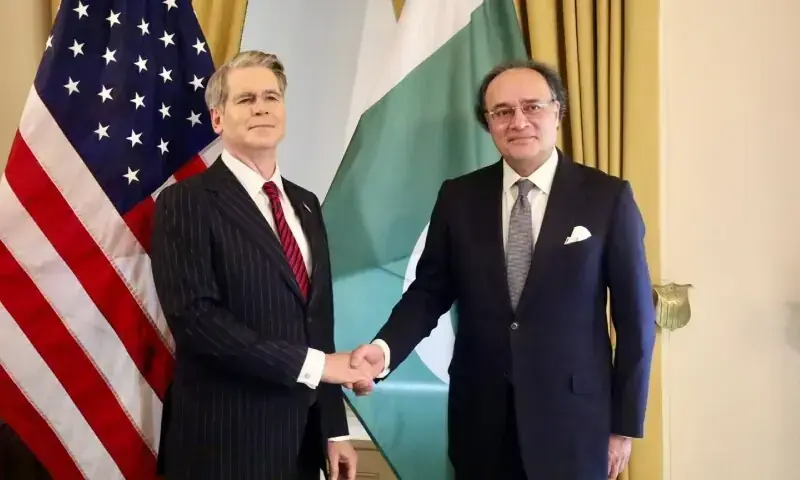
Pakistan has formally requested a $10 billion Exchange Stabilisation Support Facility from the US Treasury, a powerful but often misunderstood financial tool. Finance Minister Muhammad Aurangzeb made the request during a recent visit to Washington, seeking a facility with a maturity period of up to five years. This move comes as Pakistan grapples with significant external financing pressures, including the need to maintain foreign exchange reserves, meet international debt obligations, and stabilize its currency market. Unlike traditional aid from multilateral lenders, this would be a direct bilateral financial arrangement between the US and Pakistan.
If approved, the Exchange Stabilisation Fund (ESF)-backed facility could provide crucial liquidity to Pakistan at a critical juncture. It would assist the State Bank of Pakistan in managing external payments for imports and debt servicing, thereby bolstering market confidence in the country's ability to meet its international commitments. Former IMF economist Agha Adeel Saadat noted that such a facility could act as an "important financial buffer," strengthening reserves, enhancing investor confidence, and reducing short-term financing risks, especially given Pakistan's vulnerability to geopolitical uncertainty and volatile global oil prices due to its reliance on energy imports. A stronger reserve position would enable better management of exchange rate volatility and external debt without disrupting economic activity.
While the ESF facility could offer significant short-term relief, experts caution it is not a panacea for Pakistan's deep-rooted economic issues. Mr. Saadat emphasized that it should serve as a "bridge to stability" rather than a replacement for essential structural reforms. These reforms include broadening the tax base, boosting exports, improving productivity, and exercising greater fiscal discipline by cutting non-essential public spending. Political economist Dr. Shahzad Latif argued that Pakistan's long-term economic health requires a strategic shift towards attracting foreign direct investment, building industrial capacity, and expanding exports to reduce import dependence and strengthen the rupee. Dr. Latif also pointed out that such bilateral financial arrangements can carry geopolitical implications, potentially leading to strategic or diplomatic expectations from the US, such as encouraging Pakistan's engagement with initiatives like the Abraham Accords, though no such conditions have been publicly announced. The request remains a proposal, with the key factors being Washington's assessment of its appropriateness for ESF use and the agreement on terms between both governments.
The proposed US Exchange Stabilisation Fund facility for Pakistan highlights a recurring dynamic in international finance: the use of emergency liquidity tools to address balance-of-payments crises. While such facilities can provide critical short-term relief and bolster confidence, their effectiveness is inherently limited without concurrent domestic structural reforms. The ESF's operational flexibility, stemming from its independent resources and broad executive authority, allows for rapid deployment in financial emergencies, as demonstrated in past interventions like the 1995 Mexican peso crisis. However, the underlying challenge for Pakistan, as with many nations facing similar pressures, is to transition from reliance on external financial buffers to sustainable economic models driven by export growth, investment, and fiscal prudence. The geopolitical dimension, where financial assistance may be linked to strategic alignment, introduces a layer of complexity, suggesting that the efficacy and long-term implications of such bilateral arrangements depend not only on economic fundamentals but also on evolving international relations.
AI-generated to prompt reflection — not editorial opinion, not advice, not a statement of fact. How this works.