Pakistan Sees Significant Drop in Environmental Poliovirus Detections
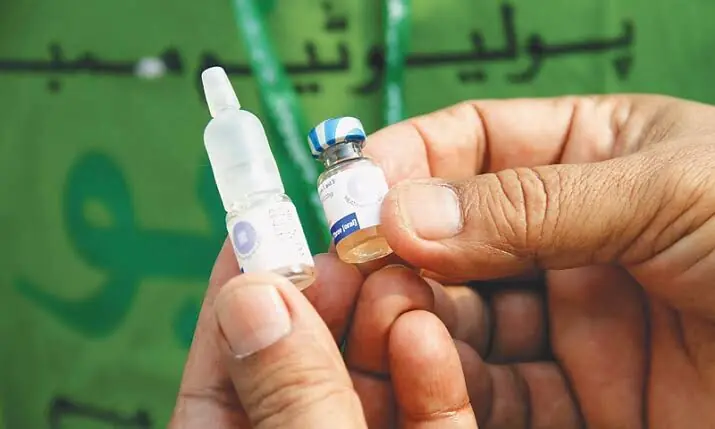
Pakistan has experienced a substantial decrease in poliovirus detection in environmental samples during the first half of 2026, with the positivity rate falling to 13.1% from 48.1% in the same period of 2025. Prime Minister’s Focal Person for Polio Eradication, Ayesha Raza Farooq, attributed this progress to a new strategy incorporating external audits, improved team selection and training, and law enforcement support. Despite this positive trend, a polio expert highlighted ongoing concerns regarding cross-border movement from Afghanistan, noting the detection of poliovirus strains linked to Kandahar and Nangarhar in environmental samples from Quetta and Peshawar. Data from the National Emergency Operations Centre (NEOC) for Polio Eradication revealed that out of 127 environmental samples collected nationwide in June 2026, 10 tested positive, a significant reduction from the 369 positive samples recorded between January and June 2025. Punjab reported no positive samples in June, while Sindh had one out of 29, Khyber Pakhtunkhwa had four out of 34, and Balochistan had five out of 23. The NEOC emphasized that while these figures reflect improved vaccination coverage and surveillance, continuous vigilance is crucial for halting virus transmission. Pakistan has reported three wild poliovirus cases this year, prompting intensified surveillance and vaccination in high-risk areas. Farooq identified southern Khyber Pakhtunkhwa and Karachi as persistent challenge areas, with Karachi facing issues due to its dense population and unsatisfactory routine immunization coverage, necessitating ongoing attention and external audits. Access remains a key challenge in Khyber Pakhtunkhwa, where law enforcement and local communities are involved, with Prime Minister Shehbaz Sharif personally overseeing efforts.
The reported decline in environmental poliovirus detection in Pakistan signifies a potential public health success, likely driven by enhanced surveillance and vaccination strategies. However, the persistent detection of virus strains linked to cross-border movement from Afghanistan underscores the complex, interconnected nature of disease eradication efforts. This highlights the critical need for coordinated, regional approaches to border health security and public health infrastructure. The challenges in densely populated urban centers like Karachi and remote areas of Khyber Pakhtunkhwa suggest that localized, context-specific interventions are as vital as national strategies. Future efforts will likely require sustained investment in community engagement, innovative delivery mechanisms for vaccines, and robust data analysis to identify and address persistent gaps in immunization coverage, particularly in the face of evolving population dynamics and potential disruptions.
AI-generated to prompt reflection — not editorial opinion, not advice, not a statement of fact. How this works.