Pakistan Stock Exchange Surges 2,000 Points Amid Easing Oil Prices and Earnings Optimism
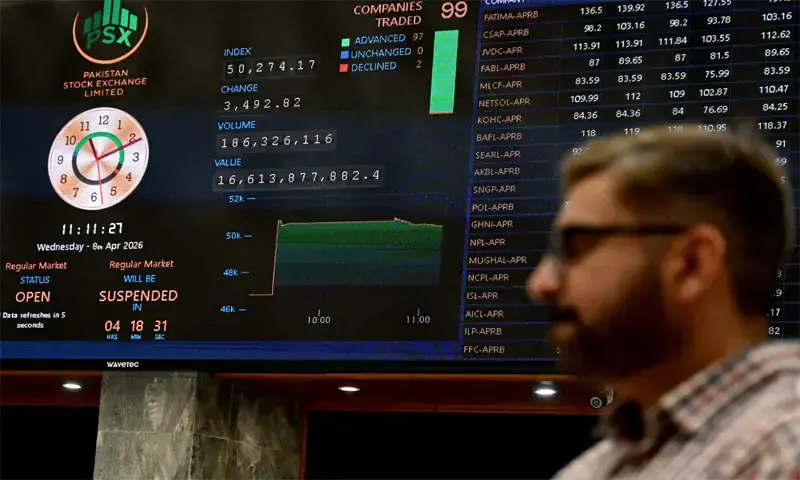
The Pakistan Stock Exchange's (PSX) benchmark KSE-100 index experienced a significant surge of 2,000 points during early trading on Tuesday. By 10:24 AM, the index had risen 2,075.58 points from its previous closing value of 175,927.73. This market upswing coincided with a softening of global oil prices, influenced by mediation efforts between the US and Iran, alongside ongoing tensions and threats of a naval blockade against Saudi Arabia by Yemen's Houthis. Brent crude futures fell 0.9% to $88.44 per barrel, and US West Texas Intermediate crude saw similar declines. Awais Ashraf, Director of Research at AKD Securities, attributed the market's momentum to retreating oil prices and positive investor sentiment driven by the current earnings season. Companies in the oil and gas exploration, cement, refinery, and textile sectors are anticipated to report robust financial results. The stock exchange had previously opened the week on a subdued note, marked by volatility, but late-session value-hunting in banking and refinery stocks allowed the KSE-100 index to close Monday with a modest gain of 124.95 points, or 0.07%.
The Pakistan Stock Exchange's intraday surge reflects a common market dynamic where investor sentiment can be swayed by external factors like global commodity prices and geopolitical developments. The easing of oil prices, potentially linked to de-escalation in US-Iran tensions, likely reduced immediate inflationary concerns and improved the outlook for import-dependent economies. Furthermore, positive expectations from the domestic earnings season, particularly in energy and industrial sectors, can create a self-fulfilling prophecy of short-term gains by attracting capital seeking yield. However, the underlying volatility noted suggests that the market remains sensitive to geopolitical risks and global economic uncertainties, indicating that sustained growth may depend on the resolution of these broader issues rather than solely on domestic factors or temporary commodity price fluctuations.
AI-generated to prompt reflection — not editorial opinion, not advice, not a statement of fact. How this works.