Pakistan Stock Exchange Surges Over 4,000 Points Amid Easing Geopolitical Tensions
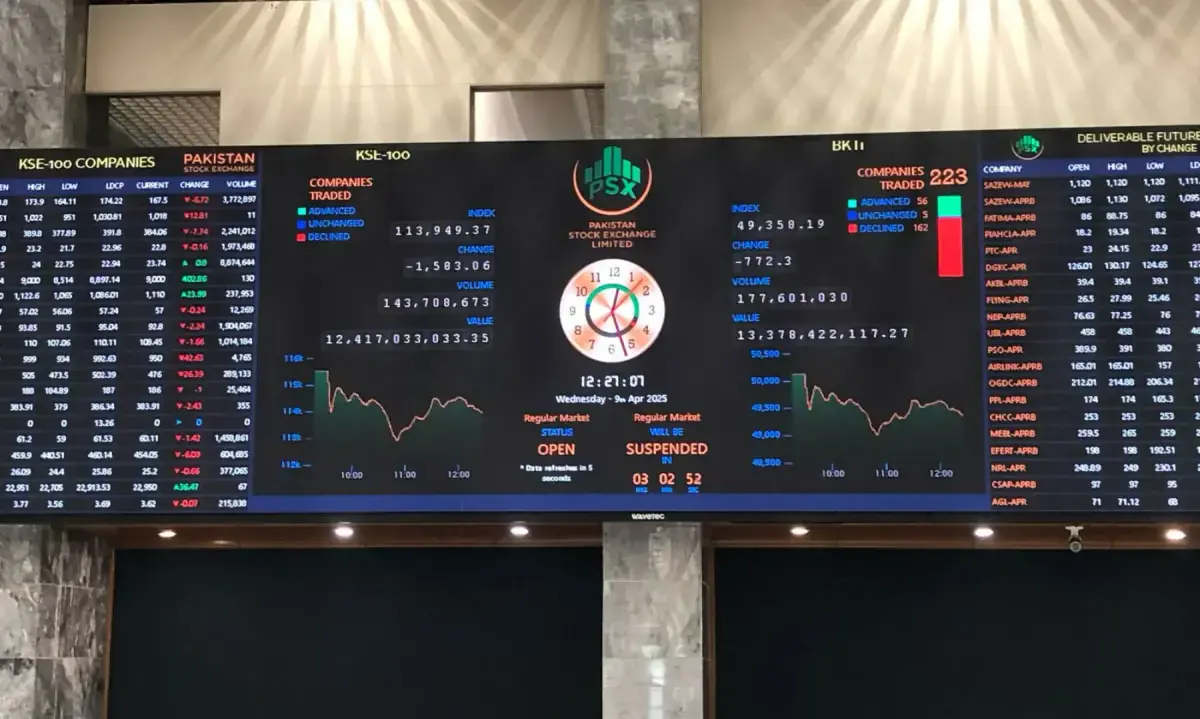
The Pakistan Stock Exchange (PSX) began the trading week with a significant surge, with its benchmark KSE-100 index gaining over 4,000 points in early trade. By 9:50 am, the index had climbed 4,501.33 points to reach 175,522.53, up from the previous close of 171,021.20. Financial portal Mettis Global attributed this rally to a reduction in geopolitical tensions and a notable drop in global oil prices, which collectively boosted investor confidence. This positive market movement coincided with Iran and the United States de-escalating their direct conflict on Monday, providing a temporary reprieve for the shipping and oil sectors. Global oil prices experienced a significant decline, with Brent crude falling over seven percent to briefly dip below $90 per barrel, and West Texas Intermediate dropping four percent to $85.45. Last week, the PSX had faced downward pressure, with the KSE-100 index losing 2.7 percent, or 4,782 points, due to heightened Middle Eastern geopolitical concerns and rising oil prices, which overshadowed domestic positive news such as an improved sovereign credit rating for Pakistan.
The recent surge in the Pakistan Stock Exchange appears to be driven by external factors, primarily a temporary de-escalation in Middle Eastern geopolitical tensions and a subsequent fall in oil prices. While this provides short-term relief and improves investor sentiment, it highlights the market's sensitivity to global events rather than fundamental domestic economic strength. The rapid recovery following last week's decline underscores the speculative nature of trading influenced by geopolitical news cycles. Investors may need to consider the sustainability of this trend, as geopolitical situations can shift rapidly, and the underlying economic conditions that led to last week's pressure may persist. The market's reaction demonstrates the interconnectedness of global stability, energy prices, and emerging market investment flows, suggesting that future volatility is likely as long as these external factors remain unpredictable.
AI-generated to prompt reflection — not editorial opinion, not advice, not a statement of fact. How this works.