Pakistan Supreme Court: Technicalities Must Not Block Justice, Especially in Witness Testimony
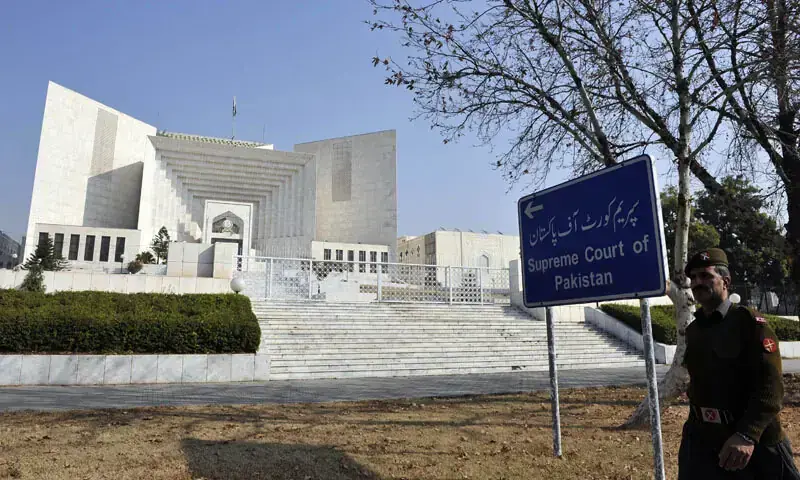
The Supreme Court of Pakistan has ruled that procedural laws must serve to address human suffering rather than obstruct justice, emphasizing that technicalities should not impede the pursuit of truth. This significant observation was made during the review of a criminal appeal concerning the murder trial of advocate Sanam Umrani, a women's rights activist killed on May 31, 2018, in Jacobabad, Sindh. The apex court set aside lower court decisions that had dismissed an application by Nayab Umrani, Sanam's sister, to correct inaccuracies in her recorded testimony. The Supreme Court directed the trial court to meticulously re-examine the video recording of the petitioner's statement and compare it with her written testimony. This review must occur in the presence of the accused, legal counsel, and the prosecutor. If any discrepancies, omissions, or inaccuracies are identified, the trial court is to record its remarks, incorporate the correct version into a memorandum, and add it to the case record, as stipulated by Section 360(2) of the Criminal Procedure Code (CrPC). This process is to be completed within fifteen working days. Subsequently, the trial court must decide the case on its merits within thirty days, following opportunities for re-argument. The petitioner, Nayab Umrani, is a prosecution witness in the 2018 murder case, registered under various sections of the Pakistan Penal Code. She had noticed inaccuracies in her recorded statement, specifically the date of the incident, which was incorrectly noted as May 30 instead of May 31, 2018. Both the trial court and the Sindh High Court had previously dismissed her application to rectify this error. The Supreme Court highlighted that the procedure for recording evidence mandates that statements be read back to witnesses for correction, and Section 360(2) allows witnesses to challenge the written record, requiring judges to append their remarks and the corrected version. The court underscored that procedural frameworks, like the CrPC, are designed to uphold due process and the right to a fair trial, fundamental rights guaranteed by Article 10-A of the Constitution. Judges, therefore, must not adopt a purely technical approach that frustrates justice; instead, procedure should be an instrument to promote justice.
This ruling by the Supreme Court of Pakistan underscores a critical tension between procedural adherence and substantive justice. By prioritizing the correction of witness testimony inaccuracies, the court signals a commitment to ensuring that legal processes accurately reflect factual events, particularly in cases involving significant human suffering. The judgment implicitly critiques a rigid, technical application of procedural rules that could inadvertently shield perpetrators or misrepresent evidence. Looking ahead, this emphasis on accuracy and fairness in evidence recording is crucial for maintaining public trust in the judicial system, especially as digital evidence and remote testimony become more prevalent. The challenge for the judiciary will be to balance the need for efficient case resolution with the imperative of meticulous evidentiary standards, ensuring that technological advancements serve, rather than subvert, the pursuit of truth and justice.
AI-generated to prompt reflection — not editorial opinion, not advice, not a statement of fact. How this works.