Pakistan to Minimize Human Tax Interaction with New AI System, Says Finance Minister
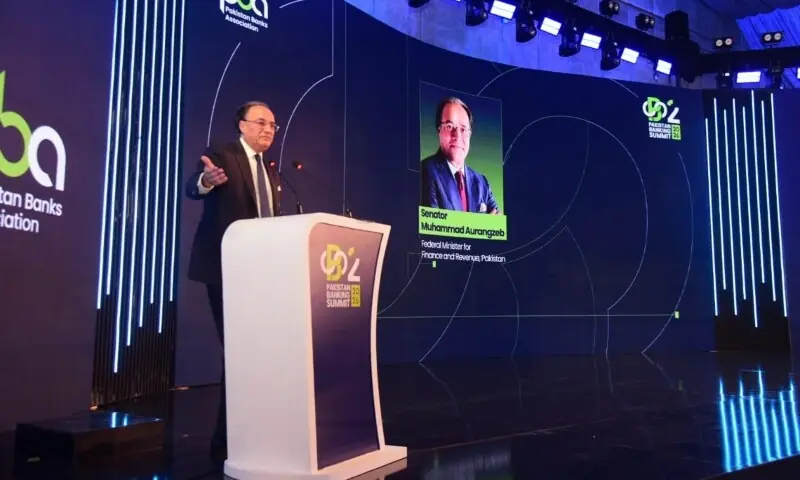
Pakistan's Finance Minister, Muhammad Aurangzeb, announced on Tuesday that a new artificial intelligence-driven model will significantly reduce human intervention in tax administration. Speaking at a banking summit in Karachi, he explained that parliament has approved a new operating model and structure allowing AI systems to issue tax notices. The minister also expressed optimism about Pakistan's re-entry into international financial markets, highlighting the successful issuance of a Panda Bond in China's market, which raised the yuan equivalent of $250 million in mid-May 2026 and attracted demand exceeding its target fivefold. Pakistan is now preparing to launch additional Eurobonds and sukuk, which will be dollar-settled, rupee-linked instruments, a novel approach for the country. The government has issued requests for proposals to gauge investor interest and pricing for these upcoming issuances. Aurangzeb noted Pakistan's return to the international bond market after a four-year hiatus, with strong demand for Eurobonds allowing for an increase in issuance size to $750 million. He also touched upon the Pakistan Stock Exchange, emphasizing that underlying economic drivers are more crucial than the exchange's numerical performance, citing growth in investor numbers, the emergence of Gen Z participants, and a return to double-digit corporate profitability. The recent budget, led by the Tax Policy Office, focused on export-led growth, the removal of advance and super taxes, subsidized financing, and a consistent tariff regime. The banking sector was underscored as vital for Pakistan's transition from economic stabilization to sustainable growth, with a critical need for increased lending to SMEs, exporters, agriculture, manufacturing, construction, and the IT sector. Zafar Masood, Chairman of the Pakistan Banks Association, added that the banking industry contributes over Rs1 trillion annually in taxes and has seen significant lending growth in agriculture (39%), housing (90%), and SMEs (111% credit lending growth, 80% annual amount increase).
AI integration into tax administration signals a strategic shift towards enhanced efficiency and reduced administrative friction, potentially streamlining compliance for citizens and businesses. This move, alongside Pakistan's active engagement in international bond markets, reflects a broader strategy to attract foreign capital and diversify funding sources, aiming to bolster economic stability and growth. The emphasis on export-led policies and support for key economic sectors through banking initiatives suggests a focus on sustainable development. However, the long-term success of these initiatives will depend on robust regulatory frameworks, cybersecurity measures for AI systems, and sustained global investor confidence amidst evolving economic conditions.
AI-generated to prompt reflection — not editorial opinion, not advice, not a statement of fact. How this works.