Pakistan Warns India Against 'Adventurism' After Defense Minister's Kashmir Remarks
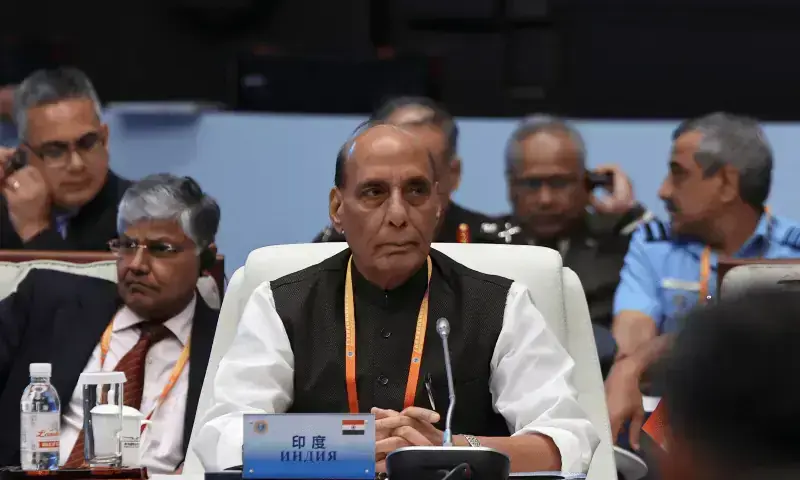
Pakistan's Foreign Office (FO) has strongly condemned "highly provocative and irresponsible comments" made by Indian Defence Minister Rajnath Singh regarding the disputed Kashmir region. Singh stated on Sunday that India would not engage in talks with Pakistan, and if any discussions were to occur, they would only be about Azad Jammu and Kashmir, which he claimed was "illegally occupied by Pakistan." He also warned that any "misadventure" would result in a response "beyond their imagination."
The FO responded by asserting that Singh's statement distorts facts about the UN-recognized Jammu and Kashmir dispute and demonstrates India's deliberate policy to threaten regional and international peace. Pakistan suggested these insinuations aim to distract from India's occupation of Indian Illegally Occupied Jammu and Kashmir, its alleged sponsorship of terrorism, and domestic instability. The FO emphasized that India must not underestimate Pakistan's resolve to thwart any "Indian adventurism," referencing past national determination during "Operation Bunyanum Marsoos" last year. A four-day conflict in May 2025, sparked by an attack on tourists, saw Pakistan and India trade strikes before a US-brokered ceasefire. Pakistan urged the international community and the UN to hold India accountable for its alleged "rogue behavior" and failure to uphold UN Security Council resolutions.
Defence Minister Khawaja Asif echoed these sentiments, stating that India's attempts to alter internationally recognized legal realities through "coercive rhetoric" are futile and do not change the status of Indian Illegally Occupied Jammu and Kashmir or promote peace. He accused India of being the primary sponsor of terrorism and instability in South Asia, holding the region hostage to its "aggressively revisionist designs." Asif also warned that India's rhetoric risks lowering the threshold for interstate conflict and reiterated Pakistan's commitment to peace and dialogue, while asserting its absolute resolve to safeguard its sovereignty and national security. He suggested the Indian minister's rhetoric aims to deflect from internal turmoil and discontent with the current governance style.
This exchange highlights escalating geopolitical tensions and a pattern of assertive rhetoric between India and Pakistan concerning the Kashmir dispute. Both nations are employing strong public statements, leveraging nationalistic sentiment and historical grievances to bolster their positions. Pakistan's Foreign Office aims to frame India's statements as destabilizing and a distraction from internal issues, while simultaneously projecting an image of unwavering resolve. India's Defence Minister's comments appear designed to signal a firm stance and potentially deter any perceived Pakistani actions, while also asserting a claim over territory it views as illegally occupied. The invocation of past conflicts and the international community's role suggests a strategic effort to garner support and shape international perceptions. Moving forward, the challenge lies in de-escalating rhetoric to prevent miscalculation, particularly given the region's complex security dynamics and the potential for such verbal exchanges to spill over into more concrete actions or diplomatic stalemates.
AI-generated to prompt reflection — not editorial opinion, not advice, not a statement of fact. How this works.