Pakistan Welcomes Gaza Peace Plan Disarmament Developments
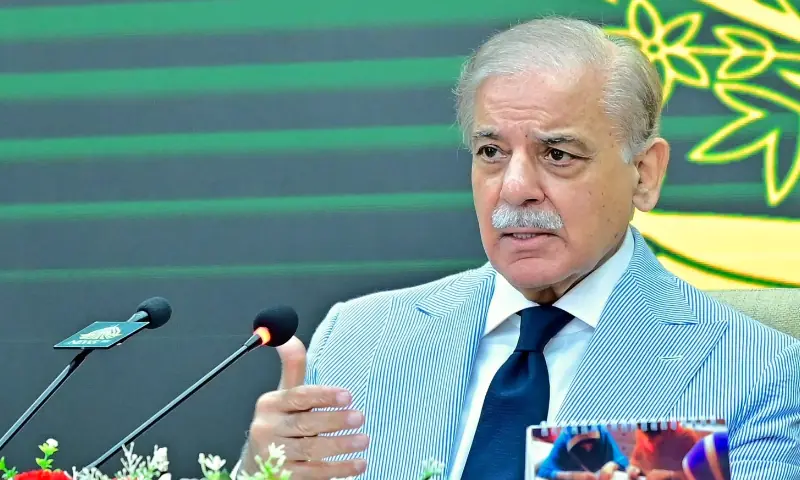
Prime Minister Shehbaz Sharif of Pakistan announced on Friday that the nation supports the recent progress made by the Board of Peace in advancing the disarmament process outlined in the Gaza Peace Plan. This statement follows an announcement by former US President Donald Trump regarding a phased disarmament agreement for Hamas and other armed groups in Gaza, brokered through talks in Cairo. While Trump described the deal as historic and complete, a Hamas official characterized it as a draft, and US officials expressed skepticism about Israel's willingness to accept the terms. Prime Minister Sharif lauded the mediating nations, including the United States, Egypt, Qatar, and Turkiye, for their crucial efforts. He also commended President Trump's leadership in achieving this milestone for the Board of Peace. Pakistan hopes these developments will lead to concrete actions for the Gaza Peace Plan's commitments, ultimately fostering the self-determination of the Palestinian people. Sharif reiterated the vision for an independent, sovereign Palestinian state within pre-1967 borders, with East Jerusalem as its capital, in accordance with international legitimacy and UN resolutions. The Board of Peace, proposed in September 2025 and established in January, has the Donald J Trump Institute of Peace in Washington as its headquarters, with the US government as its depository. A UN Security Council resolution from mid-November authorized the board to establish an international stabilization force in Gaza post-ceasefire. Pakistan is one of the 14 founding members of the Board of Peace, having signed its charter on January 22 during the World Economic Forum in Davos. The board's mandate has expanded from overseeing Gaza's ceasefire and reconstruction to broader peace-building efforts.
The reported agreement on phased disarmament in Gaza, as announced by former President Trump and welcomed by Pakistan, represents a significant diplomatic initiative. The involvement of multiple international actors and the establishment of a formal Board of Peace suggest a structured approach to conflict resolution. However, the differing interpretations of the agreement's status by Hamas and US officials highlight inherent challenges in trust and verification. The long-term success of such plans hinges on sustained political will, equitable implementation of all commitments, and addressing the root causes of the conflict, including the establishment of a sovereign Palestinian state. The geopolitical landscape, characterized by shifting alliances and competing interests, will continue to influence the effectiveness of these peace-building mechanisms in the coming decade, particularly in the context of evolving regional dynamics and international legal frameworks.
AI-generated to prompt reflection — not editorial opinion, not advice, not a statement of fact. How this works.