Pakistan Welcomes Kuwait's Ratification of Expanded Defense Cooperation Pact
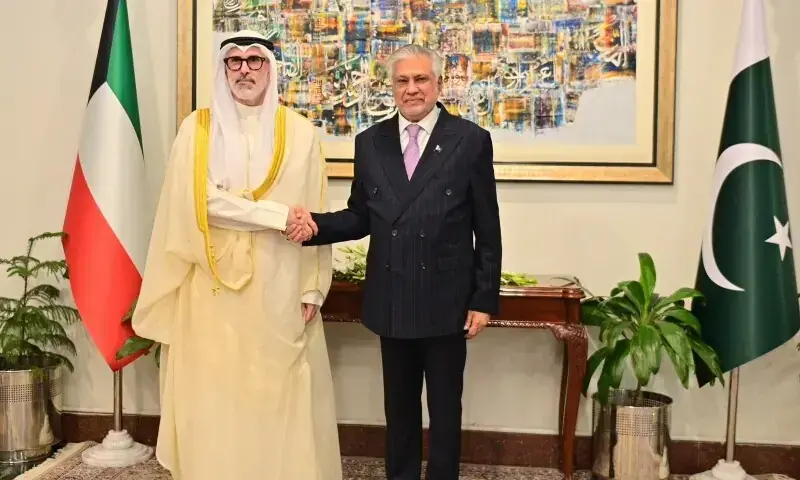
Pakistan's Foreign Office (FO) announced on Wednesday its welcome of Kuwait's recent ratification of a 2023 defense cooperation agreement. FO spokesperson Dr. Tahir Andrabi stated that this pact represents a significant milestone in the long-standing defense partnership between the two nations, which began in the early 1980s. The agreement underscores a shared commitment to enhance bilateral defense cooperation and elevate their security partnership. The pact establishes a comprehensive framework for broadening collaboration, including military training, joint exercises, and the exchange of expertise, aiming to strengthen institutional ties between their armed forces. Pakistan and Kuwait are committed to implementing the agreement to expand bilateral defense collaboration, reinforcing their enduring partnership built on trust and shared interests, and contributing to regional peace and stability. This development coincided with a meeting in Islamabad between Pakistan's Deputy Prime Minister and Foreign Minister Ishaq Dar and his Kuwaiti counterpart, Sheikh Jarrah Jaber Al-Ahmad Al-Sabah. DPM Dar highlighted the ratification as a crucial step in bilateral defense relations. The agreement was originally signed on June 11, 2023, by Ambassador Malik Muhammad Farooq for Pakistan and Brigadier General Fawaz Khudair Muhammad Al-Harbi for Kuwait. Reports suggest Pakistan has been seeking an expanded defense pact with Kuwait in exchange for energy cooperation and investment.
The ratification of the 2023 defense cooperation agreement between Pakistan and Kuwait signifies a formalization and potential expansion of their existing security relationship. This pact, rooted in decades of partnership, aims to institutionalize collaboration across various military domains, including training and joint exercises. From a strategic perspective, such agreements can enhance mutual capabilities and interoperability, potentially contributing to regional stability. However, the underlying economic dimensions, particularly Pakistan's reported pursuit of energy cooperation and investment, suggest that defense ties may also serve broader national economic interests. Examining this through a future-oriented lens, the increasing interconnectedness of security and economic objectives in international relations highlights the complex incentives driving such bilateral pacts. The long-term efficacy will depend on sustained political will, equitable resource allocation, and the evolving geopolitical landscape in South Asia and the Persian Gulf.
AI-generated to prompt reflection — not editorial opinion, not advice, not a statement of fact. How this works.