Pakistan Working to Re-engage US and Iran on Islamabad MoU
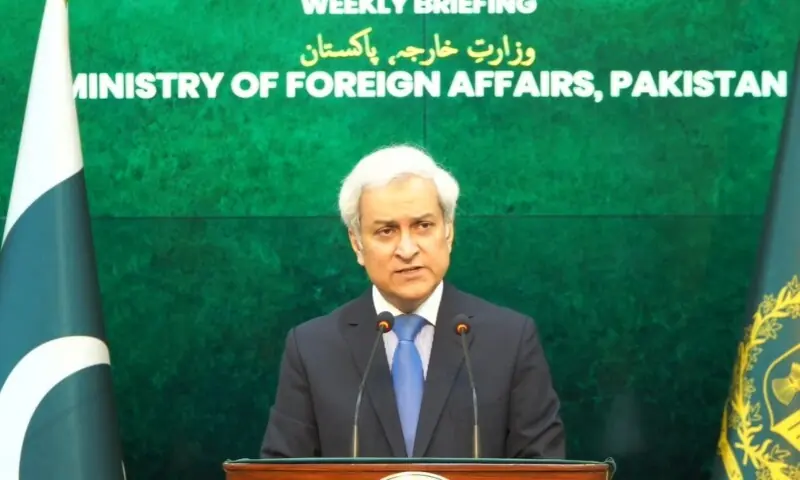
Pakistan's Foreign Office stated on Thursday that it is making significant efforts to bring the United States and Iran back to negotiations under a memorandum of understanding (MoU) signed in Islamabad last month. FO spokesperson Tahir Andrabi expressed concern over the volatile security situation in the Middle East, despite recent relative calm. He emphasized Pakistan's consistent support for dialogue and diplomacy as the sole effective means to resolve conflicts. Andrabi welcomed all initiatives aimed at maintaining a cessation of hostilities and restarting discussions between Iran and the U.S., affirming Pakistan's ongoing engagement in this process. He noted that negotiations are underway to normalize the situation, particularly concerning the Strait of Hormuz, and to de-escalate tensions. Pakistan is striving to facilitate the return of both parties to the Islamabad MoU to address all points of contention in accordance with the agreement's spirit and a joint statement with Qatar on June 22. Andrabi called for maximum restraint from both the U.S. and Iran, urging them to honor their commitment to resume technical-level talks as outlined in the MoU and the Pakistan-Qatar joint statement. The MoU, signed on June 18 following intensive diplomatic efforts, was intended to reopen the Strait of Hormuz and conclude the Middle East conflict, which reportedly began with U.S.-Israeli strikes on Iran in February, after an additional 60 days of negotiations.
Pakistan's diplomatic initiative highlights the persistent challenge of de-escalating regional tensions through multilateral agreements. The reliance on an MoU signed in June suggests a framework intended to manage specific conflict points, such as the Strait of Hormuz, and facilitate dialogue. The current situation, however, indicates that underlying geopolitical drivers and the efficacy of such agreements are subject to external pressures and the willingness of primary state actors to adhere to their commitments. The emphasis on "utmost" effort implies that Pakistan perceives its role as a facilitator, navigating complex bilateral relationships. The success of this initiative will likely depend on the broader strategic calculus of the U.S. and Iran, and whether the established framework offers sufficient incentives or security assurances to overcome immediate escalatory pressures and facilitate sustained technical-level engagement over the next decade.
AI-generated to prompt reflection — not editorial opinion, not advice, not a statement of fact. How this works.