Pakistani Crew of Hijacked Oil Tanker Endure Critical Conditions, Plea for Rescue
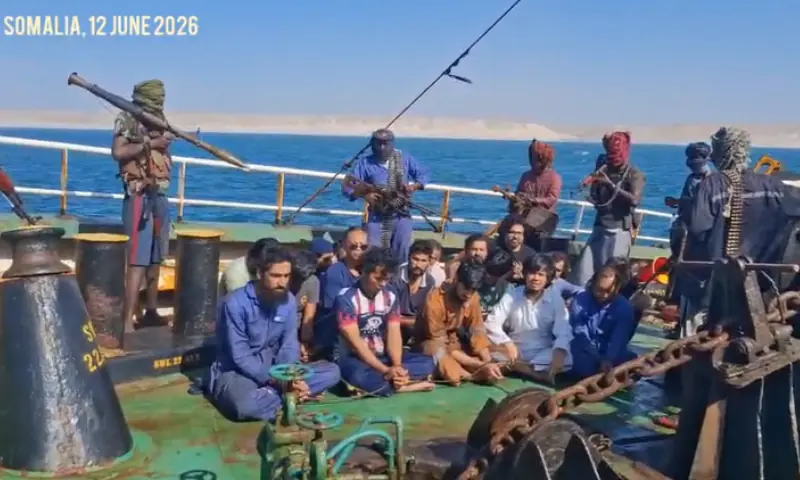
The crew of the oil tanker MT Honour 25, hijacked by Somali pirates on April 21, 2026, is facing dire circumstances three months into their captivity. Captain Ashari Samadikun reported critical conditions, with several crew members suffering from diabetes and infections, and the entire crew subsisting on plain rice and contaminated water. The vessel, flagged in Palau and carrying 17 to 19 crew members including 10 Pakistanis, seven Indonesians, an Indian, and a Sri Lankan, has seen no progress in negotiations for the estimated $3 million ransom. Crew members have released multiple video and audio appeals detailing their lack of clean water, food, and medicine, pleading for government intervention to compel their company to act. Pakistani crew member Oiler Yasir Khan specifically appealed to Pakistan's Prime Minister Shehbaz Sharif, Chief of Defence Forces Asim Munir, and President Asif Zardari for assistance. The hiring agency, Purser Shipping Consultancy (SMC Pvt Limited / Helmsman Shipping Company) in Karachi, and a potential middleman named 'Osman' are identified, but the official owners, Wharf Chartering Co of Dubai, are reportedly unwilling to negotiate with the pirates. Communication with families has ceased since mid-June, increasing their anxiety. Families are struggling financially and emotionally, with some relatives falling ill due to worry. While a humanitarian organization, the Ansar Burney Trust, is involved, official government responses have been limited to urging patience, with multiple ministries and the Pakistan Embassy in Djibouti reportedly engaged but yielding no concrete results.
The prolonged captivity of the MT Honour 25 crew highlights systemic failures in maritime security and corporate responsibility. The dispute over the ship's ownership and the alleged unwillingness of the official owners to negotiate with pirates, contrasted with the involvement of intermediaries and a middleman, creates a complex liability vacuum. This situation underscores the critical need for international maritime regulations that clearly define owner accountability, especially in high-risk piracy zones. The reliance on pleas to governments and humanitarian groups suggests a gap in established protocols for hostage negotiation and crew welfare during such incidents. Future frameworks should incentivize proactive risk management by shipping companies and establish clear channels for immediate intervention, preventing prolonged suffering and ensuring swift resolution when vessels are compromised.
AI-generated to prompt reflection — not editorial opinion, not advice, not a statement of fact. How this works.