Palestinian children fly kites in West Bank village to assert land claims
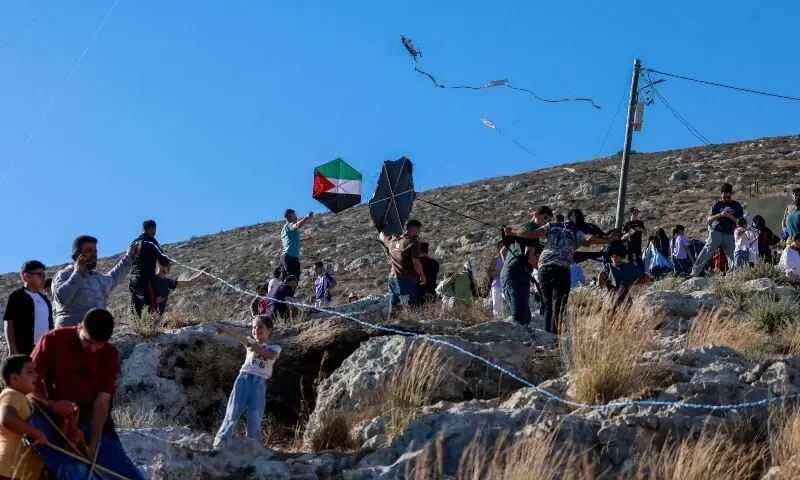
In the Palestinian village of Burin, located in the Israeli-occupied West Bank, children and activists gathered on July 10, 2026, to fly kites. This annual event, held since 2009, takes place on land that has been partially lost due to Israeli settlements. The festival aims to send a message to settlers from the nearby Har Bracha settlement, established in 1983 and considered illegal under international law. Ghassan Najjar, an organizer, stated that the kites symbolize their connection to the land and sky, especially as direct access to some areas is restricted. The event, which includes face painting and music, also serves as a political statement amidst ongoing concerns about settler attacks and settlement expansion. The United Nations Office for the Coordination of Humanitarian Affairs (OCHA) has previously documented settler violence in the area, including shootings and the destruction of olive trees. Despite the festive atmosphere, the event is shadowed by the conflict; residents reported checking for settler presence before gathering and recalled past attacks that led to the cancellation of the festival. Teenager Sanaa Bashar Najjar mentioned the fear associated with settler activity and the limited time families can spend outdoors. Dalia Zaban shared experiences of her parents' home being vandalized. Nevertheless, villagers express determination to continue the tradition, viewing it as a way to reinforce their presence and connection to their land, as articulated by resident Qusai Walid Eid.
This event highlights the use of symbolic cultural activities as a form of non-violent resistance and assertion of presence in contested territories. The kite festival, held annually since 2009 in Burin, serves as a peaceful demonstration against land appropriation and settlement expansion, framing the narrative around land rights and sky as a shared, yet symbolically claimed, space. The juxtaposition of children's play with the underlying political tension and historical context of displacement and conflict underscores the resilience of the community. From a systems perspective, such grassroots initiatives, while not altering immediate geopolitical realities, contribute to maintaining cultural identity and collective memory, potentially influencing future negotiations and international perceptions by documenting persistent community presence and aspirations. The long-term impact may lie in fostering intergenerational connection to the land and galvanizing international awareness of the ongoing situation.
AI-generated to prompt reflection — not editorial opinion, not advice, not a statement of fact. How this works.