Pan Am Plane Lost 74 Years Ago Found on Ocean Floor
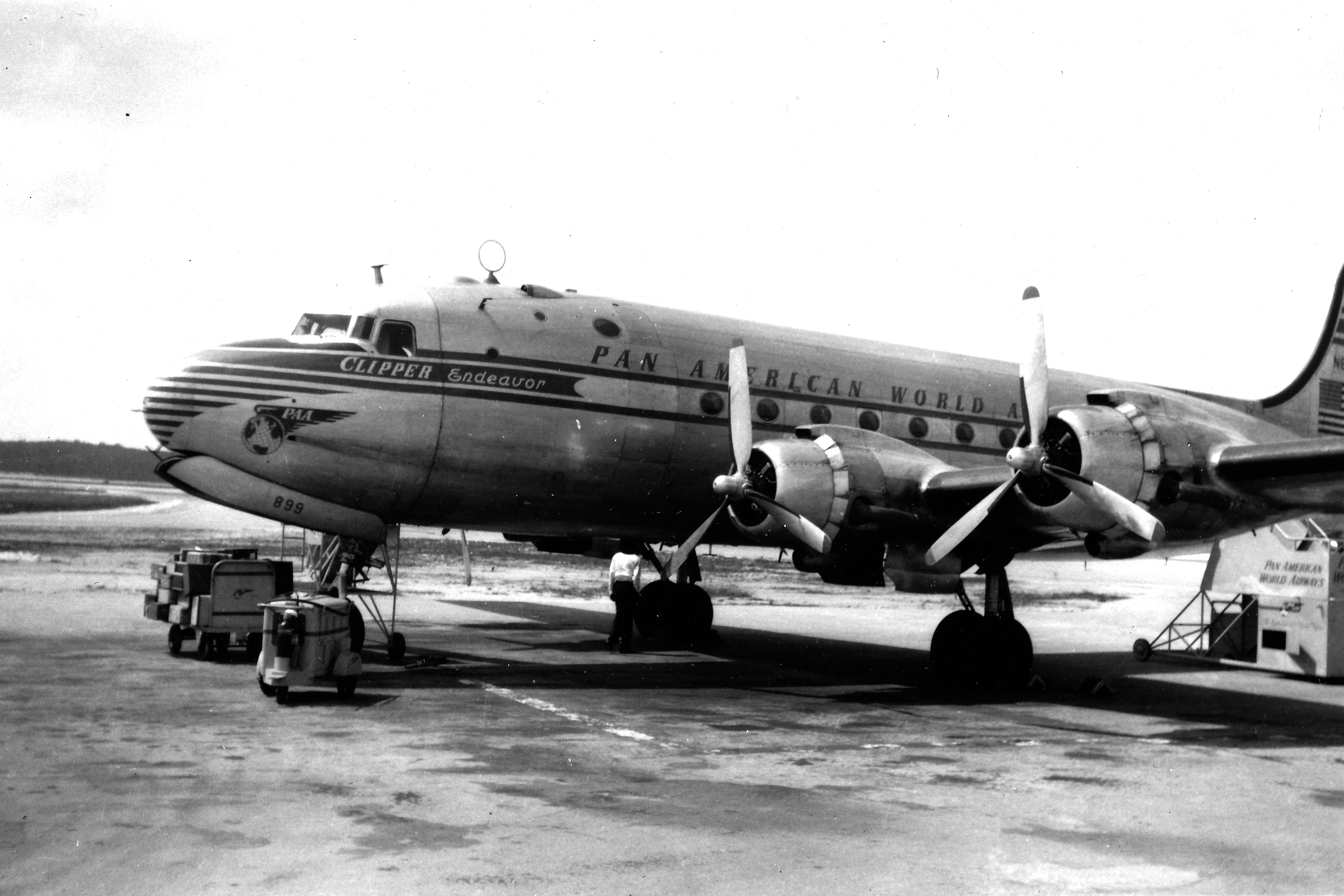
The wreckage of a Pan Am Douglas DC-4 airliner, named "Clipper Endeavor," which disappeared 74 years ago, has been discovered on the seabed. The aircraft vanished on April 11, 1952, shortly after taking off from Puerto Rico, resulting in the deaths of all 69 people on board. The discovery was announced on Tuesday, May 21st, by explorers who located the fuselage and tail at a depth of approximately 2,000 feet (610 meters) using a high-resolution sonar-equipped autonomous underwater drone. The search for the "Clipper Endeavor" was significantly delayed, with efforts only resuming in 2019 after a passenger's luggage tag washed ashore in Florida. This find was made possible by the advancements in technology, including sophisticated sonar and AI-driven mathematical models, which contrast sharply with the rudimentary tools available in the 1950s. Researchers believe the plane broke into two pieces upon impact, complicating its location. The key to finding the wreckage lay in historical records, including a map from an accident hearing in Puerto Rico, compiled from eyewitness accounts of Air Force pilots. An initial search attempt in April 2024 was unsuccessful due to bad weather, but a subsequent expedition this year, in collaboration with underwater exploration specialists Deep Sea Vision, led to the breakthrough. The 1952 crash was a pivotal moment for commercial aviation safety, prompting significant improvements in flotation devices and pre-flight passenger briefings. Aviation safety expert John Cox noted that this incident served as a catalyst for advancements that contribute to the high safety standards enjoyed today. The discovery also offers a glimmer of hope for families seeking closure in other maritime aviation mysteries, such as the disappearance of Malaysia Airlines Flight MH370 in 2014.
The recovery of the "Clipper Endeavor" after 74 years highlights the persistent challenges in locating submerged aircraft and the transformative impact of technological progress on historical investigations. The long delay underscores how limited historical search capabilities were, relying on basic navigation and environmental data. Modern advancements, including AI-driven predictive modeling and high-resolution sonar, have democratized deep-sea exploration, enabling the resolution of long-standing mysteries. This event also serves as a powerful case study in aviation safety evolution; the tragedy directly spurred critical safety protocols that are now standard, demonstrating how systemic failures, when addressed, can lead to significant public benefit. The discovery may also encourage renewed efforts in locating other lost aircraft, potentially offering closure and valuable data for future aviation safety.
AI-generated to prompt reflection — not editorial opinion, not advice, not a statement of fact. How this works.