Panic and Relief as Train Fire Erupts on São Paulo's Line 12-Safira
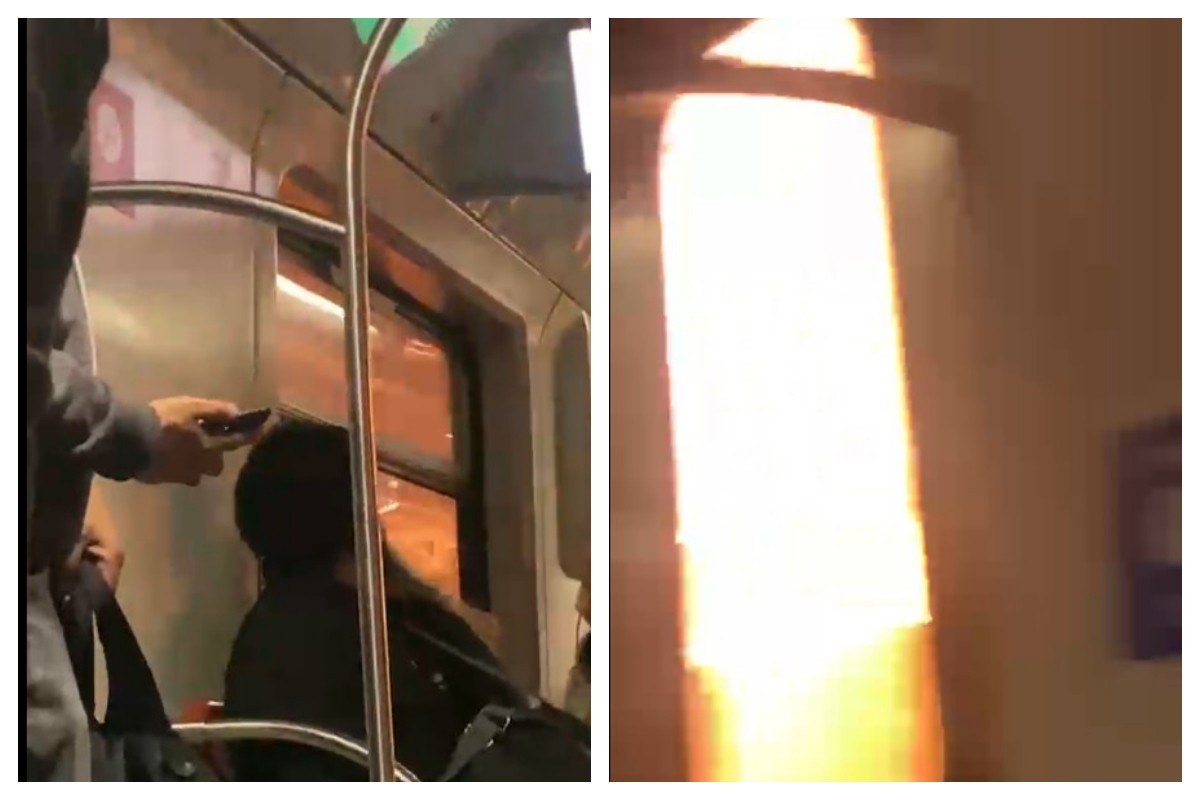
A passenger captured harrowing footage of panic, screams, and crying inside a burning train on São Paulo's Line 12-Safira on Thursday morning, November 23rd. The incident began around 5:25 AM when an explosion, believed to be caused by a short circuit, ignited a fire outside the locomotive. The ensuing blaze led to the shutdown of power substations, disabling the train's emergency door release buttons. Passengers were trapped inside the smoke-filled carriage as they struggled to find an escape route. The video shows the immense relief and lingering fear as the doors were finally opened manually, allowing passengers to exit the compromised train. The fire left one carriage severely charred, both inside and out, though fortunately, no injuries were reported. The disruption occurred between the Brás and Tatuapé stations, near the Bresser-Mooca station of the Metro's Red Line. Military police were deployed to assist passengers, including the elderly and those with reduced mobility, in evacuating the train lines. This event marks the third consecutive day of operational issues for Trivia Trens, which officially took over operations on Tuesday, November 21st. Service began to normalize around 10:24 AM, with all affected lines, including 11-Coral, 12-Safira, 13-Jade, and the Airport Express, fully restored by 3:34 PM.
This incident highlights critical vulnerabilities in public transit infrastructure, particularly concerning emergency response systems. The failure of electric emergency door releases due to power substation shutdowns, a direct consequence of the initial electrical fault, underscores the need for robust, redundant safety mechanisms. The reliance on manual overrides in such high-stress situations introduces significant delays and risks. This event, occurring within days of Trivia Trens assuming operations, raises questions about the diligence of pre-handover safety assessments and the resilience of systems designed to manage cascading failures. Future transit system planning must prioritize fail-safe designs that ensure passenger safety irrespective of primary power grid stability, especially as urban populations and reliance on mass transit continue to grow.
AI-generated to prompt reflection — not editorial opinion, not advice, not a statement of fact. How this works.