Panpsychism: Consciousness as a Fundamental Property of the Universe
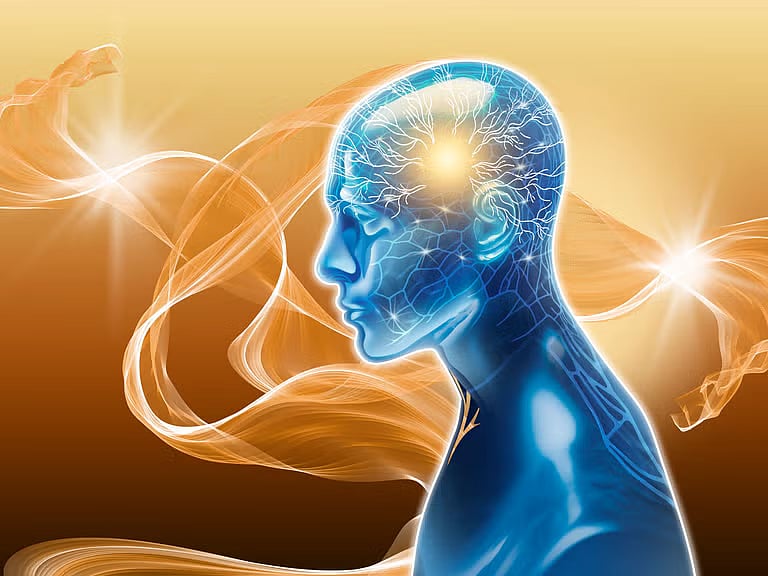
A growing challenge to the traditional scientific view of a fundamentally inanimate universe is emerging from panpsychism, an ancient philosophical concept now gaining traction in modern science, particularly quantum physics. Panpsychism posits that consciousness is not a late evolutionary development but a fundamental property inherent in matter from the universe's inception. This contrasts with the long-held belief that consciousness arose accidentally from complex chemical reactions in non-living matter over billions of years.
Neuroscience can readily explain the "easy problem" of consciousness, such as how the brain processes visual information from a red rose into electrical signals. However, the "hard problem," coined by philosopher David Chalmers, remains: why does the physical process of electrical signals in the brain give rise to subjective experiences, like the feeling of seeing the color red or experiencing pain? Panpsychism offers a solution by suggesting that consciousness, in a rudimentary form, exists at the most basic level of reality. Every fundamental particle, like an electron or quark, possesses a form of "proto-consciousness"—a basic responsiveness to its environment, rather than complex thought.
This theory is supported by observations in quantum mechanics, such as the measurement problem, where particles behave differently when observed. Panpsychism suggests that this interaction implies a fundamental sensitivity in particles. The theory proposes three levels of consciousness integration: atomic, biological, and quantum coherence. In the atomic level, individual particles have proto-consciousness but lack unified experience. Biological evolution led to complex nervous systems, like the human brain, where neurons communicate rapidly, forming organized networks. Finally, theories like the one by Sir Roger Penrose and Stuart Hameroff suggest that within the brain's microtubules, proto-consciousnesses of billions of atoms become quantumly entangled, unifying into a single, complex human consciousness. Dual aspect monism further simplifies this by viewing matter and consciousness as two sides of the same coin, suggesting the universe is inherently conscious, not dead.
The concept of panpsychism challenges the reductionist view of consciousness solely as an emergent property of complex biological systems. By proposing that consciousness is a fundamental, albeit rudimentary, aspect of all matter, it offers a potential framework for addressing the "hard problem" of subjective experience. This perspective shifts the scientific inquiry from a search for consciousness's origin to an investigation of how simpler forms of consciousness integrate into more complex ones. Future research may explore the quantum mechanical underpinnings and biological mechanisms that facilitate this integration, potentially leading to new understandings of mind-body interactions and the nature of reality itself. The implications extend to artificial intelligence, suggesting that true artificial consciousness might require more than computational power, possibly necessitating the integration of fundamental conscious properties.
AI-generated to prompt reflection — not editorial opinion, not advice, not a statement of fact. How this works.