Pantanal Wildfire Spans Brazil-Bolivia Border Amid Strong Winds
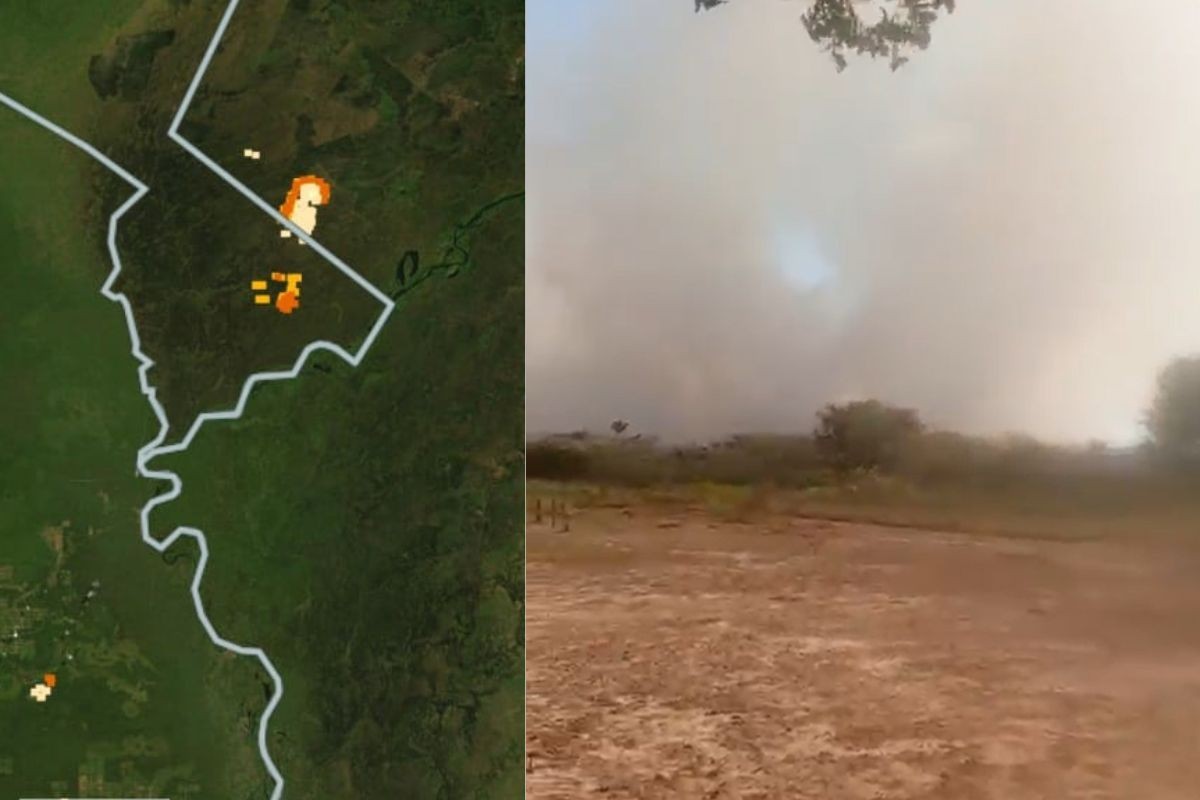
A wildfire that originated in the Pantanal region of Mato Grosso do Sul, Brazil, on Thursday, June 16th, has crossed the border into Bolivia due to strong winds. The fire's initial focus was approximately 5.8 kilometers from the border, near Forte Coimbra in Corumbá. Satellite imagery confirms the flames have reached the Otuquis Integrated Management Area in Bolivia. According to the Otuquis National Park, fire outbreaks are present along the border line. Bolivian authorities, including the Bolivian Navy and the National Service of Protected Areas (Sernap), are monitoring the situation and the fire's progression. The strong winds, with gusts ranging from 40 to 70 kilometers per hour in the Pantanal and surrounding areas, are significantly contributing to the fire's spread. Currently, there are no reports of teams actively fighting the fire within Mato Grosso do Sul. The Instituto Homem Pantaneiro (IHP) indicates that satellite monitoring shows no active fires in the Brazilian Pantanal. A potential improvement in the situation is expected from Sunday, June 19th, when winds are forecast to decrease in intensity.
This event highlights the transboundary challenges of environmental management, particularly in large, interconnected ecosystems like the Pantanal. The strong winds, a natural phenomenon, acted as a catalyst for the fire's rapid spread across national borders, underscoring the need for coordinated international response mechanisms. While satellite data from the Instituto Homem Pantaneiro suggests no current fires in the Brazilian Pantanal, the origin point near the border indicates a potential for cross-border impacts. The reliance on wind patterns for predicting fire behavior and the subsequent need for international cooperation in monitoring and suppression efforts are critical considerations. Looking ahead, increasing frequency and intensity of such events, potentially linked to climate change and land use practices, may necessitate more robust bilateral agreements and shared resource allocation for wildfire management across the region.
AI-generated to prompt reflection — not editorial opinion, not advice, not a statement of fact. How this works.