Pantanal Wildfire Spreads to Bolivia, Threatening Protected Area Amid Strong Winds
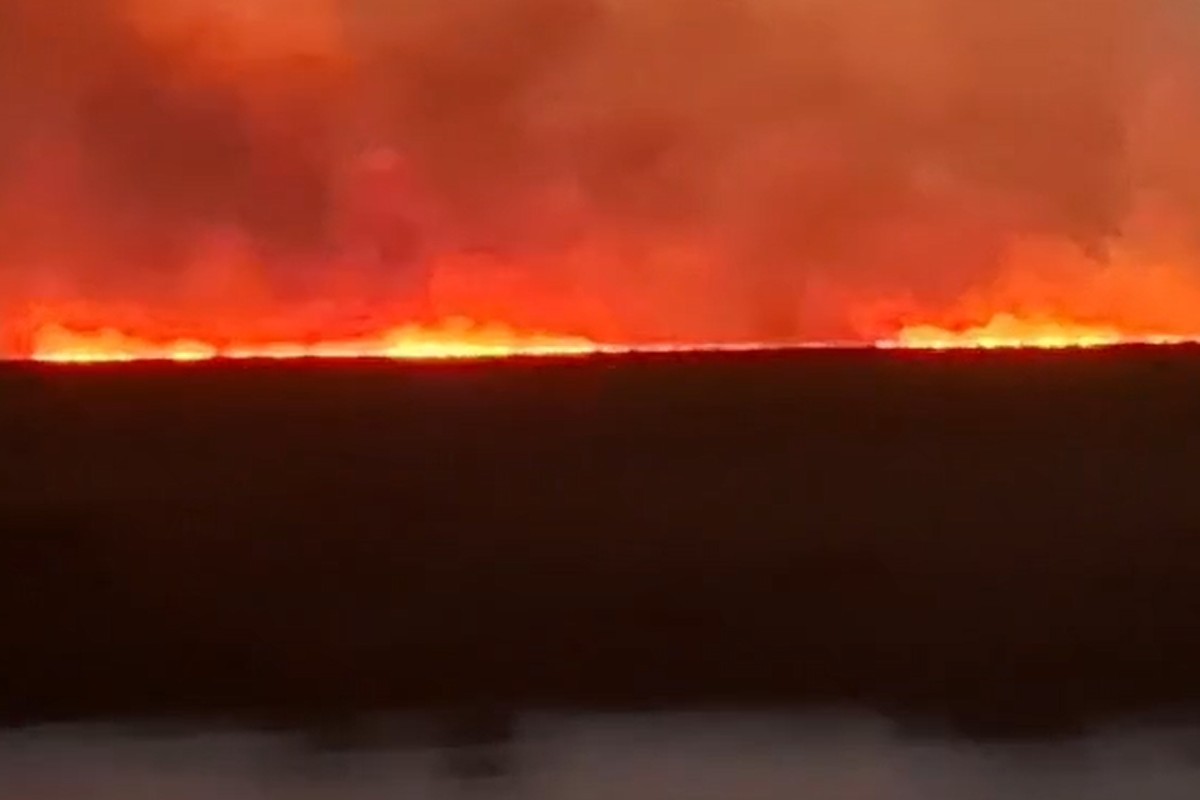
A wildfire that began near Forte Coimbra in the Brazilian Pantanal on Thursday, June 16th, has crossed into Bolivia and is now threatening a protected area at the tri-border region with Brazil and Paraguay. The fires remain active in Bolivia as of Saturday, June 18th. Images from Friday night show an extensive fire line, and the blaze continued on the Bolivian side Saturday morning. While no active fires are currently reported on Brazilian territory, strong winds exceeding 40 km/h pose a significant risk of the flames re-entering Brazil. The fire is believed to have started approximately six kilometers from the Bolivian border and may have reached the Otuquis National Park and Integrated Management Natural Area, a key protected zone in the Bolivian Pantanal. A preliminary report from Bolivia's National Service of Protected Areas confirms active fire outbreaks within this conservation unit, affecting pastures and typical Pantanal vegetation in the municipality of Puerto Suárez, near the Triângulo Foianini community, posing a risk to wildlife. Access to the fire's origin is difficult, with park rangers and the Bolivian Navy monitoring the border situation. Brigadistas are rotating to combat the flames on the Bolivian side. Experts anticipate a potential improvement from Sunday onwards due to a predicted decrease in wind intensity. The region's vegetation still holds relatively high moisture levels, which could hinder rapid fire propagation. However, the Mato Grosso do Sul Fire Department notes that unfavorable weather conditions are expected to continue, facilitating the fire's spread.
This wildfire incident highlights the interconnectedness of ecosystems across national borders and the challenges of cross-border environmental management. The strong winds, a critical factor in the fire's rapid spread, underscore the impact of meteorological conditions on ecological disasters. While efforts are underway by both Brazilian and Bolivian authorities, the difficulty in accessing the fire's origin and the ongoing unfavorable weather conditions present significant hurdles. The situation demands robust international cooperation and resource sharing for effective containment and long-term prevention strategies. Looking ahead, the increasing frequency and intensity of such events, potentially exacerbated by climate change, necessitate a re-evaluation of land management practices and early warning systems within the Pantanal biome to mitigate future risks to biodiversity and human settlements.
AI-generated to prompt reflection — not editorial opinion, not advice, not a statement of fact. How this works.