Pará Municipality Launches Local Currency to Boost Economy
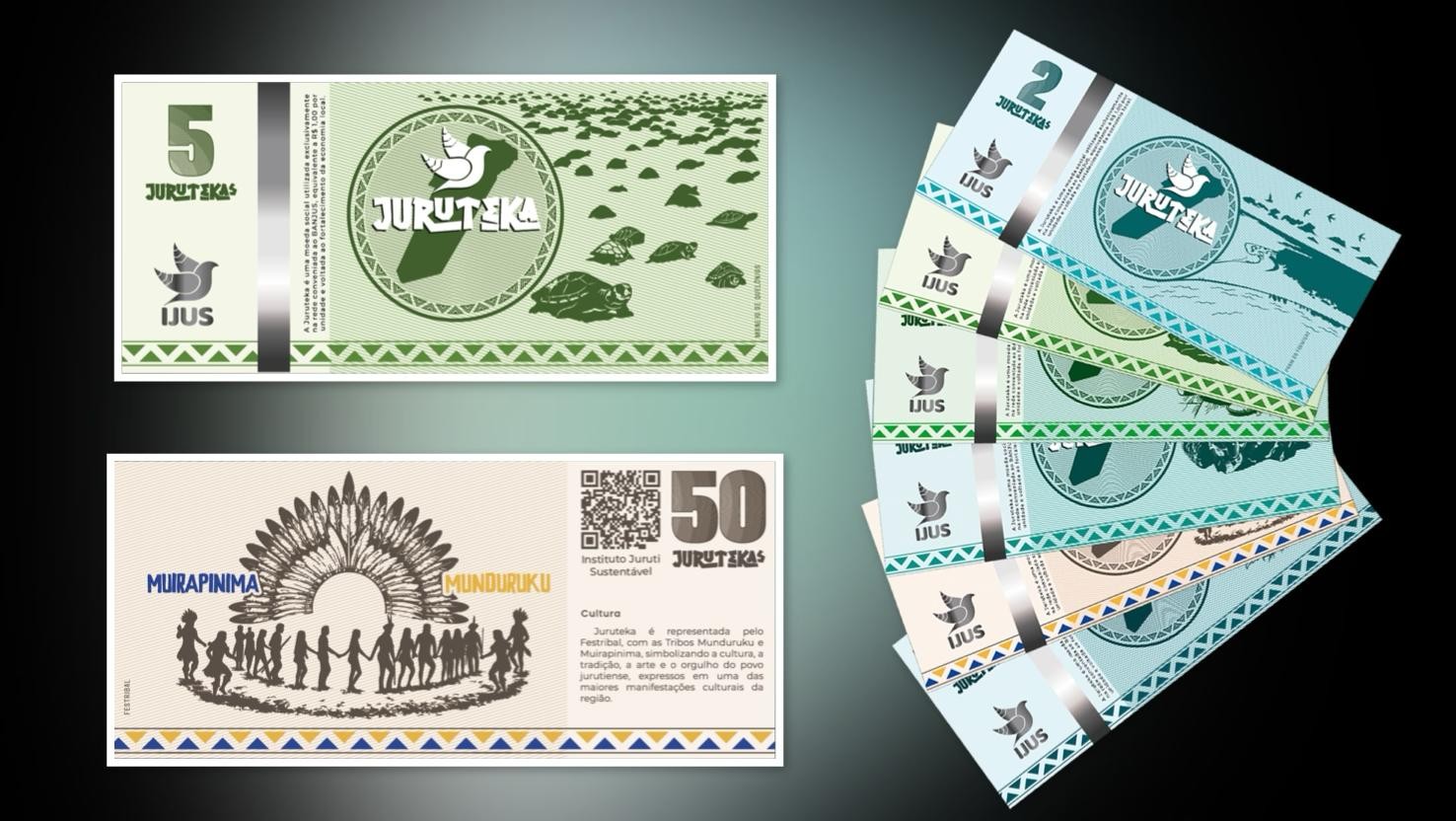
The Juruti Sustentável Institute (IJUS), through its Juruti Sustentável Bank (BANJUS), has launched the Juruteka, a social currency in Juruti, western Pará, Brazil. This initiative aims to strengthen the local economy and encourage resource circulation among businesses and entrepreneurs within the municipality. The Juruteka holds the same value as the Brazilian Real but can only be used at establishments accredited by BANJUS. The launch occurred during the Amazonian Meeting of the Brazilian Network of Community Banks, positioning Juruti among national cities employing social currencies for economic development. The Juruteka is designed to complement the Real, with banknotes issued in denominations of J$2, J$5, J$10, J$20, J$50, and J$100. Each unit is equivalent to one Real and is valid at a network of accredited shops, pharmacies, service providers, and other businesses. IJUS President Gustavo Hamoy stated that the Juruteka represents a step towards a stronger, territory-connected economy, fostering a sense of belonging, trust, and local circulation. The currency's design incorporates elements of Juruti's culture and nature, including local symbols and landmarks. Initially, the Juruteka will be tested with women entrepreneurs participating in IJUS's Dona's project before wider circulation. The expectation is that this social currency will bolster small businesses, stimulate local consumption, and retain wealth within the municipality, benefiting entrepreneurs, consumers, and communities.
The introduction of the Juruteka social currency in Juruti, Pará, represents a localized economic strategy aimed at fostering internal circulation and supporting small businesses. By pegging its value to the Brazilian Real and restricting its use to accredited local vendors, the initiative seeks to create a multiplier effect within the municipality, potentially enhancing resilience against external economic shocks. This approach aligns with broader trends of community-based economic development, where local resource control is prioritized. However, the long-term sustainability and scalability of such currencies depend on consistent adoption, effective governance by BANJUS, and the ability to integrate with the formal economy without creating significant friction. The currency's design, incorporating local cultural elements, also serves to build community identity and engagement, which can be a powerful driver for economic participation beyond mere transactional value.
AI-generated to prompt reflection — not editorial opinion, not advice, not a statement of fact. How this works.