Pará Public Prosecutor's Office Proposes Unified BRT System for Belém Metropolitan Area
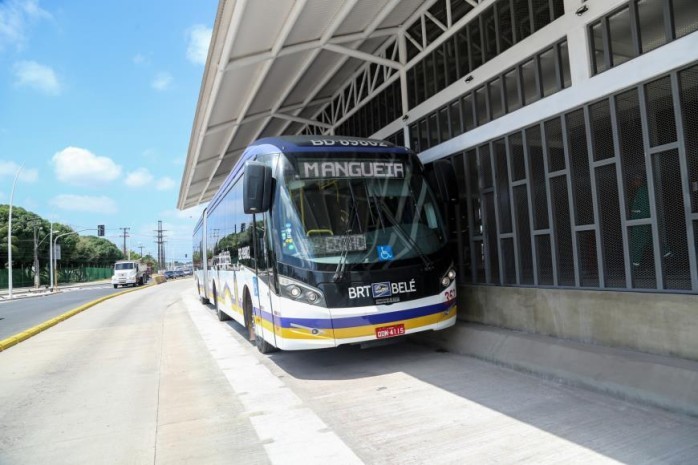
The Public Prosecutor's Office of Pará (MPPA) has proposed a Conduct Adjustment Agreement (TAC) to the Municipality of Belém and the State Government to integrate the Belém BRT and Metropolitan BRT systems. The proposal, put forth by prosecutor Marco Aurélio Nascimento, aims to streamline public transportation in the capital region. Under the TAC, the state government, through the Metropolitan Transport Management Unit (NGTM), would assume responsibility for the implementation and management of the Belém BRT system, thereby unifying the administration of both transit networks. This initiative stems from years of monitoring and technical inspections by the MPPA, supported by the Interdisciplinary Technical Support Group (GATI).
Inspections revealed significant operational disparities and a lack of full integration between the municipal and metropolitan BRT systems. A GATI technical report highlighted that separate administrative structures hinder transport efficiency, potentially leading to duplicated costs, planning challenges, inter-line conflicts, and negative impacts on users, particularly regarding fare integration. Structural issues were also noted at some Belém BRT stations, alongside underutilization of the Mangueirão Terminal and incomplete integration with the metropolitan system. In contrast, the Metropolitan BRT demonstrated regular operation, higher passenger volume, and better infrastructure conditions. The municipal and state authorities will now review the TAC's terms and indicate their agreement for formalization, while the MPPA continues to monitor the discussions.
The Public Prosecutor's Office of Pará's proposal to unify the Belém and Metropolitan BRT systems addresses systemic inefficiencies arising from fragmented governance. The identified issues of duplicated costs, planning conflicts, and user-facing integration problems are common in multi-jurisdictional public transport projects. By recommending a single administrative body, the MPPA seeks to improve operational synergy and cost-effectiveness. This move could set a precedent for optimizing public services through centralized management, potentially enhancing user experience and resource allocation in the long term. The success of this integration will hinge on the willingness of both the municipality and state government to cede control and collaborate effectively under the proposed unified structure, a critical factor for future urban mobility planning in the region.
AI-generated to prompt reflection — not editorial opinion, not advice, not a statement of fact. How this works.