Paraíba Prosecutors and Military Police Partner to Combat Recidivism in Violence Against Women Cases
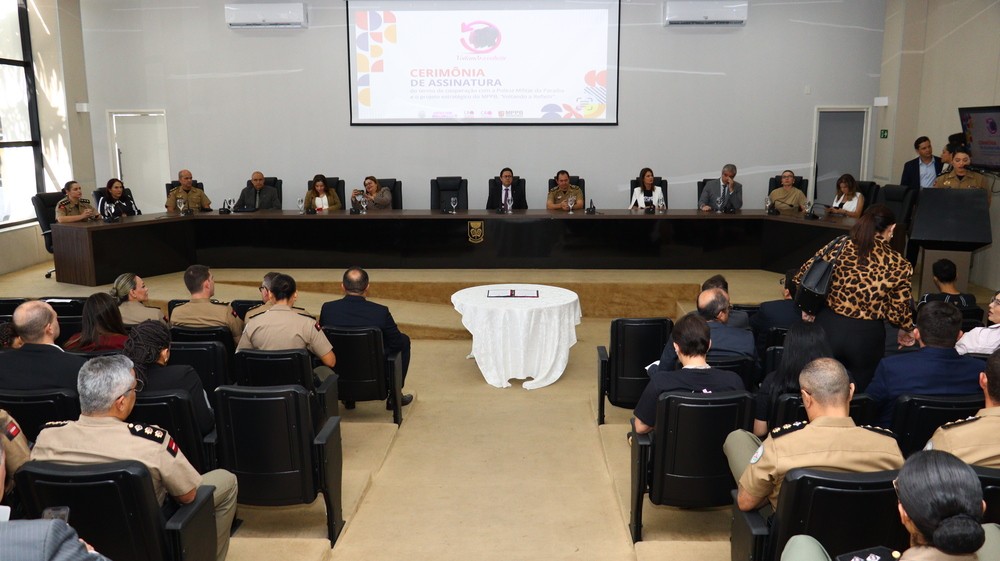
The Public Prosecutor's Office of Paraíba (MPPB) and the state's Military Police have signed an agreement to reduce the recurrence of violence against women. This collaboration establishes the "Voltando a Refletir: Grupos Socioeducativos para Autores de Violência" (Returning to Reflect: Socio-Educational Groups for Perpetrators of Violence) program, officially announced on Monday, May 13th. The initiative aims to implement and run socio-educational groups for individuals who have committed domestic and family violence against women, with the explicit goal of lowering recidivism rates.
The agreement was formalized by the Prosecutor-General of Justice, Leonardo Quintans Coutinho, and the Commander-General of the Military Police, Colonel José Ronildo Souza da Silva, during a ceremony in João Pessoa. Prosecutor-General Quintans emphasized the symbolic importance of the Military Police's involvement, highlighting their commitment to addressing violence against women beyond mere repression. The MPPB will provide the program's methodology, including thematic meeting guides, training for facilitators, and participant monitoring in coordination with the Military Police Command and the Military Inspectorate. The Military Police will contribute by assigning psychologists and social workers to lead the groups, providing dedicated spaces for the approximately two-month-long cycles of eight meetings, and granting the MPPB access to administrative procedures related to violence against women cases within the Military Inspectorate.
This initiative represents a multi-agency approach to address the persistent issue of domestic violence recidivism, moving beyond solely punitive measures. By integrating socio-educational components for perpetrators, the program seeks to address underlying behavioral patterns, a strategy that can be more effective in long-term prevention than enforcement alone. The collaboration leverages the distinct strengths of the Public Prosecutor's Office (methodology, monitoring) and the Military Police (personnel, access to cases), creating a more comprehensive intervention framework. Future evaluations will be crucial to determine the program's efficacy in reducing repeat offenses and to assess its scalability and adaptability to different contexts within the justice system.
AI-generated to prompt reflection — not editorial opinion, not advice, not a statement of fact. How this works.