Paralyzed by tragedy, Rubina fights for a future 8 years after losing legs
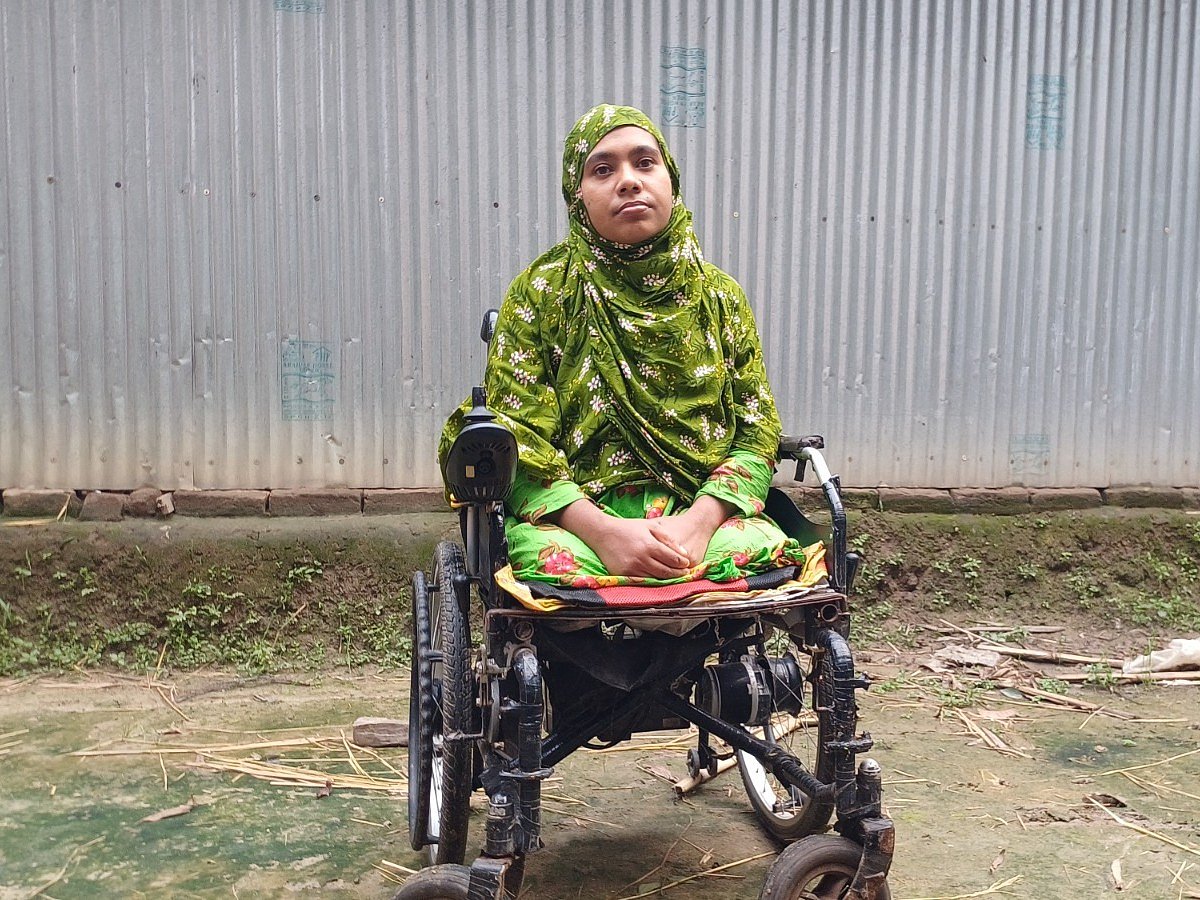
Rubina Khatun, a graduate of Jagannath University, lost both her legs eight years ago in a train accident. The incident occurred on January 28, 2018, when she fell onto the railway tracks while crossing platforms at Kamalapur Railway Station in Dhaka. She was immediately run over by a train engine. Despite extensive medical treatment and support from various organizations, Rubina has been unable to secure employment. She continues to take job exams but has not yet been successful, facing an uncertain future. Rubina had completed her final undergraduate exams from her hospital bed and passed, but could not pursue postgraduate studies due to the accident. Her family, including her mother, two sisters, and a brother, has faced financial hardship since the death of her day laborer father. Rubina herself was a bright student, achieving GPA-5 in both her SSC and HSC exams, and supported her education through scholarships, tutoring, and her mother's small-scale farming. After returning home, she established a small cow farm with financial aid, which offered a glimmer of hope for normalcy. However, this dream was short-lived. She married Jahangir Alam from Dinajpur in March 2022, who allegedly took approximately 11 lakh Taka from the sale of their farm animals before mistreating her. Rubina was brought back by her family and local representatives in June 2024 due to alleged abuse and subsequently divorced her husband. Shortly after, her mother, who had been battling cancer, passed away in September 2024. Now, Rubina, her mentally disabled elder sister, and her younger brother live in their father's inherited small homestead, relying on cultivation of his 53 decimal land. Rubina, unable to move independently, is cared for by her younger brother, Rubel Hoque, who has also completed his postgraduate studies and is seeking employment. He feels the burden of responsibility for his two sisters, especially with his elder sister's disability and Rubina's condition. Rubina continues to apply for jobs, but her age limit for employment is nearing its end. Her primary hope is a job, which she believes could be the key for her family to rebuild their lives.
This narrative highlights the profound systemic challenges faced by individuals with disabilities in Bangladesh, particularly in securing sustainable livelihoods. Rubina's journey underscores the gap between receiving aid and achieving genuine economic independence. The story also touches upon the vulnerability of individuals in precarious personal circumstances, as seen in her marriage and subsequent divorce. The narrative implicitly questions the long-term efficacy of support systems that do not translate into stable employment opportunities, especially as age limits for jobs approach. The situation of Rubina and her brother points to the need for more robust social safety nets and employment programs tailored to the unique challenges faced by persons with disabilities and their caregivers, considering the demographic shifts and economic pressures within the country.
AI-generated to prompt reflection — not editorial opinion, not advice, not a statement of fact. How this works.
