Paraná CTG Reaches Juvenart Festival Final for First Time, Showcasing "Mirror Dance"
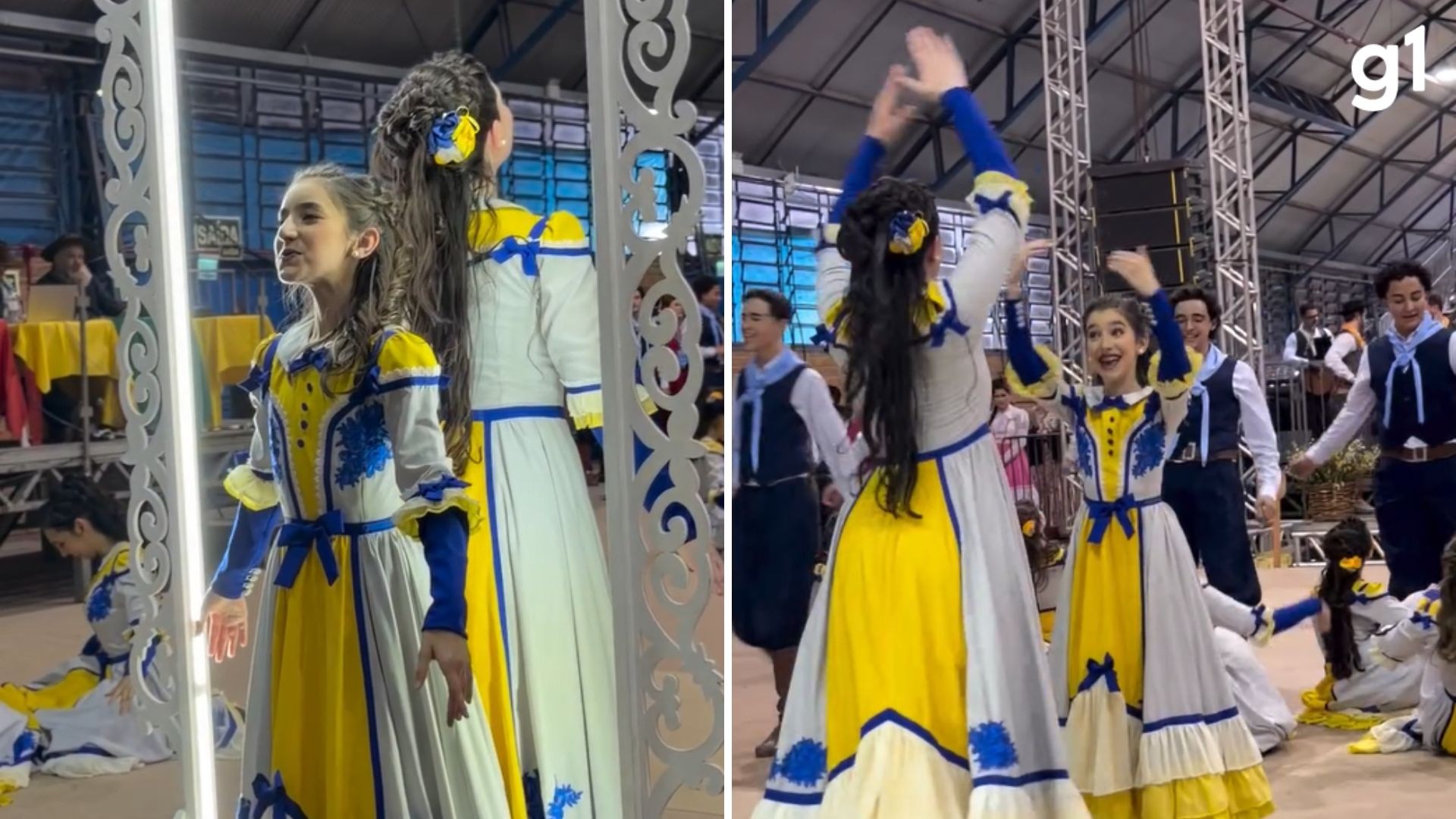
The Juvenart Festival in Santa Maria, Rio Grande do Sul, has made history by featuring a traditionalist center (CTG) from outside the state in its grand final for the first time. The CTG Querência Santa Mônica from Colombo, Paraná, captivated the audience with their performance titled "Espelho da Alma" (Mirror of the Soul). This marks a significant milestone for the festival, which typically sees participation primarily from Rio Grande do Sul entities. The competition involves over 6,000 participants aged up to 18 years.
The choreography "Espelho da Alma" tells the story of a young woman who rediscovers her inner child through her reflection. This encounter triggers childhood memories, highlighting dance as a constant link to her past and a path to self-discovery, identity, and belonging. A particularly moving moment occurs when two young dancers, Heloísa da Silva Gaboardi, 15, and Rafaela Silva Gricolo, 12, perform with a frame creating an illusion of a mirror, their synchronized movements suggesting a reflection. The piece, created ten years ago by adult members of the CTG, resonates universally with themes of childhood, dreams, passion for dance, and art's transformative power.
Bruno Dias Lemos, one of the choreographers and instructors, stated that the performance aims to connect with the audience on an emotional level, prompting reflection on what truly matters and the personal significance of dance and art. He described the music as an anthem for the CTG Querência Santa Mônica, embodying the dancers' spirit and the entity's essence. Founded in 1989, the CTG Querência Santa Mônica is a prominent traditionalist organization in Paraná, with around 200 members, including about 120 competitive dancers, and has secured 33 state and 19 national titles.
The inclusion of CTG Querência Santa Mônica from Paraná in the Juvenart Festival final represents a notable expansion of the event's regional reach, challenging the traditional geographic concentration of participants. This development could signal evolving cultural exchange dynamics within traditionalist movements across Brazil. The choreography's theme of self-reflection and identity resonates with universal human experiences, amplified by the innovative staging. From a systemic perspective, such cross-state participation fosters greater competition, potentially leading to higher artistic standards and broader recognition for participating cultural groups. The success of an entity from outside Rio Grande do Sul may encourage other regional groups to engage more actively in national festivals, fostering a more diverse and competitive cultural landscape in the coming decade.
AI-generated to prompt reflection — not editorial opinion, not advice, not a statement of fact. How this works.