Paraná Faces Severe Storms: 131 Cities Under Alert for High Winds and Hail
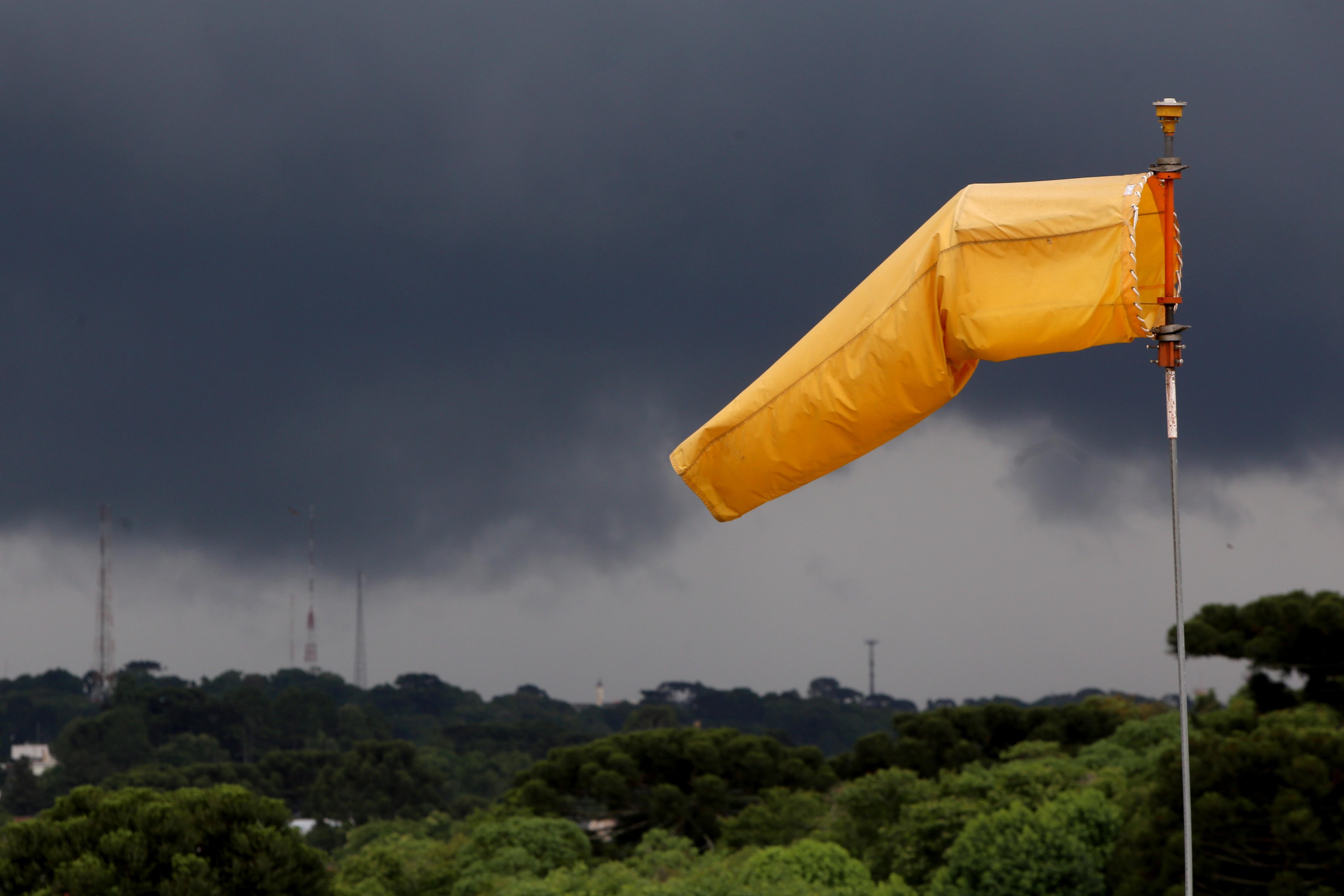
The state of Paraná, Brazil, is under a severe storm alert issued by the National Institute of Meteorology (Inmet) for Wednesday, July 29th. The warning forecasts localized storms with heavy rain, potentially reaching 60 mm/h or 100 mm/day, and strong wind gusts ranging from 60 km/h to 100 km/h. Inmet's alert specifically covers 131 municipalities located in the southern part of the state. The System of Technology and Environmental Monitoring of the state (Simepar) and the Civil Defense also issued a joint warning for storms on the same day, though they indicated higher risks for the western and southwestern regions of Paraná. These storms are expected to bring intense downpours, strong winds, lightning, and hail, posing risks of falling branches and trees, flooding, roof damage, crop destruction, and power outages. Simepar attributes the unstable weather to a cold front and an intensifying low-pressure system off the southern Brazilian coast. While rain began in the interior early Wednesday, it was expected to reach the eastern and northern parts of the state by morning. The system is predicted to move quickly, leading to strong wind gusts exceeding 50 km/h and limiting temperature fluctuations, with highs below 25°C. By Thursday, July 30th, atmospheric instability is forecast to decrease, with lingering cloudiness and occasional rain mainly in the west. Friday, July 31st, will see more clouds in the central-south, southeast, Campos Gerais, and eastern regions, with minimum temperatures around 10°C at dawn, while sunny inland areas could reach highs near 28°C.
The issuance of severe weather alerts by Inmet, Simepar, and Civil Defense highlights the critical role of meteorological agencies in public safety, particularly in regions prone to extreme weather events. The differing geographical focus of the alerts (southern vs. western/southwestern Paraná) underscores the complexity of localized weather forecasting and the importance of integrating data from multiple sources for comprehensive risk assessment. This event serves as a reminder of the increasing frequency and intensity of extreme weather phenomena, potentially linked to broader climate shifts. Preparedness and effective communication of these risks are paramount for mitigating damage to infrastructure, agriculture, and ensuring citizen safety. Future efforts may focus on enhancing predictive models for rapid onset storms and improving early warning dissemination systems to reach vulnerable populations more effectively.
AI-generated to prompt reflection — not editorial opinion, not advice, not a statement of fact. How this works.