Paraná Father Arrested for Kicking 3-Year-Old Daughter; Child Unharmed
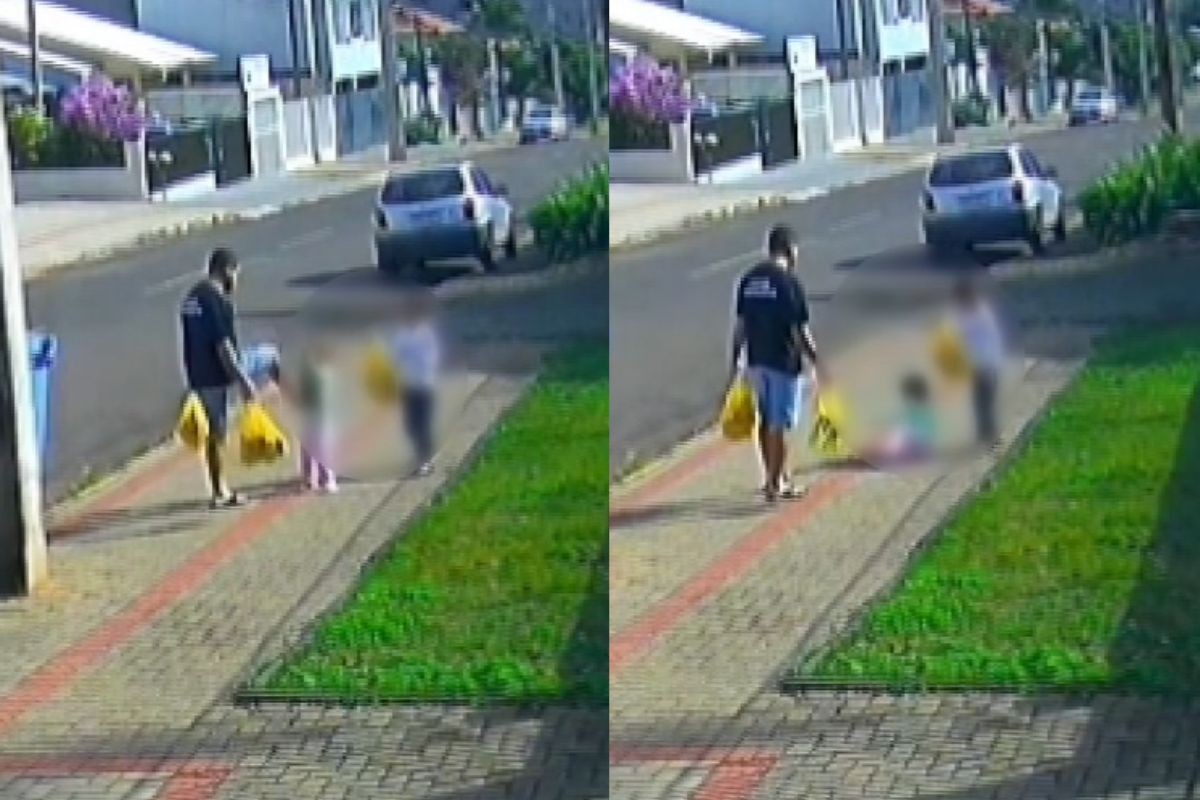
A three-year-old girl in Francisco Beltrão, Paraná, who was kicked by her father on Sunday, May 5th, is reportedly unharmed, according to Civil Police delegate Ricardo Moraes. The incident, captured on security camera footage, shows the father kicking his daughter while walking with her and her five-year-old stepbrother. The child fell but managed to get up, and the group continued walking. A passerby, identified as businessman José Fernandes, attempted to intervene but was reportedly threatened by the father. The girl's mother discovered the assault after seeing the video on social media and filed a police report on Tuesday, May 7th, initiating an investigation. The father, who was not initially arrested as it was not a flagrant offense, turned himself in on Wednesday, May 8th, claiming he kicked his daughter because she was crying. He expressed remorse during his statement. However, on Thursday, May 9th, a preventive arrest warrant was issued and executed. This decision was based on evidence suggesting a history of aggression not only towards the daughter but also towards the five-year-old stepson, who reportedly had marks on his face consistent with being hit with a belt or wooden object. The investigation is ongoing, with a 10-day deadline for completion, and protective measures have been requested for the children and their mother. The father will face charges for bodily harm.
The arrest of the father for kicking his daughter highlights the critical role of public surveillance systems and citizen intervention in addressing domestic violence. While the child's physical well-being is a primary concern, the investigation's expansion to include prior alleged abuse of the stepson underscores the importance of a comprehensive approach to child protection. Future legal and social frameworks should consider mechanisms that proactively identify and address patterns of abuse, rather than solely relying on reactive measures following documented incidents. The case also raises questions about the effectiveness of immediate post-incident responses versus the necessity of thorough investigations to establish patterns of behavior, particularly in contexts where perpetrators may express remorse but have a history of violence. The involvement of the judiciary and the issuance of protective orders are crucial steps in safeguarding vulnerable individuals, but sustained societal vigilance and support systems are essential to prevent future occurrences.
AI-generated to prompt reflection — not editorial opinion, not advice, not a statement of fact. How this works.