Paraná School Facade Transformed with 150,000 Recycled Plastic Bottle Caps
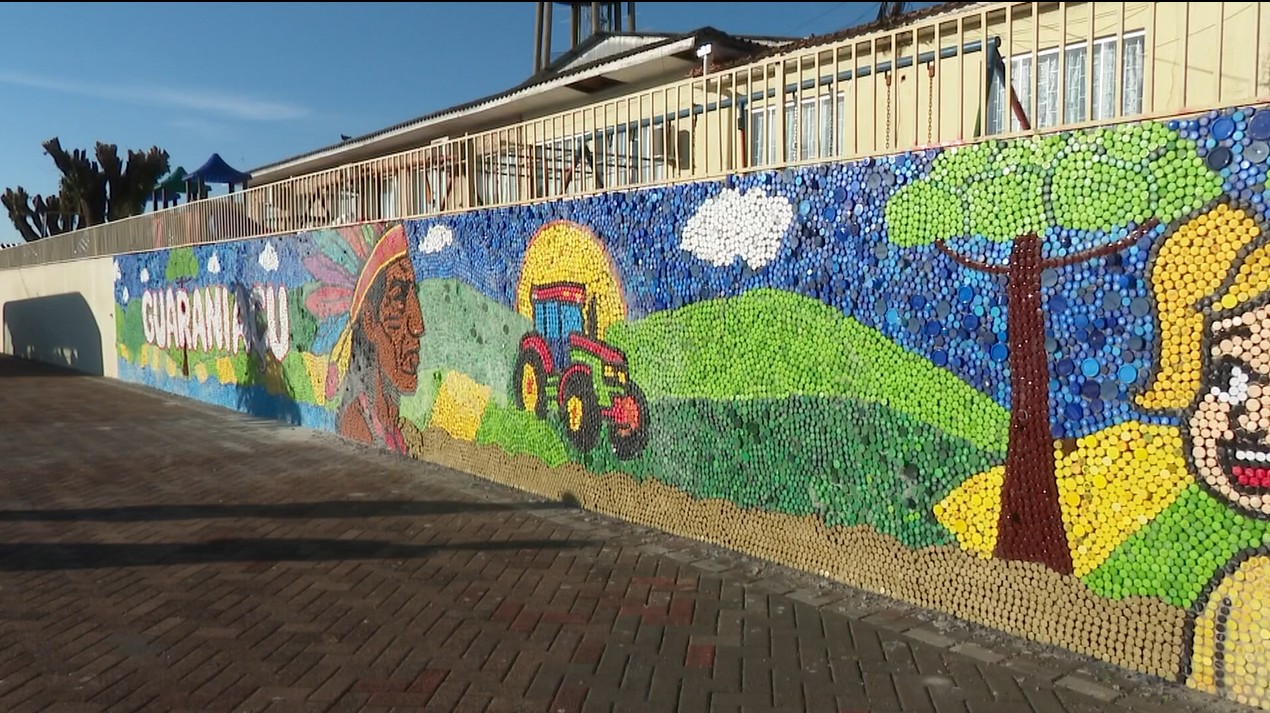
A school in Guaraniaçu, Paraná, Brazil, now boasts a vibrant facade created from over 150,000 recycled plastic bottle caps, thanks to the initiative of Professor Matheus Picolli. Picolli, a resident of the municipality, envisioned the project as a way to promote recycling awareness among students, foster community involvement with the school, and create a piece of art. The mosaic depicts cultural elements of Guaraniaçu, a city of 13,000 inhabitants known for its indigenous heritage and natural beauty. The collection of bottle caps began in September 2025, and the artwork itself took two months to complete, starting in May of the current year. Students from Joaquim Modesto da Rosa Municipal School and their families actively participated, with five-year-old Fernanda Luiza and her family collecting over 8,000 caps. The project gained significant traction online, with a video of Picolli placing the final cap accumulating nearly two million views. Due to the overwhelming positive response and leftover materials, the project is set to double in size, with requests coming from across Brazil for guidance on replicating the initiative. Public servant Márcia da Silva and local resident Sirlei Raupp also contributed, highlighting how the project has positively impacted the school's routine and the neighborhood's aesthetic, turning the mural into a popular local landmark.
This initiative effectively transforms waste into a community asset, demonstrating the power of collective action and creative resourcefulness. The project highlights a systemic opportunity to integrate sustainability education directly into public spaces, fostering civic pride and environmental consciousness. By leveraging readily available discarded materials, it bypasses traditional funding models for public art and school improvements, offering a scalable blueprint for other communities. The viral success underscores a broad public appetite for positive, tangible environmental projects, suggesting a potential for wider adoption and impact if supported by educational frameworks and logistical assistance.
AI-generated to prompt reflection — not editorial opinion, not advice, not a statement of fact. How this works.