Paraná State Experiences Second Day of Frost and Sub-Zero Temperatures
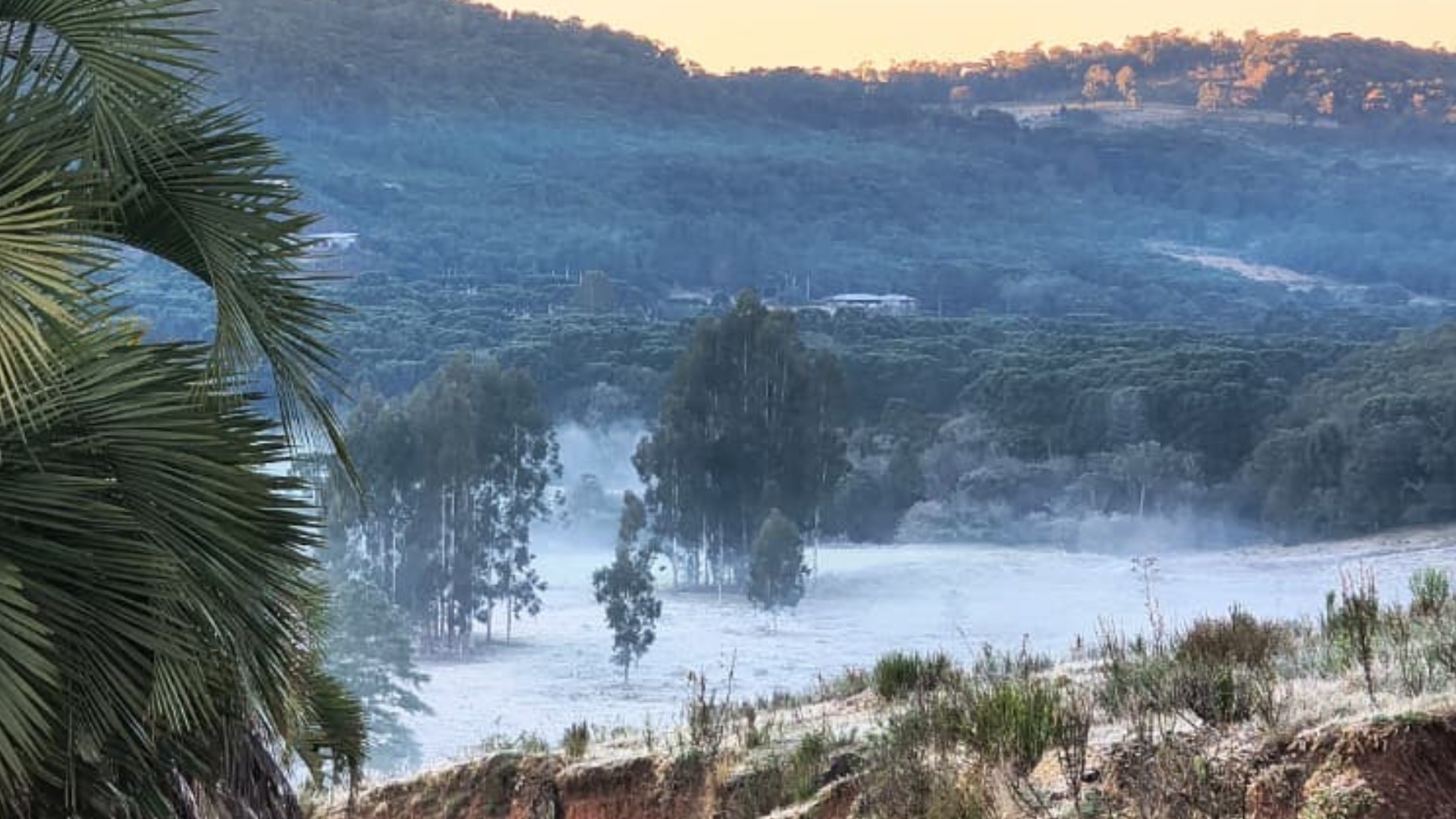
The state of Paraná, Brazil, experienced frost and sub-zero temperatures for the second consecutive day on Thursday, July 9th. While temperatures saw a slight increase, the phenomenon was recorded in the south-central regions, including cities like Guarapuava and General Carneiro, and parts of Campos Gerais, such as Ipiranga. On Wednesday, July 8th, temperatures in Paraná reached -2.3°C in General Carneiro, and on Thursday, the lowest recorded temperature was -1.7°C in the same city, according to the National Institute of Meteorology (Inmet). These frost events were anticipated by the Environmental Monitoring and Technology System (Simepar) due to the passage of a polar air mass. The year's coldest temperature in Paraná was -4.8°C, also in General Carneiro, on June 25th, with a perceived temperature of -6.3°C. For Thursday, a high-pressure system was expected to maintain stable atmospheric conditions with clear skies across the state, leading to daytime highs near 20°C in most areas, and up to 30°C in the northwest. However, temperatures were predicted to drop again at night, though less intensely than on previous days. By Friday, July 10th, Simepar forecasted the return of instability and rain as a new cold front approaches from the south, influencing weather conditions in western, southwestern, south-central, southern, Campos Gerais, and eastern Paraná.
The occurrence of frost and sub-zero temperatures in Paraná, Brazil, highlights the predictable impact of polar air masses on regional climate patterns. While a natural meteorological event, the repeated instances underscore the importance of robust climate monitoring and public preparedness systems. For agricultural sectors, such events can pose significant risks, necessitating adaptive strategies and potentially influencing crop insurance and investment decisions. Understanding the interplay between large-scale atmospheric circulation and local microclimates is crucial for both economic planning and public safety, particularly as climate variability may influence the frequency and intensity of such cold snaps in the coming years.
AI-generated to prompt reflection — not editorial opinion, not advice, not a statement of fact. How this works.