Paraná State Hit by Six Tornadoes in Three Days, Simepar Confirms
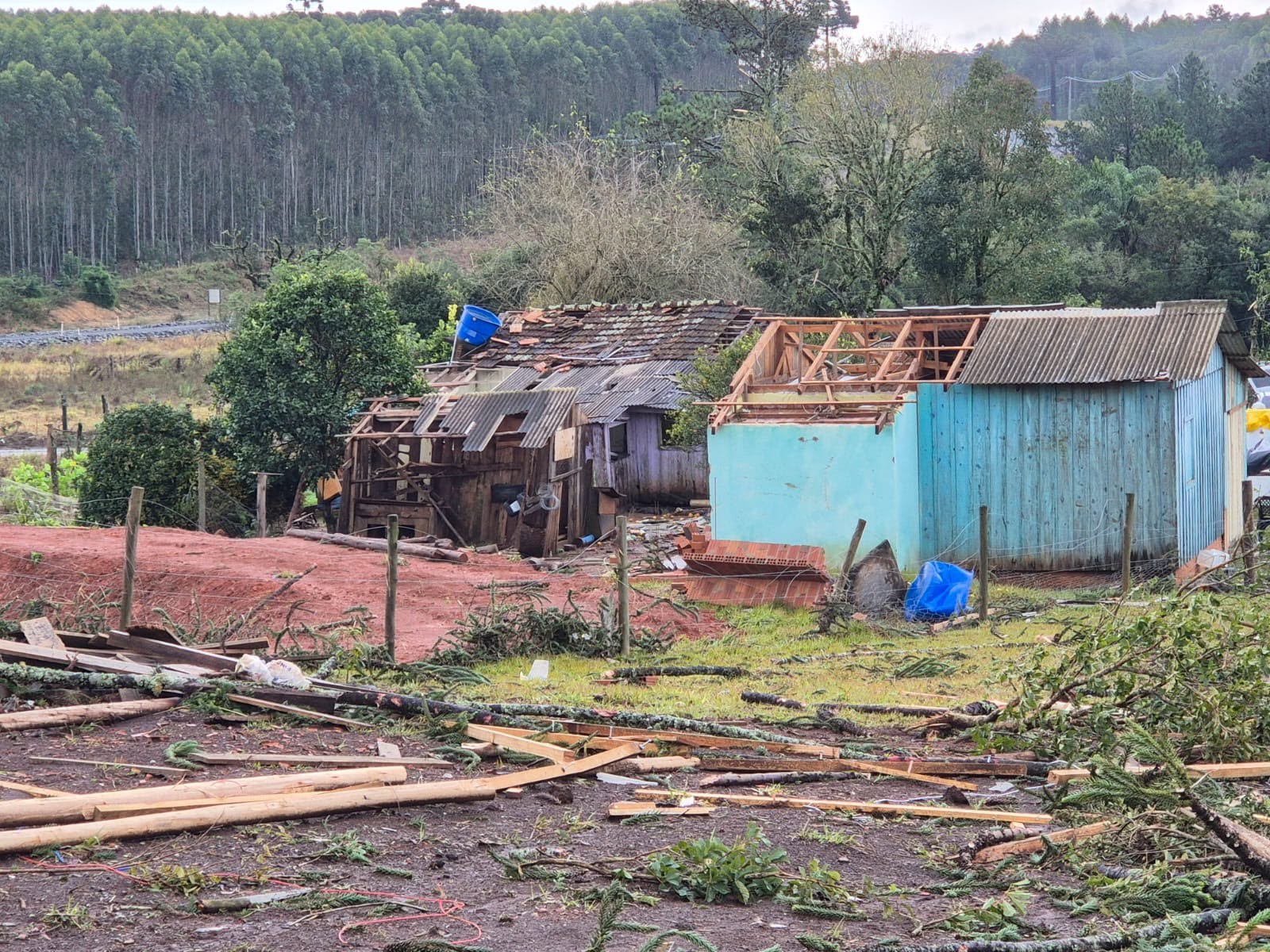
The state of Paraná, Brazil, experienced six tornadoes over a three-day period between June 28 and June 30, according to confirmation from the Paraná System of Technology and Environmental Monitoring (Simepar). These events primarily affected the Campos Gerais and central regions of the state, impacting the cities of Turvo, Inácio Martins, Nova Cantu, Laranjeiras do Sul, Cruz Machado, and Reserva. Specifically, on June 28, Reserva was struck by an F2 tornado and Nova Cantu by an F1. On June 30, Turvo, Laranjeiras do Sul, and Inácio Martins were hit by F1 tornadoes. Another tornado on the same day affected Inácio Martins again and reached Cruz Machado, though it was not classified due to a lack of registered damage. Simepar's data collection was supported by the State Civil Defense, with analysis conducted by Meteorology and Geointelligence teams, who examined damage patterns indicating rotation, distinct from other wind phenomena. Paraná is situated in one of the world's most tornado-prone regions, second only to the central plains of the United States, due to a combination of warm and cold air masses, frontal systems, and cyclones. The Fujita Scale (F) is used for classification, with F0 indicating light damage and F5 signifying extreme destruction based on estimated wind speeds. Earlier in 2025, three other tornadoes were recorded in Paraná: two in January (Mercedes and São José dos Pinhais) and one in February (Foz do Iguaçu). In November 2025, three more devastating tornadoes struck the central region, causing significant destruction in Rio Bonito do Iguaçu and resulting in seven fatalities and at least 835 injuries across the state.
The confirmation of multiple tornadoes in Paraná highlights the state's significant vulnerability to severe weather events, exacerbated by its geographical location within a recognized tornado corridor. While meteorological agencies like Simepar are diligently classifying these events using established scales like Fujita, the recurring nature of these phenomena raises questions about long-term preparedness and infrastructure resilience. Future planning should consider the increasing frequency and intensity of extreme weather, potentially driven by climate shifts, and explore adaptive strategies for urban and rural development to mitigate damage and protect populations. Understanding the atmospheric dynamics that create these conditions, as described by expert Karin Linete Hornes, is crucial for developing more accurate forecasting models and early warning systems, thereby enhancing public safety and reducing economic losses in vulnerable regions.
AI-generated to prompt reflection — not editorial opinion, not advice, not a statement of fact. How this works.