Parker Solar Probe Data Offers New Clues to Sun's Corona Mystery
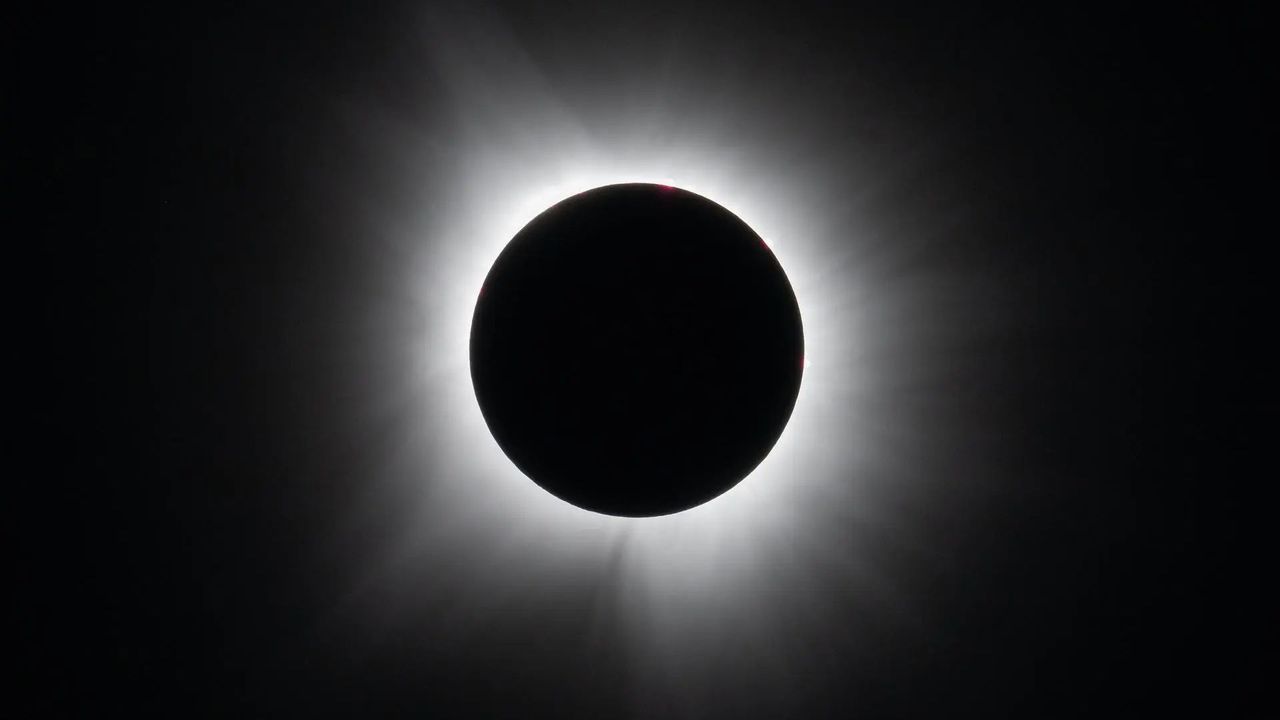
NASA's Parker Solar Probe has detected charged dust grains within the Sun's outer atmosphere, a discovery that may finally shed light on why the corona is significantly hotter than the Sun's surface. These dust grains are being transported by magnetic plasma waves. This finding represents a crucial step in understanding the long-standing solar mystery. The Parker Solar Probe mission continues to gather data from close proximity to the Sun, aiming to unravel complex solar phenomena. Scientists are analyzing the collected data to confirm the role of these charged dust grains in heating the corona. The discrepancy in temperature between the Sun's surface and its corona has puzzled researchers for decades. This new evidence suggests a potential mechanism for energy transfer that could explain the extreme temperatures observed in the outer atmosphere. Further research will focus on the interaction between these dust grains, plasma waves, and the Sun's magnetic field.
The Parker Solar Probe's detection of charged dust grains, transported by magnetic plasma waves, offers a novel perspective on the solar corona's extreme temperature. This finding shifts focus towards particle-level interactions as a potential energy transfer mechanism, moving beyond purely wave-based theories. Understanding this dynamic is critical for predicting space weather and the behavior of solar emissions. The ongoing analysis will likely refine models of coronal heating, potentially revealing how solar system dynamics are influenced by such energetic processes. This could have long-term implications for satellite operations and our understanding of planetary atmospheres exposed to solar radiation.
AI-generated to prompt reflection — not editorial opinion, not advice, not a statement of fact. How this works.