Parliamentary Speaker's Remarks on Presidential Term Limits Deemed Unconstitutional, Dampening Reform Momentum
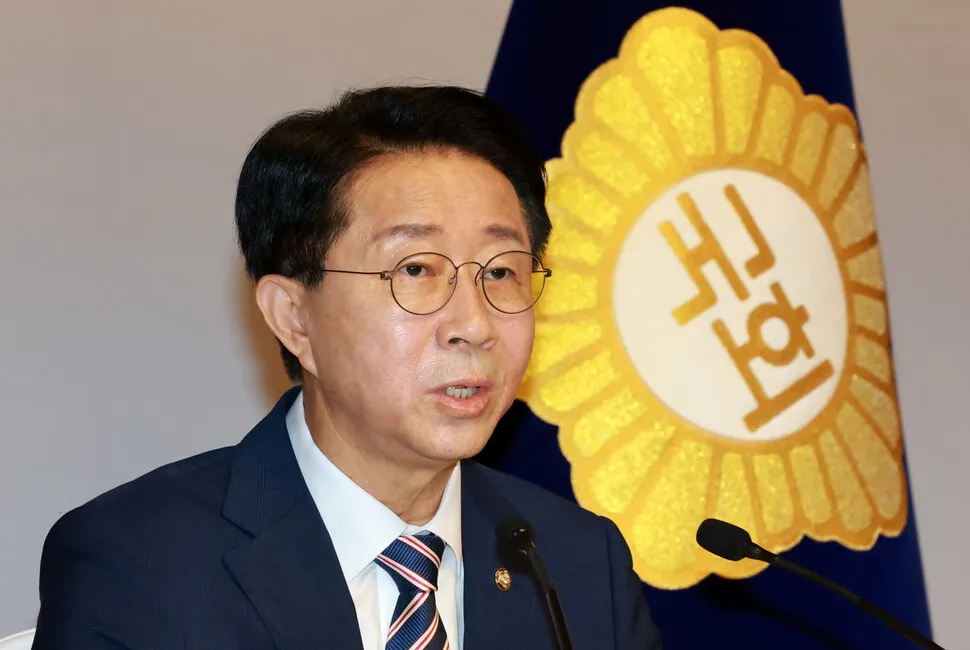
The Speaker of the National Assembly has made statements regarding the possibility of a current president serving consecutive terms, which have been widely criticized as unconstitutional. These remarks have significantly dampened the momentum for constitutional reform efforts in South Korea. The opposition parties and legal experts argue that such a move would violate the established principles of the presidential term limit, which is a cornerstone of the country's democratic system. The current constitution limits the president to a single, non-renewable five-year term. The Speaker's comments suggest a potential reinterpretation or amendment of this clause, sparking considerable debate and concern among the public and political factions. This controversy comes at a critical juncture, as discussions about revising the constitution were gaining traction. The potential for a constitutional crisis looms if these interpretations gain further traction, potentially leading to prolonged political instability. The debate centers on whether the existing framework can accommodate such a significant departure from established norms or if a formal amendment process, which is arduous, would be required. The implications for future presidential elections and the balance of power are also major concerns.
The Speaker's statements on presidential term limits, if interpreted as advocating for consecutive terms for a sitting president, raise fundamental questions about constitutional stability and democratic governance. Such a move could be seen as an attempt to circumvent established checks and balances designed to prevent the concentration of power. The ensuing public and political debate highlights the tension between potential political expediency and the adherence to constitutional principles. In the context of evolving governance models and the increasing influence of technology on political discourse, preserving the integrity of constitutional frameworks becomes paramount. This situation underscores the importance of robust institutional mechanisms to safeguard democratic norms against potential executive overreach or political maneuvering, ensuring long-term political health and public trust.
AI-generated to prompt reflection — not editorial opinion, not advice, not a statement of fact. How this works.