Partial Building Collapse in Governador Valadares Injures Three
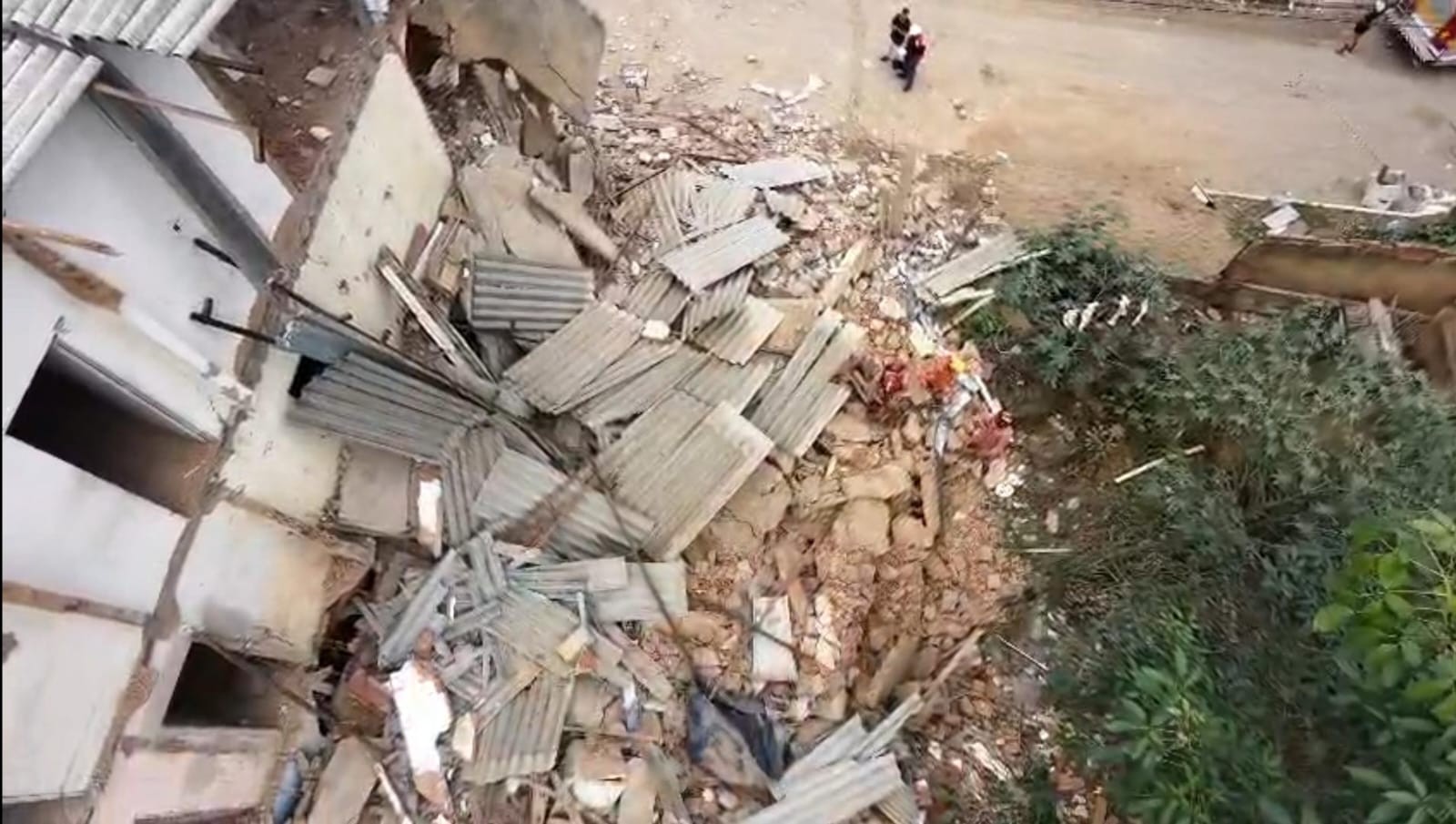
A three-story building partially collapsed on Sunday morning, May 19th, in the Jardim Pérola neighborhood of Governador Valadares, Brazil, resulting in three injuries. Images from the scene depict the extensive destruction and the ongoing rescue efforts. Among the injured, one person was found trapped under debris and required extraction by rescue teams. Another victim, a woman using a wheelchair, fell from the third floor and sustained a fractured femur. The third injured individual is a woman who sustained injuries while attempting to assist others affected by the collapse. Specialized search dogs were deployed to scan the structure but did not indicate the presence of additional victims. The area has been cordoned off and remains inaccessible due to the risk of further collapse. Residents from adjacent buildings were evacuated for safety and are receiving support from the municipality's social services. Preliminary assessments by the State Civil Defense identified significant structural issues, including detached slabs, concrete spalling, and visible cracks, suggesting potential construction deficiencies. Engineers from the City Hall will conduct a detailed technical inspection to determine the remaining structure's stability and the necessity of demolition. The State and Municipal Civil Defense, along with the Regional Council of Engineering and Agronomy of Minas Gerais (Crea-MG), were involved in the response. The Municipal Secretariat of Public Works provided a crane to assist with debris removal, while the Military Police secured the perimeter and the Civil Police conducted forensic examinations. Authorities urge the public to respect the isolation zone until technical evaluations are complete.
The partial building collapse in Governador Valadares highlights critical issues in urban infrastructure management and construction oversight. The identified "patologias construtivas" suggest a potential systemic failure in regulatory enforcement, building inspections, or adherence to construction standards. The incident underscores the vulnerability of older or inadequately maintained structures to unforeseen stresses, particularly in rapidly developing urban environments. Moving forward, a robust framework for proactive structural assessments, stringent building codes, and transparent accountability mechanisms for developers and inspectors will be crucial to mitigate future risks and ensure public safety. The long-term implications involve not only immediate repair or demolition costs but also the potential for cascading failures in urban areas with similar structural vulnerabilities, necessitating a comprehensive approach to urban resilience planning.
AI-generated to prompt reflection — not editorial opinion, not advice, not a statement of fact. How this works.