Passenger partially sucked from plane window recalls 1997 TAM flight tragedy
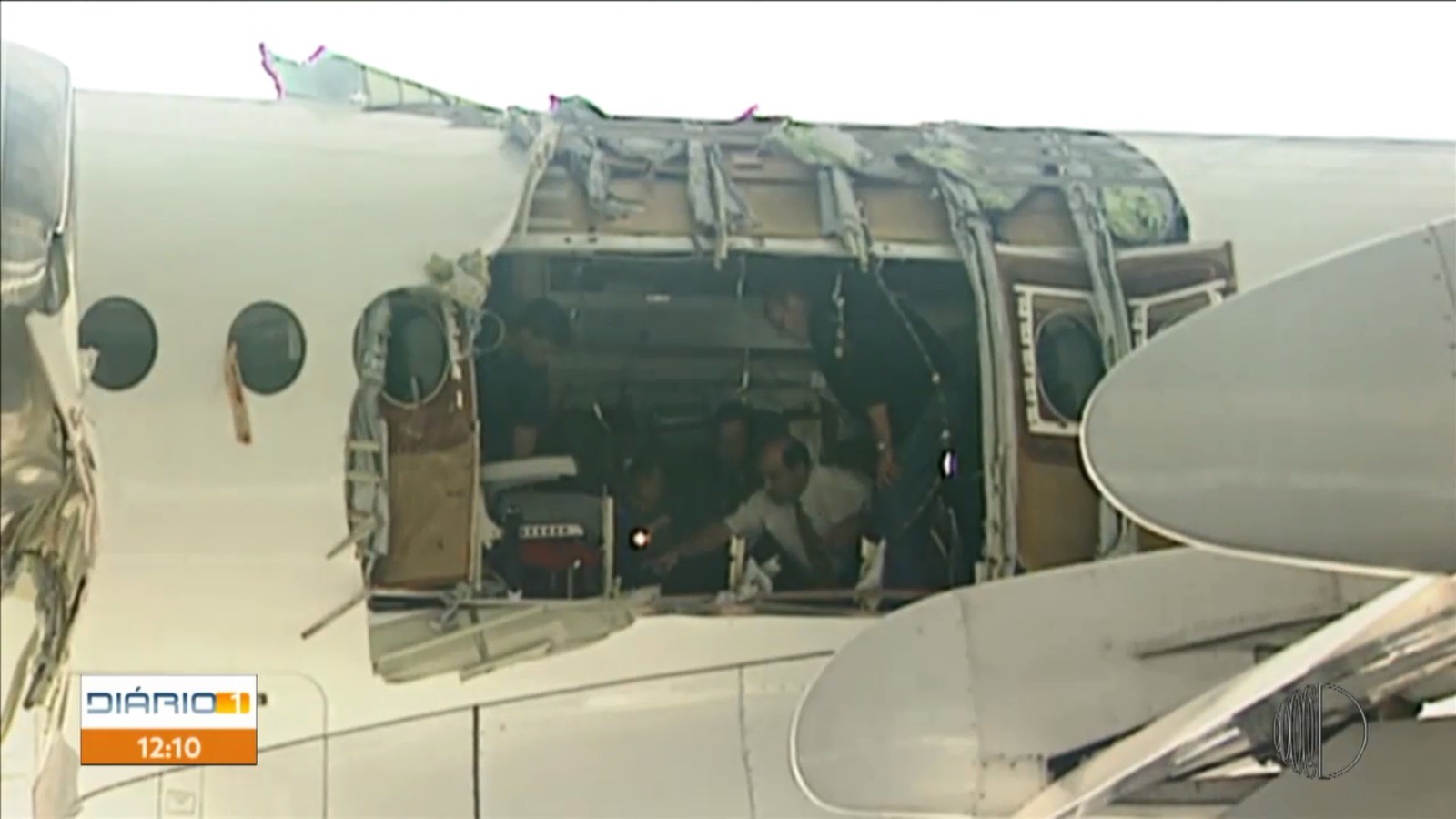
A recent incident where a passenger was partially sucked out of an airplane window has brought to mind a significant aviation tragedy in Brazil that occurred nearly 30 years ago. In 1997, an explosion on a TAM flight en route from São Paulo to Rio de Janeiro ejected a passenger, 38-year-old engineer Fernando Caldeira de Moura Campos, to his death. Campos, from São José dos Campos, had boarded the Fokker 100 in his hometown for a short 20-minute flight to São Paulo. The aircraft, which had departed from Vitória, Espírito Santo, experienced the explosion approximately 10 minutes after taking off from São José dos Campos, creating a large hole in the fuselage. Campos's body fell into a rural area of Suzano. Despite the dramatic event and the damage to the aircraft, the plane managed to land safely at Congonhas airport with no other serious injuries among the approximately 60 people on board. Investigations into the explosion did not reach a judicial conclusion. A primary suspect, Professor Leonardo Teodoro de Castro, was deemed unfit to stand trial due to his incapacitated state after being struck by a bus three days after the incident, leading to the suspension of legal proceedings. Castro's lawyer argued that the accident prevented his client from proving his innocence, and no evidence against him was found. The Federal Justice system officially archived the case in September 2023, extinguishing the possibility of punishment. Fernando Caldeira de Moura was a deacon, married with two young daughters, and owned a company serving the aviation sector, notably Embraer.
This event highlights the critical importance of robust aircraft maintenance and security protocols, as well as the unpredictable nature of human actions and their potential consequences. The unresolved judicial outcome of the 1997 incident, influenced by the incapacitation of a key individual, underscores the complexities of assigning accountability in aviation accidents. Future aviation safety frameworks may need to consider contingency plans for scenarios where investigative pathways are obstructed, ensuring that lessons learned from tragedies are fully integrated into preventative measures. The recurrence of such incidents, even if minor, prompts a review of systemic safety checks and passenger screening, especially in light of evolving threats and the increasing volume of air travel.
AI-generated to prompt reflection — not editorial opinion, not advice, not a statement of fact. How this works.