Pauline Hanson Suggests Relocating Political Opponents to Island
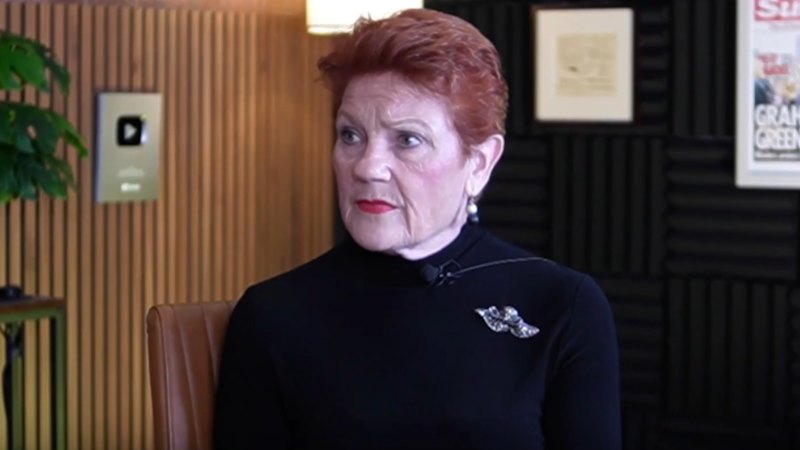
Australian politician Pauline Hanson has expressed a desire to "round up" and relocate her political opponents to an island. She shared this sentiment during an interview with Liz Truss, the former prime minister of the United Kingdom. The specific island or location for this proposed relocation was not detailed in the provided information. Hanson's statement suggests a highly unconventional and extreme approach to political opposition. The context of the interview with Truss, who herself had a brief tenure as UK PM, might indicate a discussion about political strategies or challenges. However, the core of Hanson's remark focuses on the physical removal of dissenters from the political landscape. This proposal, if taken literally, raises significant questions about democratic principles and human rights. The statement, made in a public forum, is likely to attract considerable attention and debate regarding its implications for political discourse and tolerance.
Pauline Hanson's statement, suggesting the relocation of political opponents to an island, presents a provocative rhetorical device rather than a feasible policy proposal. Such language, while potentially intended to express extreme frustration with political opposition, risks normalizing authoritarian sentiments and undermining democratic norms of debate and dissent. From a governance perspective, the incentive structure for political actors often involves seeking to neutralize or marginalize opposition, but democratic systems rely on robust debate and the protection of minority viewpoints. The long-term societal impact of rhetoric that dehumanizes or targets political opponents can erode trust in institutions and foster polarization. In the context of an increasingly interconnected and digitally mediated public sphere, extreme statements can rapidly gain traction, highlighting the need for leaders to exercise greater responsibility in their public discourse to maintain a healthy democratic environment.
AI-generated to prompt reflection — not editorial opinion, not advice, not a statement of fact. How this works.