PC Cooling: Leveraging the Chimney Effect for Passive Heat Dissipation
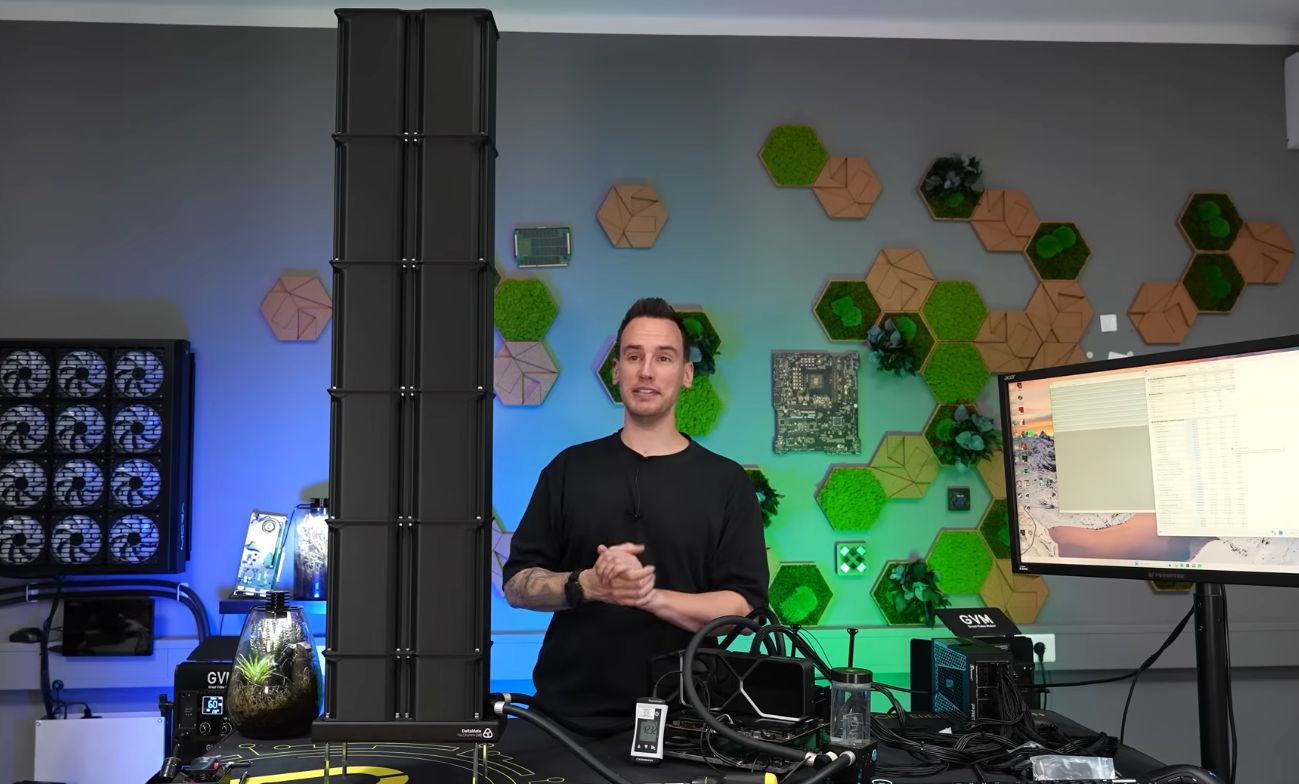
Researchers are exploring the "chimney effect," also known as the stack effect, as a passive cooling method for personal computers. This principle, which relies on the natural tendency of hot air to rise and escape when guided through a confined space, offers a potential alternative to traditional active cooling systems. The concept involves designing PC enclosures or components to facilitate the upward movement of heated air, drawing cooler ambient air in from lower points. This passive approach aims to reduce reliance on energy-consuming fans and heatsinks, potentially leading to quieter and more energy-efficient computing. The effectiveness of this method is being investigated for its ability to manage thermal loads in various PC configurations. Further research will determine the practical applications and scalability of this passive cooling technique in the consumer electronics market.
The exploration of passive cooling techniques like the chimney effect for PCs represents a shift towards energy efficiency and reduced mechanical complexity in computing hardware. As computational power increases, thermal management becomes a critical bottleneck, driving innovation beyond conventional fan-based solutions. Leveraging natural physical phenomena like convection aligns with broader trends in sustainable technology design, aiming to minimize power consumption and noise pollution. This approach could mitigate the environmental impact of electronics manufacturing and operation, while also enhancing user experience through quieter devices. The long-term viability will depend on balancing cooling efficacy with component density and cost-effectiveness in a rapidly evolving technological landscape.
AI-generated to prompt reflection — not editorial opinion, not advice, not a statement of fact. How this works.