PC Enthusiast Revives 19th Century Stirling Engine for Computer Cooling
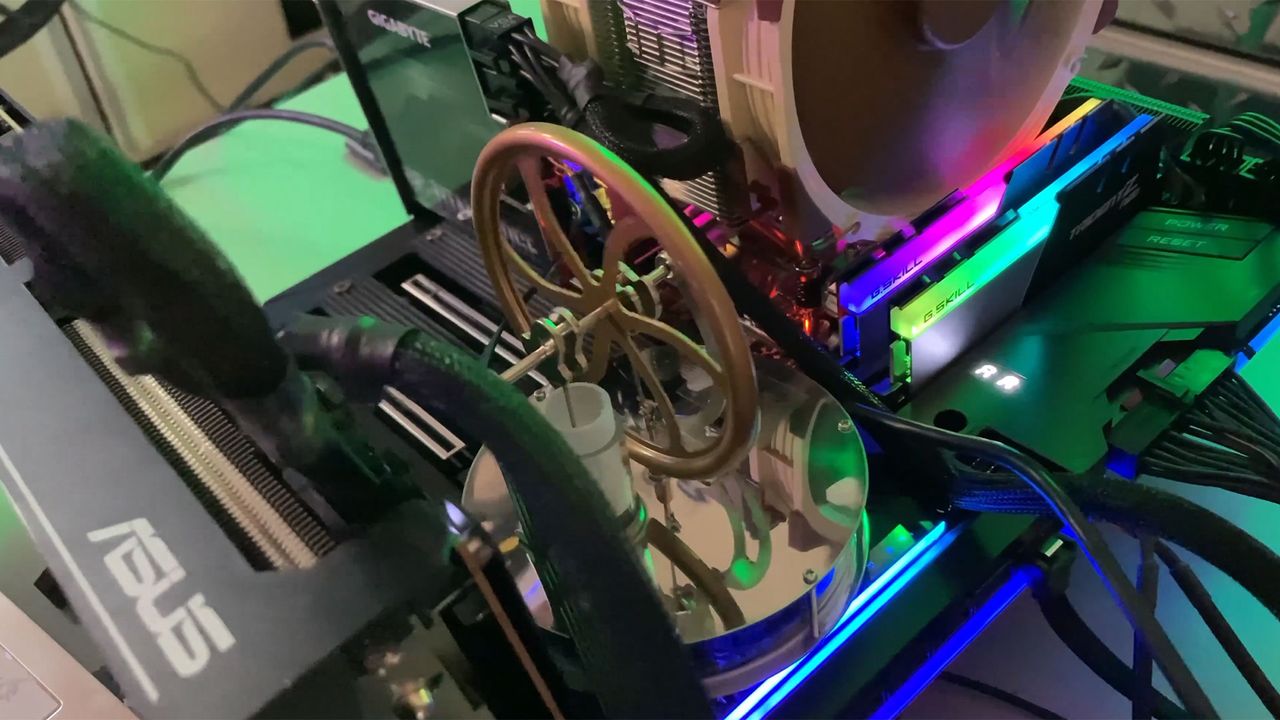
Windows developer Dave W. Plummer has showcased an innovative cooling system for his high-performance computer, utilizing a 19th-century Stirling engine. Plummer, known for his work on Windows, demonstrated the setup in a short video. The system employs a Stirling engine to harness waste heat generated by his AMD Threadripper 3970X processor. The heat causes the engine's flywheel to spin, which in turn drives a fan for auxiliary cooling. This creative approach repurposes a historical technology to address modern computing challenges. The Stirling engine, a heat engine operating by cyclic compression and expansion of air or other working fluid at different temperatures, was invented by Robert Stirling in 1816. Plummer's project highlights the potential for integrating older mechanical principles with contemporary electronics. The goal is to manage the significant thermal output of powerful CPUs like the Threadripper 3970X.
This demonstration by Dave W. Plummer ingeniously repurposes a historical thermodynamic device, the Stirling engine, to address the escalating thermal management challenges in modern high-performance computing. The application of a 19th-century technology to cool a 21st-century processor highlights a potential avenue for energy recovery and efficiency improvements in computing systems. As processing power continues to increase, so does heat generation, necessitating novel cooling solutions beyond conventional methods. Plummer's experiment suggests that exploring overlooked or legacy technologies could yield innovative approaches to waste heat utilization, potentially reducing reliance on energy-intensive active cooling systems and contributing to more sustainable computing infrastructure in the long term. This approach prompts consideration of how fundamental scientific principles, even those predating the digital age, can offer practical solutions to contemporary technological problems.
AI-generated to prompt reflection — not editorial opinion, not advice, not a statement of fact. How this works.