PDM Leader Accuses Ruling Party of Political Retaliation Over Salary Delays
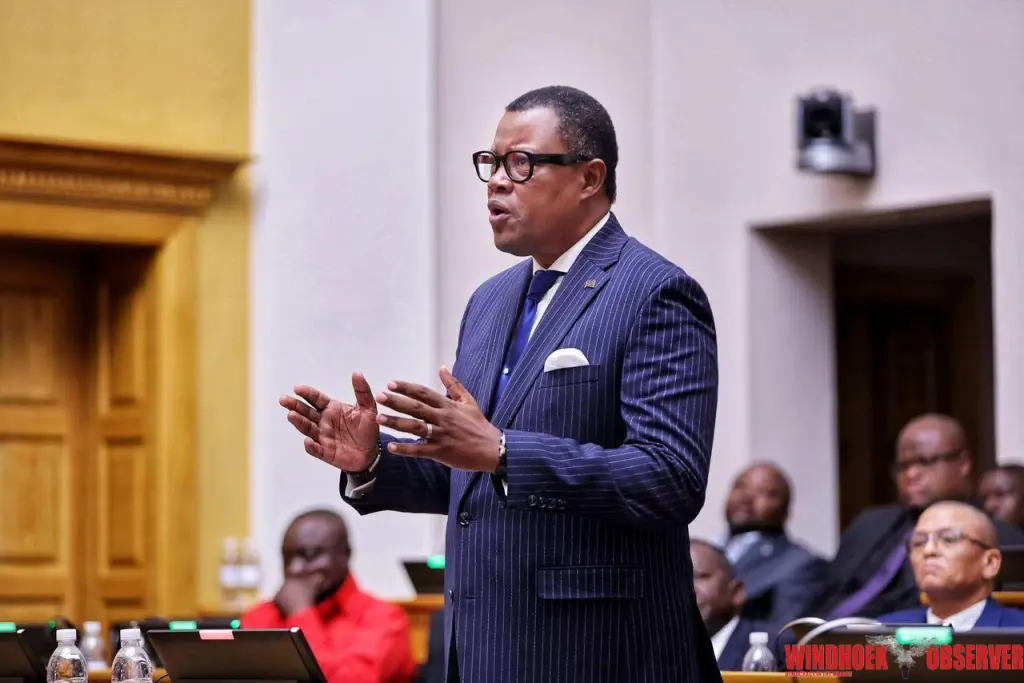
McHenry Venaani, leader of the Popular Democratic Movement (PDM), has accused the ruling Swapo party of political targeting. Venaani made these accusations in the National Assembly on Tuesday, linking delayed salary payments to employees of the Kunene Regional Council to Swapo's alleged actions. He directed an oral question to Prime Minister Elijah Ngurare regarding the matter. Venaani implied that the PDM is being punished by Swapo due to the salary payment issues in the Kunene region. The specific nature of the alleged punishment and the exact reasons for the salary delays were not fully detailed in the provided text. This situation highlights potential inter-party political tensions within Namibia's governance structures. The PDM leader's statement suggests a belief that the ruling party may be using administrative or financial mechanisms for political leverage against opposition parties. Further details would be needed to understand the full context and validity of these claims.
This situation presents a potential conflict between political opposition and the ruling party, framed by the PDM leader as retaliatory action. The core issue appears to be salary delays within the Kunene Regional Council, which Venaani alleges are politically motivated by Swapo. From a governance perspective, it is crucial to distinguish between legitimate administrative challenges and politically motivated interference. If Swapo is indeed using financial mechanisms to exert pressure on the PDM or its constituents, this raises questions about fair governance and the separation of political interests from public service delivery. The Namibian political landscape, like many others, may see such accusations emerge, underscoring the importance of transparent financial management and accountability within regional councils. Evaluating this situation requires examining the operational independence of regional councils and the potential for political parties to influence their financial operations. The long-term implications could involve public trust in governmental institutions and the integrity of electoral processes.
AI-generated to prompt reflection — not editorial opinion, not advice, not a statement of fact. How this works.