PDT Party Officially Backs Lula's Re-election Bid
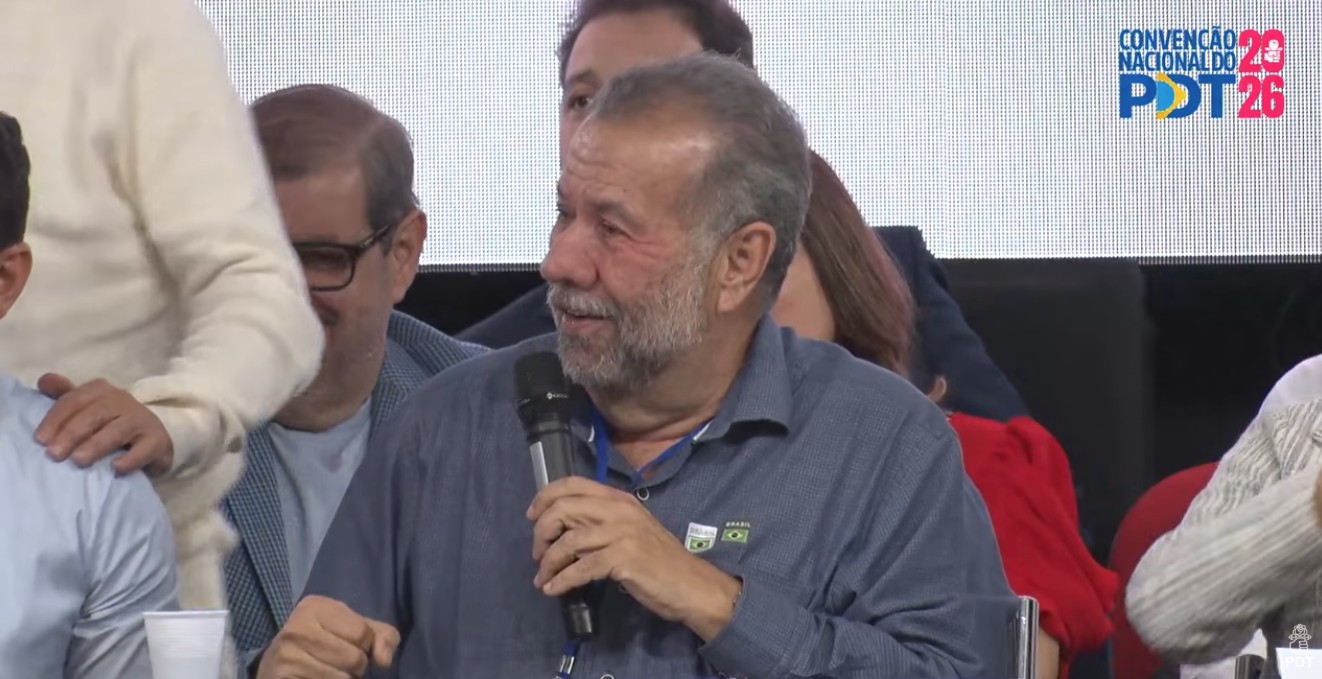
The Democratic Labour Party (PDT) officially announced its support for President Luiz Inácio Lula da Silva's re-election bid during its national convention in Brasília on Monday, June 20th. The endorsement was unanimously approved by party members present at the event, which was led by PDT national president Carlos Lupi and attended by President Lula himself.
This marks a significant shift for the PDT, as it is the first party to formally back Lula's campaign this year. Previously, the PDT nominated Ciro Gomes as its candidate and only supported Lula in the final stages of past elections. With Gomes now running for governor of Ceará under the PSDB in an alliance with the PL, the PDT decided against fielding its own presidential candidate, opting instead to align with Lula. Lupi emphasized unity, stating the party is focusing on shared goals and moving forward, despite past disagreements. He also echoed criticisms of the United States, positioning Lula as the antithesis of the current US president.
PT national president Edinho Silva highlighted the importance of this election for democracy, calling Lula a leading figure in the democratic world and asserting that his victory would demonstrate the possibility of defeating fascism and the far-right. He also criticized US influence, stating Brazil is not a US backyard. PDT leaders, including national vice-president Sírley Soalheiro and Chamber leader André Figueiredo, expressed that the party has returned to its roots with Ciro Gomes' departure, with Soalheiro noting that those who left the party are the ones who lost. Former mayor of Aracaju, Edvaldo Nogueira, stressed the need to avoid past divisions and form an alliance with Lula to combat corruption and the perceived misrule of the Bolsonaro government.
The PDT's endorsement of President Lula's re-election campaign, particularly after a period of internal divergence and the departure of a prominent figure like Ciro Gomes, signals a strategic realignment driven by evolving political dynamics and a desire to consolidate opposition forces. This move reflects a pragmatic approach to electoral politics, prioritizing a unified front against perceived threats from the far-right and the Bolsonaro government, rather than pursuing an independent candidacy that might fragment votes. The party's leadership appears to be leveraging this alliance to reassert its historical positioning within the broader center-left spectrum, while simultaneously navigating the complexities of past associations and internal party identity. The decision highlights the ongoing tension between ideological purity and electoral expediency in multiparty democracies, particularly in the context of a highly polarized political landscape where coalition-building is paramount for achieving electoral success and shaping policy agendas over the next decade.
AI-generated to prompt reflection — not editorial opinion, not advice, not a statement of fact. How this works.