Pentagon Admits US Lags Ukraine in Drone Production Pace
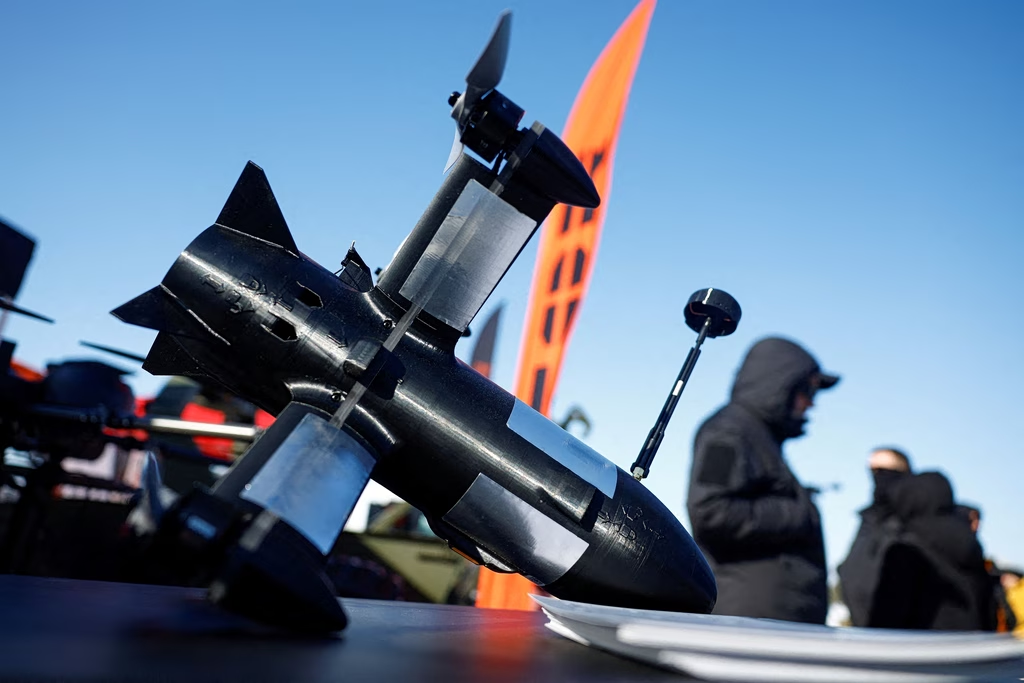
Despite significant investments and political will aimed at fostering a robust domestic drone industry, the United States significantly trails Ukraine in the production rate of drones utilized in modern warfare. This admission was made by Travis Metz, deputy director of the Defense Innovation Unit. The US has been striving to accelerate its own military production capabilities, particularly in areas like unmanned aerial vehicles, to meet the demands of ongoing conflicts and maintain a technological edge. However, the challenges in scaling up production to match the rapid output seen from Ukraine have become apparent. Ukraine has demonstrated remarkable agility and speed in adapting and manufacturing drones, which have proven crucial on the battlefield. The Pentagon's acknowledgment highlights a gap between stated goals and actual production capacity, suggesting a need for further strategic adjustments and potentially different approaches to industrial mobilization. This situation underscores the complexities of military supply chains and the dynamic nature of defense innovation in contemporary conflict zones. The ability of Ukraine to produce drones at such a pace presents a compelling case study for defense planners worldwide, prompting a reevaluation of existing industrial strategies and the speed of technological implementation.
The Pentagon's acknowledgment of falling behind Ukraine in drone production pace, despite substantial investment, points to systemic challenges in the US defense industrial base. This situation may reflect the inherent difficulties in rapidly scaling complex manufacturing processes within established bureaucratic and regulatory frameworks, compared to the more agile, wartime-driven production models adopted by Ukraine. The discrepancy suggests a need for the US to re-evaluate its procurement strategies, potentially exploring more flexible partnership models or faster prototyping and production pathways. Over the next decade, as drone technology becomes increasingly integral to military operations, nations that can adapt their industrial capacity quickly will hold a significant strategic advantage. This event could catalyze reforms aimed at enhancing the defense sector's responsiveness to evolving technological and geopolitical demands, fostering innovation and efficiency.
AI-generated to prompt reflection — not editorial opinion, not advice, not a statement of fact. How this works.