Peptide Sequencing Using Nanopore Technology with Stepwise Shortening
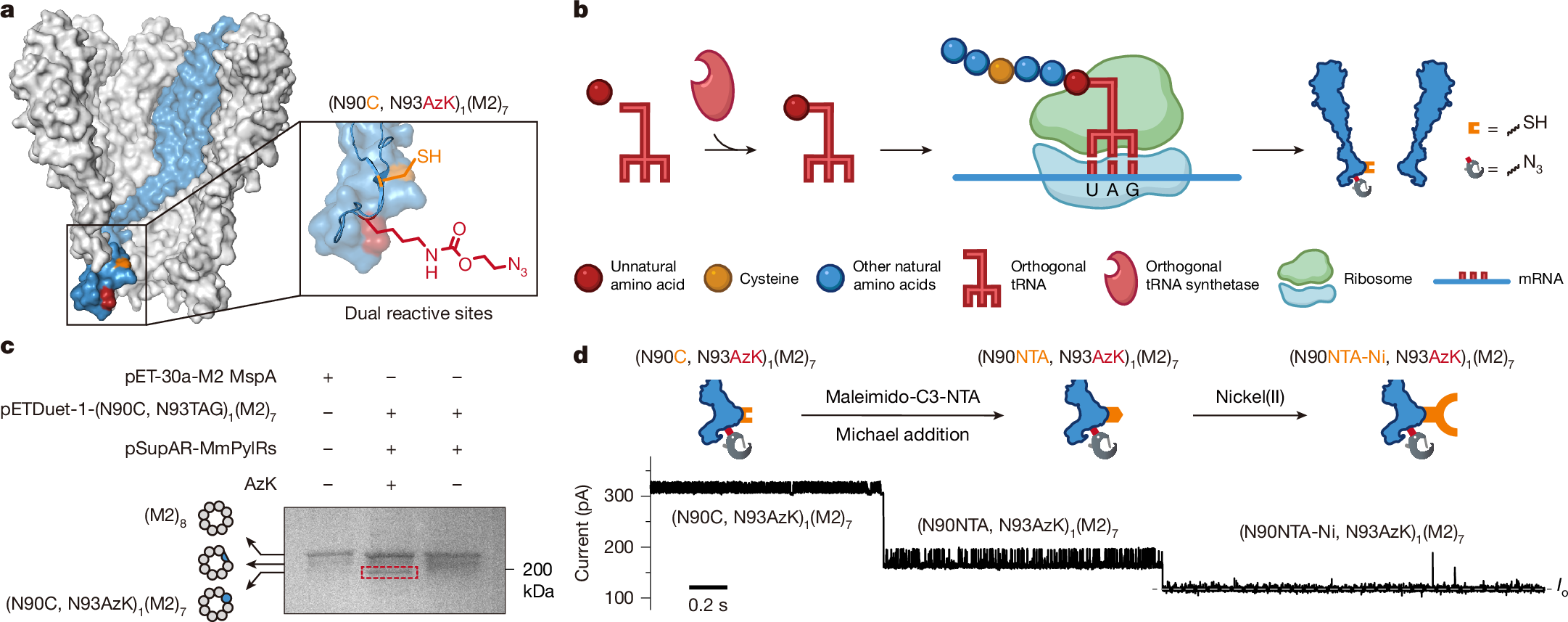
Researchers have developed a novel method for sequencing peptides by immobilizing them on a nanopore and sequentially reading their amino acid sequence. This technique involves stepwise shortening of the peptide while it is attached to the nanopore. The process allows for the identification of individual amino acids as they are cleaved from the peptide chain. This advancement offers a new approach to peptide analysis, potentially enabling more accurate and efficient determination of peptide structures. The method's ability to read the sequence in a stepwise manner provides a detailed breakdown of the peptide's composition. Further development of this nanopore-based sequencing could have significant implications for proteomics and drug discovery. The immobilized peptide strategy simplifies the experimental setup compared to traditional sequencing methods. This innovative technique contributes to the growing toolkit for molecular analysis.
This research introduces a novel nanopore-based peptide sequencing method that utilizes stepwise shortening. By immobilizing the peptide and systematically cleaving amino acids, the technique aims to provide a more direct and potentially faster readout of peptide composition. This approach could offer advantages in terms of sample preparation and throughput compared to established methods like Edman degradation or mass spectrometry. The system's efficiency and accuracy will be critical factors for its adoption in fields such as proteomics, where rapid and precise identification of peptides is essential for understanding biological processes and developing therapeutics. Future work will likely focus on scaling this technology and validating its performance across a wider range of peptide complexities and lengths.
AI-generated to prompt reflection — not editorial opinion, not advice, not a statement of fact. How this works.