Personal Trainer Arrested for Threatening Motorcyclists with Fake Gun in Vitória
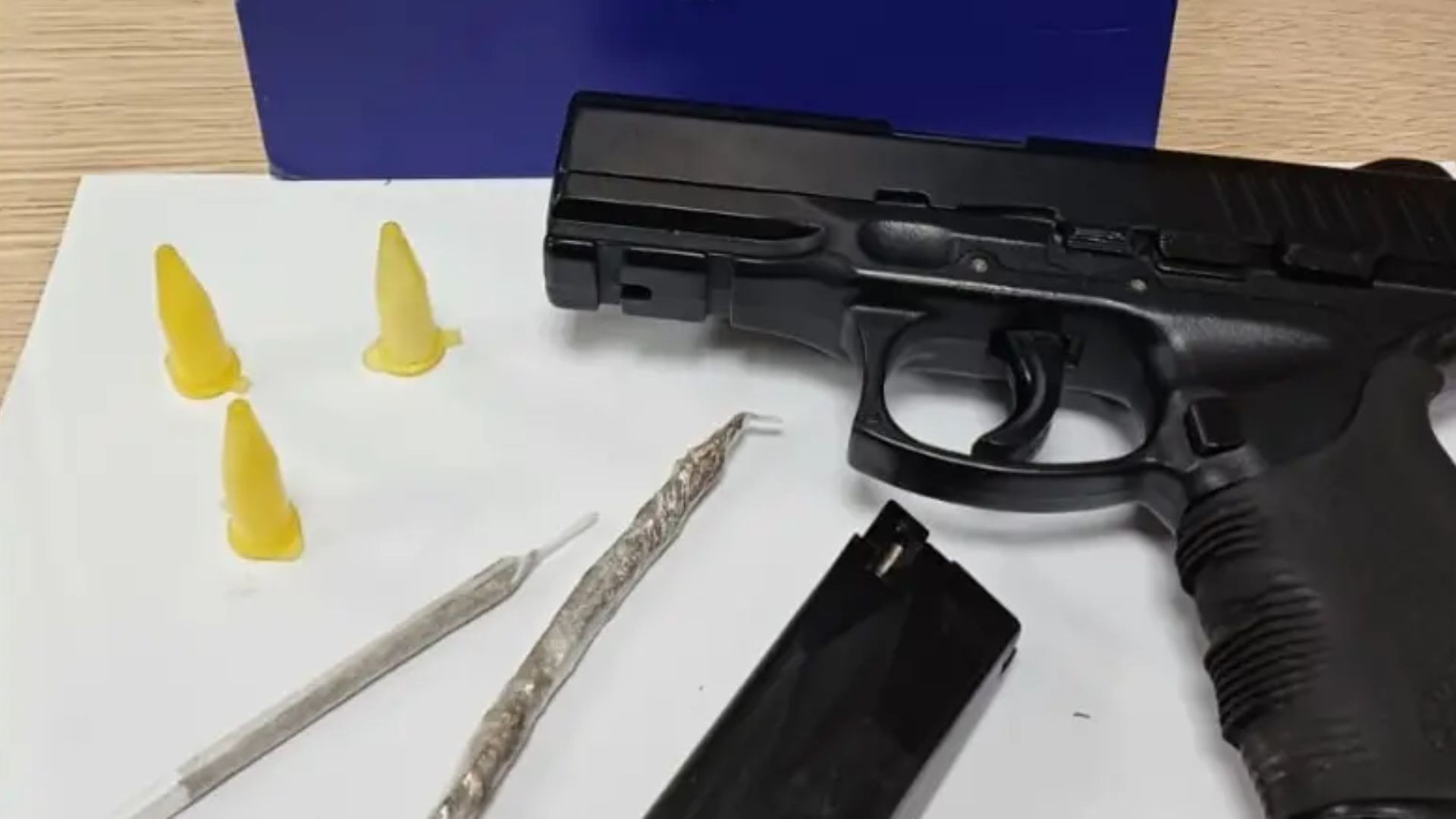
A personal trainer was arrested in Vitória, Espírito Santo, early Saturday morning, November 11th, after allegedly threatening three motorcyclists with a fake firearm during a traffic dispute. The incident occurred in the Jardim da Penha neighborhood, near Avenida Anísio Fernandes Coelho, commonly known as Rua da Lama. According to one of the victims, who wished to remain anonymous, they were riding with a cousin and a friend when the driver of a car accused them of cutting him off. The motorcyclists stopped to understand the situation, at which point the driver reportedly drew a weapon and threatened the group. Following the confrontation, the suspect fled the scene, and the victims contacted both the Military Police and the Municipal Guard. The motorcyclists later spotted the suspect at a bar, leading to his apprehension by the patrolling agents. Upon being detained, the suspect was found to be carrying a fake gun and also possessed portions of marijuana and cocaine. He was taken to the 1st Regional Police Station of Vitória. The victims only learned the weapon was fake at the police station, expressing their fear of death during the encounter. The Espírito Santo Civil Police were contacted for comment but had not yet provided information on whether the suspect was charged or what actions were taken, and his name has not been released.
This incident highlights the volatile intersection of road rage and criminal behavior. The suspect's actions, escalating a traffic disagreement with a replica firearm and illicit substances, underscore the potential for disproportionate reactions when individuals feel their perceived status or control is challenged. The use of a fake weapon, while ultimately not posing a lethal threat, demonstrates a calculated intent to instill fear and assert dominance, reflecting a breakdown in conflict resolution skills. Future considerations for public safety might involve examining the psychological profiles of individuals involved in aggressive driving incidents and exploring community-based de-escalation programs that address anger management and impulse control, particularly in urban environments where such interactions are frequent.
AI-generated to prompt reflection — not editorial opinion, not advice, not a statement of fact. How this works.