Peru's Congress Reopens Bicameral System with Swearing-In of Senators and Deputies
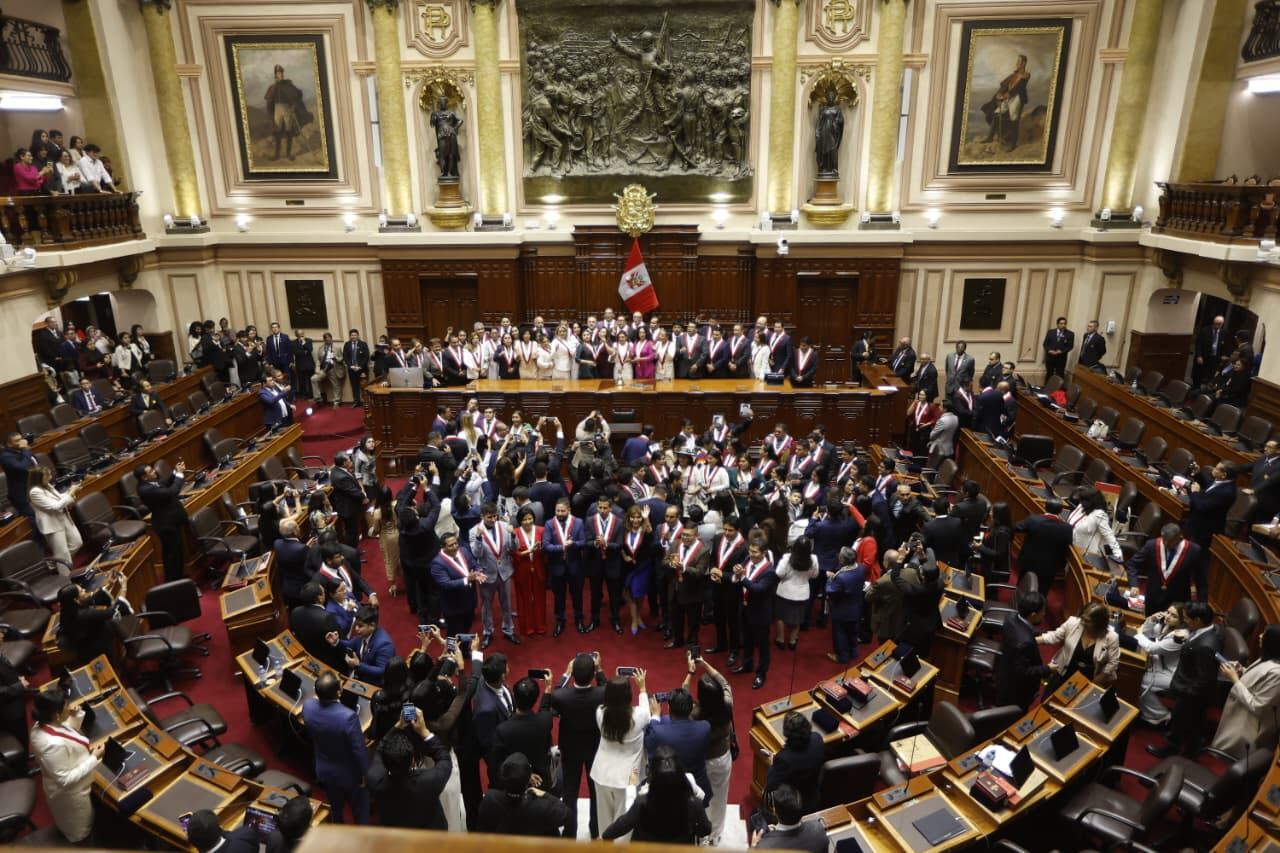
Peru's Congress has officially inaugurated a new bicameral era with the swearing-in of 60 senators and 130 deputies. The ceremony marked the formal establishment of both chambers, resuming a legislative structure not seen in decades. Miguel Torres, president of the Preparatory Board of the Congress, declared the temporary body installed, noting that the required quorum of 90 parliamentarians was met after 85 deputies and 42 senators had registered. The Preparatory Board was declared in permanent session to oversee the incorporation of new members and the election of the presiding officers for both the Senate and Chamber of Deputies.
The swearing-in ceremonies, which began in the Senate, saw several notable moments and some disruptions. Miguel Torres, Fernando Rospigliosi, and Alejandro Muñante were among the first to take their oath. During the proceedings, one deputy swore "for those who died during the COVID-19 pandemic due to the genocidal Martin Vizcarra," while another deputy, Absalón Vásquez, slipped before taking his oath, later swearing "for the memory of the best president of Peru, Alberto Fujimori." Several members, including Jose Mercedes Castillo (brother of former President Pedro Castillo), former minister Iber Maraví, and ex-congressman Jaime Quito, all from Juntos por el Perú, requested the release of Pedro Castillo. Jaime Quito also had a contentious exchange with the board regarding the senatorial medal.
The Chamber of Deputies ceremony commenced later in the afternoon, presided over by Cecilia Chacón. During this session, deputy Frank Krklec swore "for the martyrs and the fight against terrorism." Analí Márquez and Yennifer Paredes also called for Pedro Castillo's release. Both chambers are now preparing to present slates for their respective presidencies, with elections scheduled for the following day. Senator Flavio Figallo announced a potential alliance for the Senate's leadership with Juntos por el Perú, Obras, and Ahora Nación.
Peru's legislative branch has transitioned back to a bicameral system, a structural change with potential implications for governance efficiency and political dynamics. The integration of senators and deputies, alongside the visible political statements and procedural disagreements during the swearing-in, highlights the existing partisan divisions and the contentious political landscape. The emphasis on past grievances and calls for the release of political figures suggest that immediate legislative priorities may be overshadowed by ongoing political disputes. Future legislative effectiveness will likely depend on the ability of these diverse factions to forge consensus, navigate institutional processes, and address the nation's pressing socio-economic challenges, rather than becoming mired in historical recriminations or partisan power struggles.
AI-generated to prompt reflection — not editorial opinion, not advice, not a statement of fact. How this works.