Pet Buffalo Enjoys Seven-Hour Swim in Northern Rio Grande do Sul Family's Pool
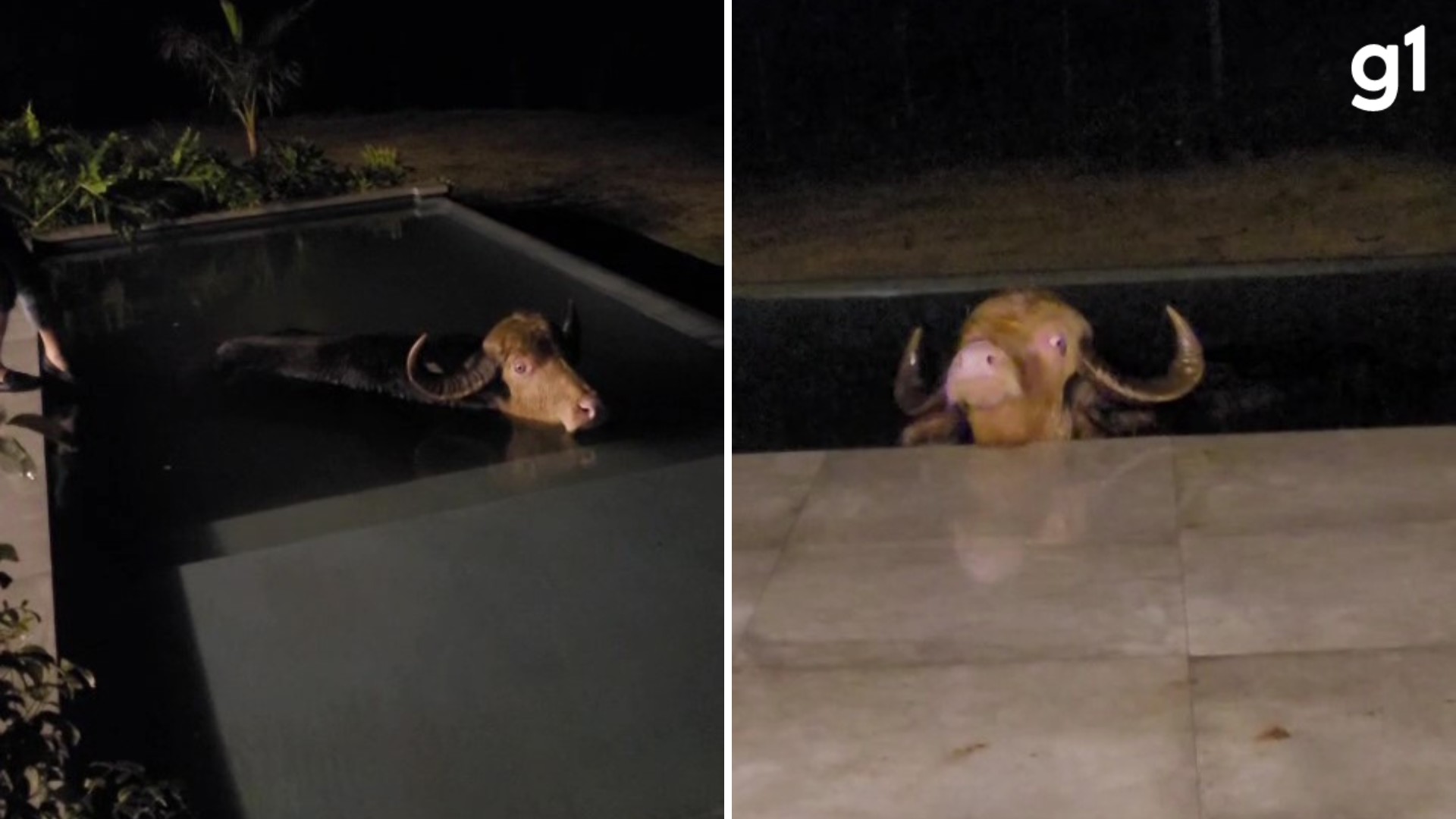
An unusual incident occurred in Sananduva, in the Northern Region of Rio Grande do Sul, Brazil, when a pet buffalo named Cotonete decided to take an extended dip in a family's swimming pool. The Mediterranean breed buffalo, raised as a pet by the Salvador family, entered the pool around 1 AM on Tuesday, May 21st. Carine Salvador, Sandro Salvador's sister, first noticed the animal when her dogs began barking incessantly. She saw Cotonete with his head at the glass door, looking inside, and was initially frightened. After the initial shock, Carine witnessed the buffalo calmly walk into the pool, not by falling, but by entering slowly as if accustomed to water. The family reported that Cotonete remained in the pool for approximately seven hours, until around 8 AM. Photos and videos of the buffalo's aquatic escapade were shared among friends and family. The family found themselves trying to figure out how to remove him, but Cotonete eventually exited the pool on his own accord. Sandro Salvador, the owner, explained that their buffaloes are accustomed to water and frequently use ponds to cool off. He stated that Cotonete is a very docile and gentle animal and that on this particular night, he likely took a wrong turn while venturing out, mistaking the pool for a pond.
This event highlights the intersection of domestic animal husbandry and unexpected environmental interactions. The buffalo's behavior, while unusual in the context of a swimming pool, aligns with its natural inclination for water immersion as a thermoregulation and comfort mechanism. The family's response, shifting from surprise to managing the situation, reflects common challenges in coexisting with large domestic animals that may deviate from expected routines. From a systems perspective, such incidents underscore the importance of robust containment strategies for domestic animals, even those considered docile, to prevent unintended consequences and ensure both animal welfare and human safety. Future considerations might involve enhanced fencing or environmental design to guide animal behavior and prevent access to potentially hazardous or inappropriate areas, particularly as urban and rural environments continue to converge.
AI-generated to prompt reflection — not editorial opinion, not advice, not a statement of fact. How this works.