Petrolina Offers Free ID Cards for Autistic Individuals and Fibromyalgia Patients
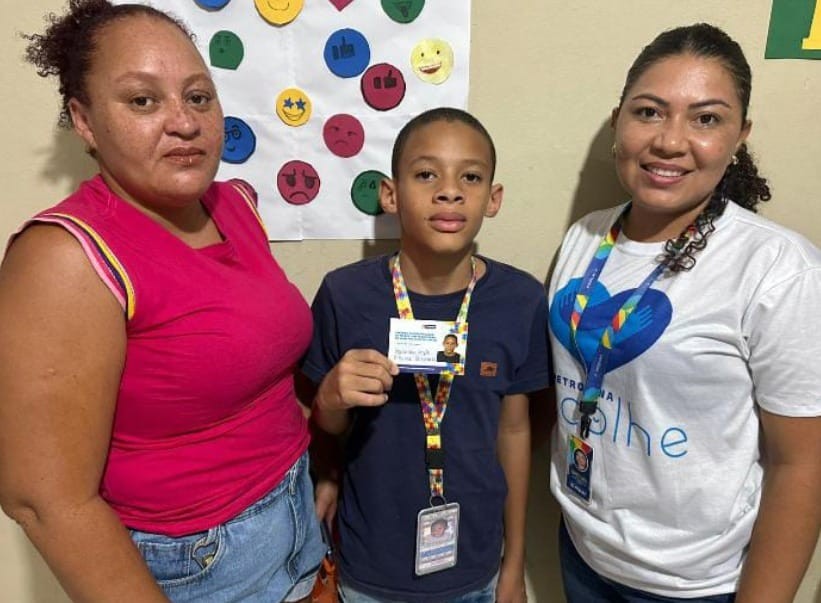
Petrolina, located in the Sertão region of Pernambuco, Brazil, is now offering free issuance of identification cards for individuals with Autism Spectrum Disorder (TEA) or fibromyalgia. This initiative is being managed by the Municipal Secretariat of Social Assistance and Combating Hunger. The primary goal of these identification cards is to simplify the recognition of these individuals and ensure their access to priority services and rights within the municipality.
Applications are being accepted at the Inclusion and Citizenship Sector, situated within the Specialized Center for Social Assistance Reference (CREAS) building. The CREAS is located at Rua Projetada, nº 111, in the Vila Mocó neighborhood, directly opposite SESI. The service is available from Monday to Friday, between 8 AM and 5 PM.
To obtain the Identification Card for Persons with Autism Spectrum Disorder (CIPTEA), applicants must provide a medical report detailing the International Classification of Diseases (CID) diagnosis, a recent 3x4 photograph, and proof of residency in Petrolina. Original and copied identification and CPF documents of the beneficiary are also required. For minors, the documentation of their legal guardian must be submitted. For the fibromyalgia identification card, individuals need to present a medical report with the diagnosis, along with copies of their RG, CPF, proof of residence, and a 3x4 photograph.
This municipal initiative in Petrolina aims to streamline access to rights and priority services for individuals with autism and fibromyalgia through a free identification card system. Such programs address systemic challenges in recognizing and accommodating specific health conditions, potentially reducing administrative burdens and improving public service delivery. The requirement for medical documentation, while necessary for verification, highlights the ongoing need for accessible diagnostic pathways and healthcare infrastructure. Looking ahead, the integration of such identification systems with broader digital public service platforms could further enhance efficiency and inclusivity, ensuring that vulnerable populations can readily benefit from societal support structures as technology evolves.
AI-generated to prompt reflection — not editorial opinion, not advice, not a statement of fact. How this works.