Petrolina Student Wins Bronze in International Astronomy Competition
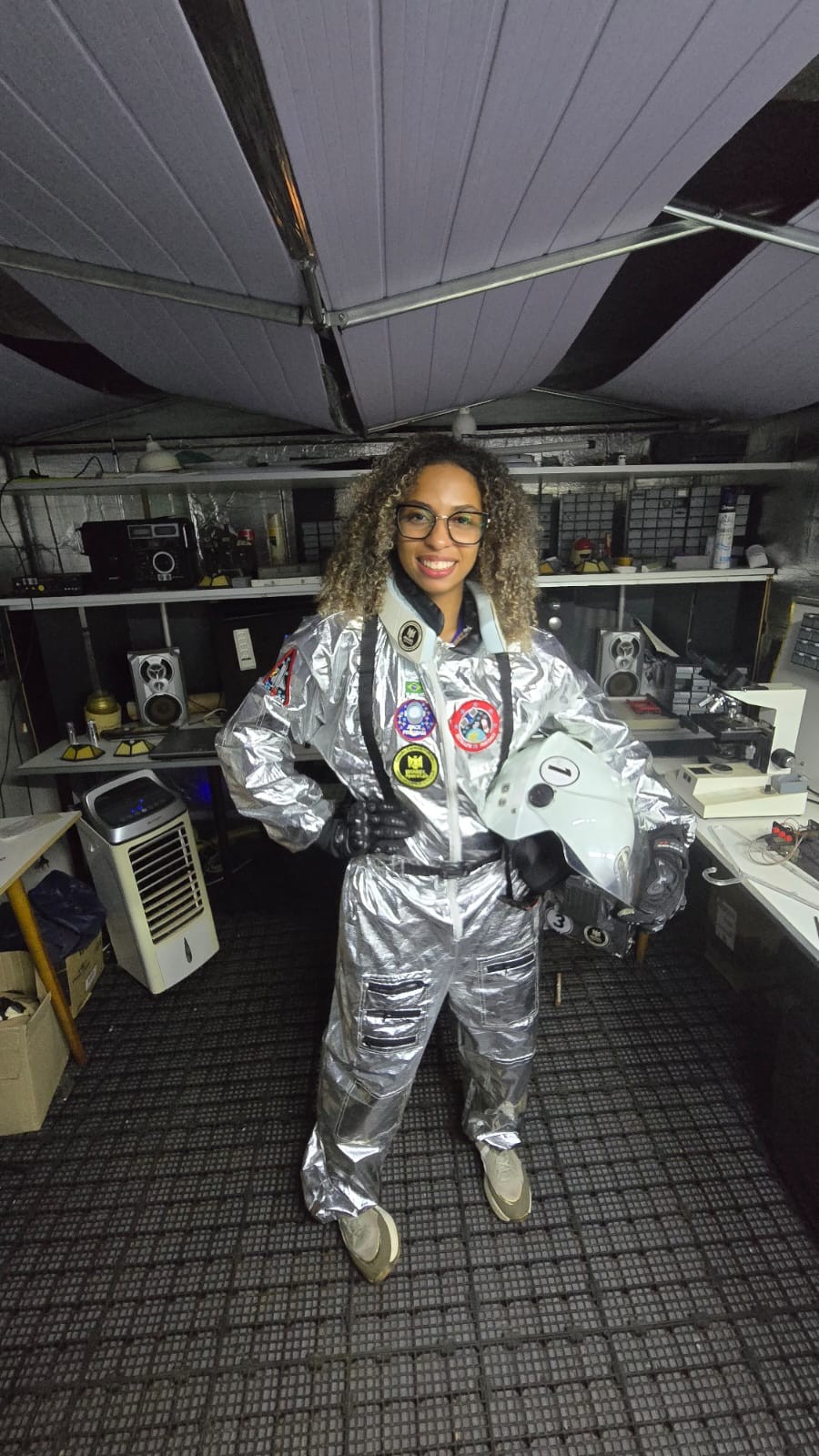
Fabiana Santos Amorim da Silva, a 19-year-old student from Petrolina, Pernambuco, has been awarded a bronze medal at the International Astronomy and Astrophysics Competition (IAAC). The results were announced on Monday, June 6th. The IAAC, which concluded on June 30th, attracted over 9,000 participants globally and was conducted in three stages. This marks Fabiana's first time competing in the IAAC. She is the sole representative from Pernambuco and the entire Northeast region of Brazil to qualify for the finals, and she is the second Brazilian to ever win a medal in this competition. Fabiana expressed that receiving the bronze medal fulfills a lifelong dream and acknowledges her extensive study and dedication, hoping her achievement will inspire other young people, particularly from the Northeast, to believe in achieving significant results through education and science. The competition featured a challenging 40-question test within 40 minutes, covering advanced topics in astronomy, astrophysics, cosmology, and space exploration, requiring strong scientific reasoning, theoretical knowledge, and complex problem-solving skills. Fabiana, who dreams of space travel, is also set to become the first analog astronaut from Petrolina upon her graduation in 2025. Additionally, she founded the Inter-American League of Astronomical Knowledge, and serves as a Wogel Space Lab Brazil ambassador, where she trained as an analog astronaut, and is also a NASA ambassador.
This achievement highlights the growing global accessibility of advanced scientific education and competition, even for students from regions historically underserved by such opportunities. The IAAC's structure, involving multiple stages and broad participation, suggests a robust evaluation process. Fabiana's multiple roles, including analog astronaut training and ambassadorships, indicate a proactive engagement with the scientific community beyond mere academic performance. Her success underscores the potential for talent to emerge from diverse geographical backgrounds when provided with the right platforms and encouragement. Future initiatives could focus on further democratizing access to such high-level competitions and training programs, particularly for students in developing regions, to foster a more inclusive global scientific talent pool and address potential systemic disparities in educational resource allocation.
AI-generated to prompt reflection — not editorial opinion, not advice, not a statement of fact. How this works.